
2024 ANNUAL REPORT: EQUITY & JUSTICE

Diocesan Reparations
At Diocesan Convention in January 2023, we passed a resolution that established the Committee on Diocesan Reparations. The committee is formed of the Policy Working Group and the Education Working Group. The Policy Working Group is tasked with investigating and recommending policies and other measures to support the redress, healing and atonement of the diocese’s historical involvement in anti-Black racism. The Education Work Group is focused on educating, encouraging, and supporting the diocese in its reparations work, while also making preparations to implement the recommendations of the Policy Working Group. The committee will submit its recommendations in the form of resolutions for consideration at the 2025 Diocesan Convention.
In addition to holding regular meetings and conducting research into the reparations work of other dioceses, institutions, and localities, in 2024 the committee:
- Finalized and submitted recommendations to move toward a culture of equity in EDOW.
- Refreshed the Reparations Hub on the diocesan website a second time to enhance user experience as additional stories were told and resources created.
- Shared a narrative about the collective work before us through articles in the Diocesan Bulletin and on social media.
- Encouraged research and reporting on racialized histories, including the commission of Bindeth Up Our Wounds by Franklin Robinson, a report on the 8 parishes that were originally members of the diocese of Maryland and transferred to EDOW in 1865.
- Hosted Healing Histories: A Reparations Dialogue for African-American members in EDOW.
- Presented on reparations at congregations and regional clergy gatherings around the diocese and at the fall Regional Gatherings in preparation for convention.
Equity and Justice Areas of Common Concern
In 2024, deacons and parish leadership fostered parish engagement in areas of common concern. Congregations have addressed food insecurity, gun violence and more. (See sections 3 and 4 to learn more about creation care and refugee and migrant ministries.) The information below is drawn from the 2024 survey on congregational outreach and justice ministries.
-
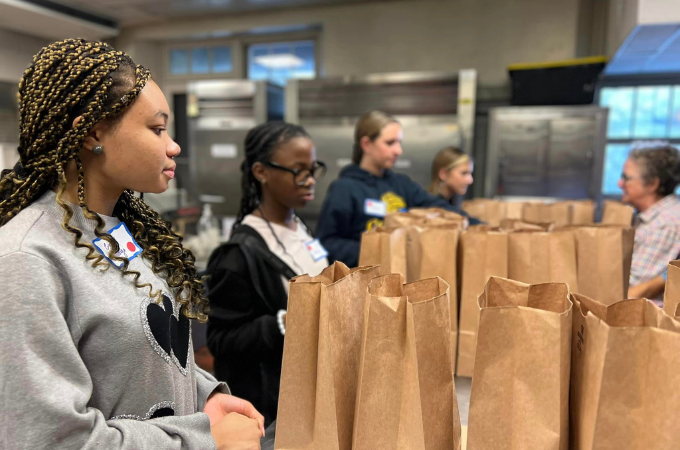
- Food insecurity: more than half of the congregations in the diocese are engaged in some kind of food ministry. Parishes provide volunteer support for local organizations including schools, food banks, and homeless shelters. Many serve meals from their buildings, grow and share vegetables, and donate food regularly. Three parishes — Atonement, D.C., St. Stephen and the Incarnation, D.C. and San Mateo, Hyattsville — serve as hubs for wider distribution to local groups.
- Housing insecurity: Congregations use their buildings to provide hypothermia and drop-in shelter as well as short- and long-term housing for those in need. Clothing, supply, and toy drives through local nonprofits, including shelters, help resource these individuals and families. Several congregations are members of Action in Montgomery or Washington Interfaith Network, two faith-based advocacy groups with safe and secure housing campaigns.
- Congregations also support outreach and advocacy in jail and prison ministry, and gun violence prevention. This includes visits to incarcerated people, donations and support for returning citizens (those recently released from incarceration who are returning to their communities). Advocates have worked to raise awareness and provide education on both these concerns.
- Deacons throughout the diocese are champions in these areas as well as in migrant support and creation care. They are energized by not only their own passions but also the passions and encouragement of the parish members living out their baptismal covenant. Parishes/deacons work both independently and also in concert with other parishes and faith communities on collective efforts.
Immigrant and Refugee Support
The Refugee Response Team (RRT) continues to be a dynamic, motivated powerhouse in the diocese working to resource and connect congregations under the able leadership of the Rev. Nancy Stockbridge. In 2024, more than half the parishes in our diocese supported migrants and refugees in some capacity. We:
- Sponsored refugees from Afghanistan, South Sudan, Somalia, and other locations. Partners include the state department, Good Neighbors Capitol Hill, Lutheran Social Services, Migrant Solidarity Mutual Aid, Episcopal Migration
- Ministries and (new in 2024) Rainbow Railroad, an organization supporting LGBTQ+ refugees. In addition to housing, refugees received support for enrolling in school, finding work, managing a new culture and more. This takes participation from dozens of parishes and hundreds of individuals.
- Continued to welcome asylum seekers from the southern border. Congregations teamed up to offer housing, food, clothing, supplies, support for pregnant women and newborns, and food and donations. Many also received accompaniment to migration appointments and assistance with legal processes.
- Through RRT, deacons and lay leaders learned together to troubleshoot complicated situations, navigate bureaucracy, find local resources (such as daycare, or people who could speak Haitian and other languages), and share events and opportunities for advocacy.
- During 2024, parishes who did not have capacity to support a ministry partnered with each other to gather household goods, set up apartments, and welcome arriving migrants. It has been a good experience to share resources and build relationships among parishes. Work was accomplished through partnership that would not have been done without it.
- RRT was instrumental in raising funds to help finish bathrooms at San Mateo, a congregation that continues to serve as a hub for Spanish-speaking migrants and the wider community.
- With leadership from the Washington National Cathedral Sanctuary Ministry, members of RRT began preparations for potential mass detentions and deportations, including family preparation research and training.
Interested in learning more? Sign up for the EDOW Refugee Ministry Listserv
Creation Care
The Diocese’s Creation Care Committee works to promote and assist parishes with environmental sustainability and responsibility in our faith communities and neighborhoods. As part of this undertaking in 2024, the Creation Care Committee and congregations around the diocese:
- Observed the 2024 Season of Creation. Sixteen parishes included prayers, readings, and programs celebrating this Season and inviting congregations to continue ecological and environmental efforts.
- Contributed to natural landscaping through Saplings for Sacraments, tree planting, establishment of native plant gardens, watershed restoration, and more. Ascension, Gaithersburg dedicated the Piscataway Rain Garden; St. Dunstan’s took further steps toward storm water management; and St. Bartholomew’s, Laytonsville planted 17 native trees. St. John’s, Lafayette Square even planted trees with partners in South Africa.
- Encouraged parishes to invest in energy efficient systems, including solar power (through panels and/or connecting to solar farms) along with new heating and cooling systems. St. George’s Valley Lee added solar panels after five years of research and planning, and Good Shepherd announced that solar panels will be added as part of their new roof installation. (Long term planning pays off!)
- Partnered with Interfaith Power and Light (DC.MD.NOVA) to continue learning about new tools and technologies to reduce energy usage and carbon emissions. This resulted in the introduction of Resolution 4 (Urging the Diocese and Parishes to Participate in Energy-Usage Study) for consideration at Diocesan Convention in 2025.
- Participated in the United Nations Conference on Climate Change (COP 29) through the selection of Autumn Smith, member of Grace Silver Spring, as a lay delegate.
Equity and Justice and and the School for Christian Faith and Leadership
In collaboration with Michelle Dibblee, Interim Missioner for Equity and Justice, School Director Anna Olson developed an online workshop on the spiritual dimensions of reparations. The workshop combined the “being with” model of reflection and conversation with information about the racialized harms committed in the diocese, preparing participants for discussion of resolutions at Diocesan Convention.
Christ Before Us: Equity and Justice in 2025
In 2025, these are the strategic plan goals we will pursue:
- Continuing listening process with regions and congregations to help discern the most effective role for a diocesan resources (e.g. the Equity and Justice Missioner, regional deans, and deacons)
- Defining the leadership role of the Equity and Justice Missioner into 2025 and beyond
- Preparing for ongoing changes in response to potential changes with the new administration
- Appointing new Reparations Committee and define the scope of the Committee’s work
