Migration with Dignity Sunday: Seeing the Holy Family in Our Neighbors
“Get up, take the child and his mother, and flee to Egypt.”
Matthew 2:13
The story of the Holy Family’s flight into Egypt, when Mary and Joseph fled with the infant Jesus to escape King Herod’s violence, invites us to recognize the experiences of migrants in our own congregations and communities—and to consider how we might respond to our neighbors with compassion, solidarity, and love.
On Sunday, January 24, 2027, Episcopal congregations are invited to observe Migration with Dignity Sunday, a time to pray, learn, and act in support of migrants. Congregations may also choose another Sunday during the season of Epiphany.
An Invitation to Observe Migration with Dignity Sunday
For congregations already responding to the needs of migrants, this observance offers an opportunity to share that work, celebrate the relationships being formed, and recommit to serving and loving our neighbors.
For congregations seeking ways to begin, it offers an invitation to take a first step.
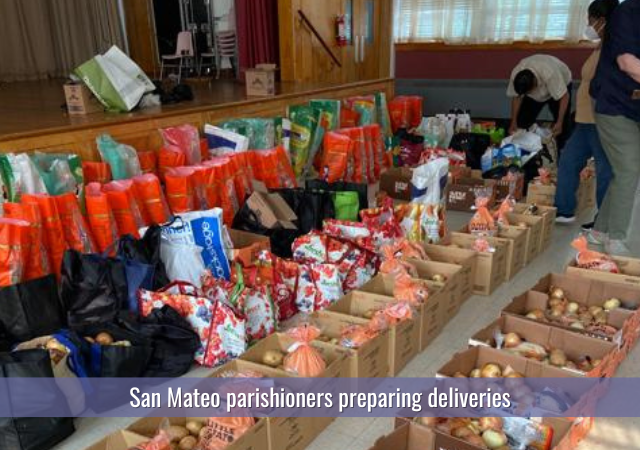
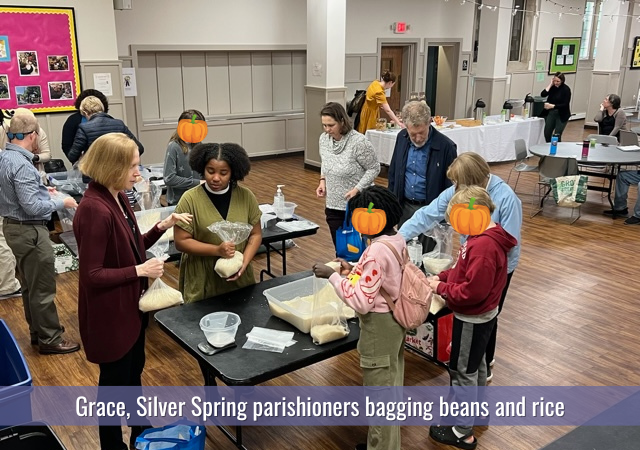
Participation can take many forms: prayers during worship, opportunities to learn about migration, hosting a service project, writing postcards to elected officials, or another activity that fits your congregation’s context and capacity.
Resources and ideas are available to help congregations plan their observance.
Our Commitment to Migration with Dignity
Our commitment to migrants is rooted in the Christian call to love our neighbors and honor the image of God in every person. The principles of Migration with Dignity offer a framework for putting that commitment into practice.
Developed in the environmental justice movement, these principles have been adopted by the General Convention of The Episcopal Church to guide our church-wide response to migration. In 2024, the Episcopal Diocese of Washington passed a similar resolution to guide our efforts locally. The Migration Caucus of The Episcopal Church, which sponsors Migration with Dignity Sunday, advocates for these principles.
They include freedom of movement, security from violence and exploitation, equal treatment and opportunity, basic quality of life, and civil and political protections. Together, they affirm both the rights of people who migrate and the responsibilities of those in power to respect their dignity.
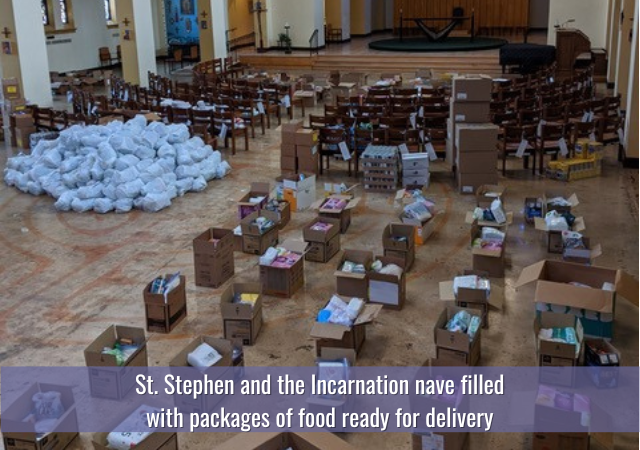
The importance of these principles becomes clear when we consider the vulnerability experienced by migrants in our communities. We see it in the families supported by our family care pods, in neighbors who have lost Temporary Protected Status (TPS) or work permits, in those facing detention or deportation without adequate protection of their due process rights, and in people who are afraid even to attend church.
In the face of these realities, we are called not only to recognize the dignity of our migrant neighbors, but also to advocate for their protection and accompany them in love.
Seeing the Holy Family in Our Neighbors
What might it mean to see the Holy Family in the faces of migrants today?
Artist Kelly Latimore explores this question in La Sagrada Familia, an icon inspired by a conversation with a young man from Guatemala who shared his difficult experience of migration to the United States.
As Latimore explains:
“Everything about him broke us. He has the image of God within him. As we were hearing all of the hateful rhetoric that was anti-immigrant, anti-stranger, his experience immediately came to mind while creating this modern holy family image and how the refugees Jesus, Mary, and Joseph must have felt fleeing from Herod 2,000 years ago.”
Migration with Dignity Sunday offers an opportunity to carry this recognition into the life of our congregations. Whether through prayer, learning, service, or advocacy, we can deepen our commitment to honoring the dignity of every person and putting our faith into action.
As your congregation prepares for Epiphany, consider how you might observe Migration with Dignity Sunday on January 24—or another Sunday during the season.