by EDOW | Feb 12, 2025
Every congregation—no matter its size or history—can benefit from a fresh look at its health and purpose. Next Vital Steps is designed to guide churches through revitalization, helping them:
-
- Rediscover their core mission
- Reconnect with their community
- Set meaningful goals for sustainable growth
Whether your congregation is facing challenges or simply seeking to strengthen its ministries, this program offers a clear and supportive path toward renewal.
What is Next Vital Steps?
Next Vital Steps builds on the work of Tending Our Soil (TOS), a three-year, grant-funded revitalization initiative concluding in 2026. This new process brings the best of what we’ve learned in TOS to congregations looking for practical ways to foster vitality.
At its heart, revitalization is about engaging in a set of key practices over time:
-
- Listening – Understanding where you are and where God is calling you
- Visioning – Setting a clear and Spirit-led direction
- Experimenting – Trying new approaches to ministry and mission
- Seeking the Holy Spirit – Grounding all efforts in faith and discernment
This process also provides accountability and partnership, ensuring that congregations have support and checkpoints along the way. As one rector who participated in TOS put it: “This is work we’ve always planned to do but never were able to make the space for.”
How Does It Work?
The Next Vital Steps process is designed to be manageable and collaborative:
-
- Orientation – The rector/priest-in-charge and a lay leader attend an initial session.
- Building a Team – A small group is formed to lead the revitalization efforts.
- Listening Sessions – Three guided conversations help assess where the congregation stands before setting goals.
- Goal Setting – The team discerns a revitalization goal to work on over the next 3-6 months.
- Taking Action – With guidance and resources, the team implements their plan.
Why It Matters
Revitalization is a long-term journey, not a quick fix. Culture change in a congregation typically takes 3-5 years, but small steps can lead to meaningful momentum. As seen in Tending Our Soil, when a team focuses on just one or two areas of vitality, positive change begins to ripple outward.
Resources & Support
Next Vital Steps offers a wide range of tools, including:
-
- Vitality assessments
- Mission discernment guidance
- Neighborhood engagement strategies
- Parish discipleship tools
The process is flexible and can be adapted to churches of all sizes.
Take Your Next Step
Whether you’re aiming for culture change or just looking to take a meaningful first step, we’re here to support you.
Reach out to Emily or Anne-Marie to discuss your parish’s unique needs and explore how we can help guide your Next Vital Steps.
The Rev. Emily Labrecque
Missioner for Church Revitalization
Email Emily
269-967-2513
The Rev. Anne-Marie Jeffery
Canon of Congregation Vitality
Email Anne-Marie
301-461-0037

by EDOW | Oct 23, 2024
All Souls, DC is beginning the second year of our three-year participation in the diocese’s Tending Our Soil (TOS) program with a diverse group of parishes including St. Luke’s DC, Grace Georgetown, and Christ Church Chaptico. With excellent facilitation from the diocese, we explore ideas with parishioners and clergy from these other congregations and together discuss ways to revitalize our parishes. One of the most stimulating presentations in the program has been “Invite, Welcome, Connect.”
Our rector, Mother Sara Palmer, scheduled a special luncheon discussion after our service on September 29 at which the All Souls TOS team explained “Invite, Welcome, Connect” to the congregation. We discussed ways to invite friends and community members to our parish (it doesn’t have to be awkward!), to welcome them when they arrive, and to connect with them while they are here. At the luncheon, we broke into three groups to discuss and stimulate ideas as to how we can use each of these important concepts to increase and maintain the vitality of our parish. The groups then shared their thoughts, notes of which have now been typed up and will be shared with the congregation.
Almost 40 people attended and the enthusiasm was palpable, with spirited conversations and many good suggestions offered. These included “calling cards,” new placement and arrangements of welcoming table(s), improved outreach on our website and social media, involvement of more congregants on committees, and the need for careful listening to each of our members as to what they are seeking in coming here. In our discussions, it became clear that for many what they seek is the desire to be part of a community, and the TOS program will help us discern the kind of community we can and should be.
During the course of the luncheon, one incident seemed to capture the effort: a new congregant, Paula, chatting with two longtime parishioners Lisa and Jim, and finding an instant connection—they all came from North Carolina! Coincidence of seating… or the Holy Spirit working to bring us together? Similar connections were made throughout the discussions.
We look forward to continuing to work with the parish on this exciting program.
Al Muller and John Longstreth
Parishioners on the Tending Our Soil team at All Souls, DC
by Keely Thrall | Oct 8, 2024
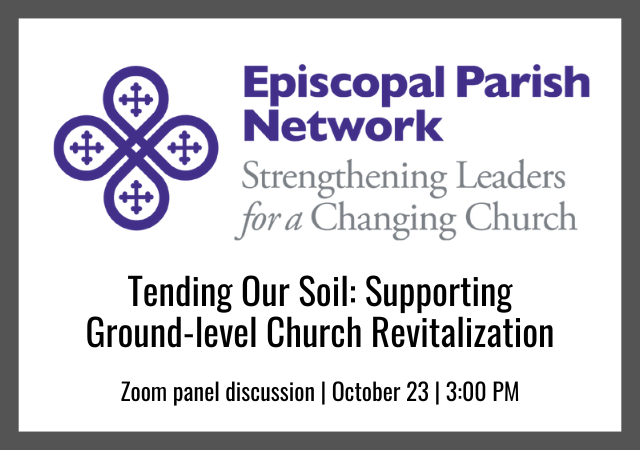
 The church is undergoing a period of profound change, realignment, and reforming. Revitalizing parish ministry is key to building the church of the future. And, this revitalization requires lay and clergy leaders to imagine and implement new ways of being church to meet the needs of our congregations and communities. This workshop is the story of the Episcopal Diocese of Washington’s efforts to uncover these new ways of being church through our parish revitalization initiative, Tending Our Soil.
During this workshop, you will learn about our work with 26 congregations over the past three years. Panelists will share both their successes and challenges and the changes in their congregations through participating in the Tending Our Soil initiative.
Leave this conversation with a better understanding of what it takes to listen to God and neighbor and bring those learnings into the life of a congregation. You will also hear about specific resources your congregation might find helpful, including how you can employ a persona – a representation of the people you serve – to focus your ministries.
Panelists include:
• Patricia Alexander – Rector, St. Dunstan’s Episcopal Church; Bethesda, Maryland
• Elsie Kirton – Member, St. John’s Episcopal Church; Beltsville, MD
• Richard Wall – Rector, St. Paul’s Parish, K Street; Washington, District of Columbia
• Melissa Williams – Member, St. Timothy’s Episcopal Church & Coach, Tending our Soil; Washington, District of Columbia
• Mariann Edgar Budde – Bishop, Episcopal Diocese of Washington; Washington, District of Columbia
• Anne-Marie Jeffrey – Canon for Congregational Vitality; Episcopal Diocese of Washington; Washington, District of Columbia (moderator)

by Anne-Marie Jeffrey | Aug 28, 2024
On Saturday, October 19, 2024, we will hold a Courageous Discipleship Day: Celebrating Small Church Ministry. A little over two years ago, I started listening to the podcast Small Church Big Impact Collective, which inspired me to reflect deeply on the power of small churches, culminating in the development of this event. The premise of the podcast is that the message that most congregational leaders get is that size matters — that is to say that small churches don’t make big impacts. The podcast creators came together to seek a different message and amplify the beauty and grace of small churches. Recently, more and more people have begun to discuss the power of small churches. Here are some important points (1) most churches have fewer than 100 active members; (2) there are many people in the world for whom small congregations are the best spiritual and community fit; and (3) rapid changes in the church will require significant reinvention of our models and assumptions, and small churches are likely to be the cutting edge of those experiments. By virtue of their size and their struggles, they are motivated to try things and nimble enough to move fairly quickly.
These points have reflected the reality that I have experienced in my three years of spending time with congregations and their leaders throughout the diocese. Most EDOW congregations are small. Many are anxious about whether what they have and what they are will be enough. Enough people? Enough money? Enough energy? Enough generational connection? The challenges are real. But here’s what else I see: when small congregations let go of fear and step out on faith, they do amazing things. People find homes there who may have no other place in this world to call home. Small congregations can connect with their communities in the most basic, intimate ways, listening to their neighbors and walking with them through lives that may also struggle with having enough to survive.
The Celebrating Small Church Ministry event will gather congregational leaders to lean into God’s long history of calling the small and the forgotten to do great things in the service of the Kingdom. It will be an interactive, experiential day, where we’ll try some things together to illuminate the creativity and innovation that is possible in the small church. The Rev. Anna Olson will share learnings from her book, Claiming Resurrection in the Dying Church, which invites the church to see ministry not through size of accomplishments or marks of affluence, but by the love of God and neighbor trusting that God capable of doing a new thing with us and through us.
Everyone is welcome. We pray that whatever the exact size and shape of your ministry, you will leave inspired, ready to step out in faith, trusting that the Holy Spirit is moving no matter how small you may be.
Learn more and register. Thanks to St. Barnabas, Temple Hills, for being our gracious hosts for the day!
Feel free to contact Canon Anne-Marie Jeffery or School director Anna Olson with any questions about the day.
The Rev. Anne-Marie Jeffery
Canon for Congregational Vitality
by EDOW | Feb 15, 2024
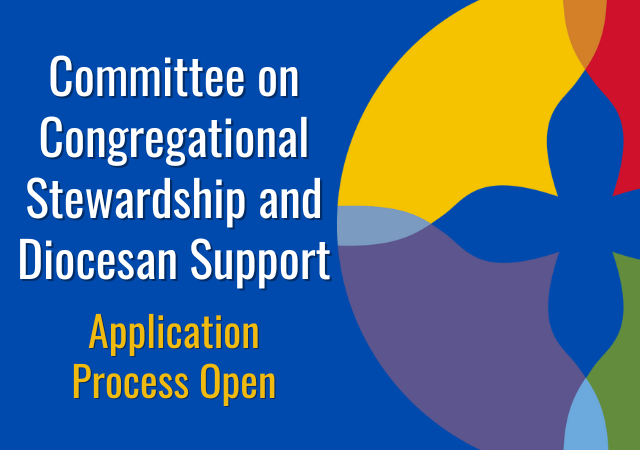
At the December 2023 Diocesan Council meeting, a resolution was presented and passed calling for the establishment of a Committee on Congregational Stewardship and Diocesan Support.
The work before the committee is to review the history of congregational giving to the mission and ministry of the Diocese and—through engagement with active leaders from around the diocese, lay and clergy, new and longtime—recommend concrete, actionable steps that we as a diocese can take to arrive at a consensus that fits this moment in time in the life of the Diocese around appropriate levels of congregational investment in our common Diocesan mission and ministry.
Learn more:
Watch the Rev. Jessica Hitchcock’s presentation about the committee at the recent Diocesan Convention
Apply to serve:
Committee on Congregational Stewardship and Diocesan Support Application
The deadline to submit an application is Wednesday, February 21 by 5:00 p.m.

