by Bishop Mariann | Apr 6, 2023
Early on the first day of the week, while it was still dark, Mary Magdalene came to the tomb and saw that the stone had been removed from the tomb.
John 20:1
At one of those small shops that specializes in quirky gifts, I perused the display of greeting cards and came across an Easter card. On the front was a depiction of the resurrected Jesus standing in front of his disciples. The caption read: “Okay, everybody, let’s get the story straight. The last thing we need is four different accounts of the Resurrection!”
It made me laugh, in the way that only religious satire can. For that’s exactly what we have in Scripture–four versions of what happened on Easter morning. They vary significantly in the details, yet are singular in proclamation: Jesus was raised from the dead.
No one, actually, sees His rising. The first witnesses appear on the scene after the event itself, and what they see at first is nothing at all–an empty tomb. Then, in a series of encounters, first to the women and then the men, Jesus appears to them–not resuscitated to carry on as before, but present in mystical, mysterious ways. First in the garden, then on the road to Emmaus, and then in an upper room where some of the disciples were hiding in fear.
“Go back to Galilee,” other messengers tell the disciples. “Go back to where you began with Him.” When they do, Jesus appears to them on the hillside and along the shore of the Sea of Galilee. They see Him, talk with Him, encounter Him again and again, and each time they feel His presence, forgiveness, and empowering spirit, enabling them to live with courage and love.
It was as implausible a proposition then as it is now, and as easily refuted as anything I might say to you about why Jesus’ resurrection matters to me.
But here goes: I have seen Him, too, and felt His presence in my life–not all the time, and not without long stretches of emptiness–but often and consistently enough to give me confidence that He is real. I have experienced His grace and forgiveness in the times that I have felt least deserving of them.
I am not immune to doubt, and I struggle to believe in the face of the world’s suffering as much as anyone. Yet Jesus keeps showing up, making His presence known to me in prayer and when I read the Bible, in the countless graces of each day, and most especially in the examples of His other followers whose witness takes my breath away.
I am not interested in Christian platitudes that gloss over the anguish of the human experience when the worst happens. Thankfully, neither is Jesus. As best I can understand, His answer to that anguish isn’t to take it away (how I wish it were), but to enter into it fully and assure us that it will not have the final word. I take that promise on faith and hold onto it even when–especially when–the evidence suggests otherwise.
I was asked in a podcast interview recently what gives me hope. It’s a question not to answer lightly. What I remember saying was something like this: “Hope, for me, comes as a gift that I can’t easily explain and I can’t evoke on command. On the other hand, hope is also a spiritual practice. I need to actively seek it out, spending time with those who embody hope in the most hopeless of situations. I need to ask for it in prayer, and fill my heart and mind with what gives me hope.
It’s all too easy to be cynical, I said. To be hopeful requires effort. That’s what following Jesus looks like for me–turning my gaze toward Him, dwelling on His life and teachings, and learning to trust, as so many have before me, that He is with us and for us. It’s especially important that I turn to Him when my hope is gone. When, by grace, His consolation comes, hope returns as the gift it is, and I am given strength to carry on. I’ve learned that I can go a long way on bits of hope–and that the joy of it is real.
On Easter morning, no matter what, those of us who follow Jesus however imperfectly will rise to say in one voice: Allelujah, Christ is Risen! As the psalmist reminds us, “Weeping may spend the night, but joy comes in the morning.” Or in the words of poet Gwendolyn Brooks, “Even if you are not ready for day, it cannot always be night.”
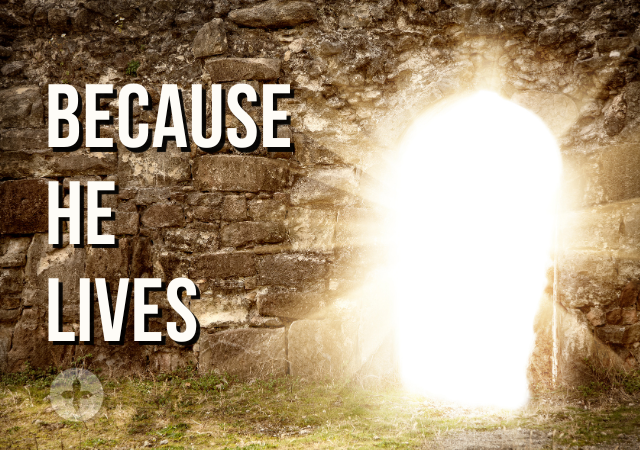
Because He lives, hope cannot die. Because He lives, so can we, with courage and love. Because He lives.

by Bishop Mariann | Apr 4, 2023
And now the Lord says, who formed me in the womb to be his servant, to bring Jacob back to him, and that Israel might be gathered to him, for I am honored in the sight of the Lord, and my God has become my strength– he says,”It is too light a thing that you should be my servant to raise up the tribes of Jacob and to restore the survivors of Israel; I will give you as a light to the nations, that my salvation may reach to the end of the earth.”Thus says the Lord, the Redeemer of Israel and his Holy One, to one deeply despised, abhorred by the nations, the slave of rulers, “Kings shall see and stand up, princes, and they shall prostrate themselves, because of the Lord, who is faithful, the Holy One of Israel, who has chosen you.”
Isaiah 49:1-7
Among those who went up to worship at the festival were some Greeks. They came to Philip, who was from Bethsaida in Galilee, and said to him, “Sir, we wish to see Jesus.” Philip went and told Andrew; then Andrew and Philip went and told Jesus. Jesus answered them, “The hour has come for the Son of Man to be glorified. Very truly, I tell you, unless a grain of wheat falls into the earth and dies, it remains just a single grain; but if it dies, it bears much fruit. Those who love their life lose it, and those who hate their life in this world will keep it for eternal life. Whoever serves me must follow me, and where I am, there will be my servant also. Whoever serves me, the Father will honor. “Now my soul is troubled. And what should I say– `Father, save me from this hour’? No, it is for this reason that I have come to this hour. Father, glorify your name.”
John 12:20-33
On the occasions in which a vow of any kind is made, there’s almost always an acknowledgement that the living of that vow will be harder than the making of it, and that we won’t be faithful to our vows if we rely only on our own good intentions and will power. That’s especially true in our faith tradition: recall how in Baptism and Confirmation services those making their promises do so with the important caveat, “I will, with God’s help.” In ordination services, after those being ordained make their vows, there is an explicit word from the presider: “May the God who has given you the will do these things, give you the grace and power to perform them.”
In the living of our vows, then, there is a necessary rhythm of rededication, not because we didn’t mean what we said the first time, but that in the living of our vows, we gain a clearer understanding of what the vows entail. We need to be reminded of what we said, and why, and to pray once again for the grace and power we need to fulfill them.
I’d like to reflect with you on the experience of living our vows–what it’s been like for you and me to journey on the path, or paths, to which we have been called by God, in all their twists and turns. In particular, I wonder if you might recall those times–perhaps you are in such a time now–when you seriously questioned whether you could stay on a given path, in part because it was nothing like what you had hoped for or expected, or because others upon whom your vocation seemed to depend had failed you, or perhaps more devastating, because you yourself had failed.
In the biblical narrative from Genesis to Revelation there are key moments upon which the arc of salvation history rests. There is the Exodus, God’s liberation of the People of Israel from bondage in Egypt, and the covenant God made with them in the wilderness. Then follow all the stories of the people’s failure to live according to their side of the covenant, all the times they repent, receive forgiveness and restoration, only to sin again, repent again, be restored again. More than once in the narrative, we get the message that God is disappointed with the Israelites, and, by extension, with us.
But what about the people? They were disappointed, too. This relationship with God wasn’t what they had imagined. God didn’t conform to their image or expectations. Nor were they people they had imagined themselves to be, and wanted to be. Only through a long process of inner transformation, could they hope to become the people God was calling them to be.
The story continues across biblical time, and we learn vicariously through the Israelites and later through Jesus’ disciples, that disappointment and failure are as much a part of salvation history as God’s saving acts and the people’s heartfelt, albeit naive promises.
For me, one of the more poignant eras in the biblical story is the time of Exile and what followers afterwards. Exile, as you recall, is when the people of Israel were removed from their sacred land, carried off into Babylon and forced to live there for several generations. The experience was devastating–a shattering of what the people thought was true about themselves and about their God. Their covenant with God was irreparably broken, or so they thought.
Yet in exile the people learned that God had not abandoned them in their sin and failings. Moreover, through the prophet Jeremiah, they realized that they were to seek the welfare of the city where God had sent them into exile, and pray to the Lord on its behalf, for in its welfare would they find their welfare. In other words, for a season, they needed to make a home in exile. That was where God called them to be. (Jeremiah 29:7)
That’s a word for us to hang onto when we feel in exile ourselves. God is with us. As Jesus followers, we can hold to his words: “I am with you always, even to the end of the age.” (Matthew 28:20). What’s more: for reasons beyond our understanding, we may need to be right where we are.
Eventually, miracle of miracles, the Isrealites who had been in exile are permitted to go back home and rebuild the Temple that had been destroyed by occupying armies. Through the prophet we’ve come to know as Second Isaiah, they are given a new, even loftier sense of their vocation as God’s people: It is too light a thing that you should be my servant to raise up the tribes of Jacob and to restore the survivors of Israel; I will give you as a light to the nations, that my salvation may reach to the end of the earth. (Isaiah 49) Imagine how those words would feel to those formerly shattered and beaten down.
So they go back, and they rebuild their temple and everything seems great–for about a minute. After their initial joy comes inevitable letdown. The second Temple in no way matches their idealized memories of the first, life is still really hard, and they aren’t able to live the vows they made to God any better than their forebears could before they were sent away.
That longing that all human beings feel for God to save us persists, and the Isrealites’ hope that God will indeed transform this world once and for all becomes the wellspring of messianic hope. For those of us who follow Jesus, we find that fulfillment in Him.
Yet as Jesus followers we continue to live through the same rhythm of hope and disappointment, longing and and fulfillment for a time, only to find ourselves in the same death-to-life rhythm that He honored and made holy by His example.
Now I’m going out on a limb here, in faith that I’m not the only one who can identify with stories marked by moments of hope and resolve followed by the messiness of life and disappointment with others, the institutions in which we serve, and ourselves. What I dare to believe, and have witnessed partially in my own life and more gloriously in the lives of others, is that the times of disorientation, disappointment, and even death are as much a part of the path to which we have been called as the more joyful moments when we clearly and confidently said Yes. I will, with God’s help.
Today is the anniversary of the Rev. Martin Luther King, Jr.’s assassination, fifty-five years ago in Memphis. In the last years of his life, King was prone to seasons of internal despondency and despair even as he worked hard to be a beacon of hope to others. As he faced the most intransigent forms of racism and economic injustice, increasing infighting and strategic divisions among Black leaders, his own physical frailties and failings, and the impossibility of organizing a massive movement of poor people from all races to descend upon Washington, DC. King said to a reporter who questioned his organization’s capacity to organize a non-violent Poor People’s Campaign. “This is my best offering and last hope for this country.” When those of inner circle questioned the wisdom of going back to Memphis to support the striking sanitation workers, he replied, “Our movement lives or dies in Memphis.”1
The next day it was King who died.
Unless a grain of wheat falls into the earth and dies, it remains just a single grain; but if it dies, it bears much fruit. Those who love their life lose it, and those who hate their life in this world will keep it for eternal life. (John 12:24)
The living of our vows is messy.
The late Madeleine Albright, the first woman Secretary of State in the United States, a devout Christian, and an active member of this diocese, once described her experience of vocation this way: “My life has felt like a jigsaw puzzle, only I was working with several pieces from several puzzles simultaneously and there was no finished picture to tell me how it should all end up.” Her memoirs are so inspiring to read, precisely because in them she doesn’t make light of her struggles; she acknowledges both her strengths and vulnerabilities, and she readily admits her mistakes. “Lives are necessarily untidy and uneven,” she writes. “It is important, however, to have some guiding star.”2
We are here today to remember our guiding star, and to hear God’s reassurance that when it feels as if we have lost our way, and even when we have, the star is still shining. Seafarers tell us that there is a lot of changing course when navigating by the stars, and that when the sky goes dark, as it does with regularity, there is no choice but to keep going in the dark. In darkness, we learn to rely on our instincts and lean on previously known vantage points, until the skies clear and we can see once again.
There’s another line from the Gospel text worthy of our meditation today. It is John’s version of the prayer Jesus prayed in the Garden of Gethsemane. In the other three gospel accounts, Jesus in the garden says, “Father, if it be possible, let this cup pass from me. But your will, not mine, be done.” Here is Jesus in solidarity with us in all those times when we pray for the same–to be spared. But in John’s version, set in another place, Jesus prays thus: “Now my heart is troubled. And what should I say, ‘Father, spare me from this hour?” No, it is for this reason that I have come to this hour. Father, glorify your name.”
Perhaps it isn’t possible for you to be spared the living of this hour. Perhaps it is for a purpose beyond your understanding that you have come to it. Can you trust that even when your guiding star is hidden under clouds, and you stumble, and what you imagined doesn’t come to pass in the way that you hope, that it is for this you have come?
One final vignette:
Our younger son, Patrick, was a theater major in college, a decision that raised a few eyebrows of well-meaning adults in his life. Once when we were at dinner with a couple that were his parents’ age, and one of them asked him if he had a Plan B. He was quiet for a moment and then said, “I don’t really think of my life that way. I will walk this path wherever it leads. If I need to make a change, that will be my new Plan A.”
That’s a nineteen-year-old’s way of saying that God can make a way out of no way; that we all must navigate by the stars in our sky, which is the life of faith.
While the journey of a vowed life is not predictable, it can be trusted, no matter what, because of the One who has beckoned us onto the path. So that at our life’s end, no matter what happens, we will be able to answer the question the poet Raymond Carter asked in his poem, “Late Fragment.”
And did you get what
you wanted from this life, even so?
(Or: Did you get what you wanted from this vocation, even so?)
I did, the poet responds.
And what did you want?
To call myself beloved, to feel myself
beloved on the earth.3
Stay strong, friends. You are beloved. You are on your path. And it is for whatever that it is that is before you that you have come to this hour.
1See Michael K. Honey, Going Down the Jericho Road: The Memphis Strike and Martin Luther King’s Last Campaign (New York: W.W. Norton Company, 2007)
2Madeleine Albright, Madam Secretary: A Memoir ((New York: HarperCollins, 2003), 6;10, Kindle
3“Late Fragment” by Raymond Carver from A New Path to the Waterfall, Atlantic Monthly Press, 1989.

by Bishop Mariann | Mar 31, 2023
As Jesus walked along, he saw a man blind from birth.
John 9:1
There are many ways of seeing and many forms of blindness. Our physical faculties aren’t the only thing that affects vision. Our emotional state influences what we can and cannot see, as does the level of anxiety within and around us, and where we stand relative to whatever it is we are looking at. The norms of the society we belong to play a role in what we see and cannot see, as does the cost of acknowledging what we see.
With vision, there is a choice to be made, and often a price to pay. One biblical commentator, Gail O’ Day, makes this last point regarding the lengthy story we’ve just read:
“The man born blind. . .has nothing to lose in the encounter with Jesus and so is open to who Jesus is and what Jesus has to offer. The Pharisees, in contrast, have much to lose and therefore much to protect, and they fight to maintain their known world.”1
I’m reminded here of a story that Anthony de Mello tells of a monk who died and was buried by his fellow monks in the tradition of their monastery, in a crypt on the back wall of their chapel. After the funeral service, they heard noises from the other side of the wall. They reopened the crypt, and the monk who died rose from the coffin and told them of his experience beyond the grave, which contradicted everything their tradition taught about life after death. So, they put him back in the wall.2
Receiving one’s sight can be life-giving–as it was for the man born blind, and others we read of in the New Testament whose physical blindness Jesus healed. But it can also be a jarring experience, particularly when we now see something that we hadn’t seen before that is upsetting to us, or challenging, or traumatizing.
I was blessed this week to be given an advanced copy of a new biography of Martin Luther King, Jr. written by the investigative journalist, Jonathan Eig. It’s over 500 pages long and I’m just getting started, but the first chapters have been amazing, because it begins by telling the story of King’s grandparents, born in chattel slavery, and his parents. His father was born into a sharecropper’s family, which he left to pursue a call to ministry and a life in the city of Atlanta. He was among the giants of his generation to fight for justice and dignity for Black Americans.
Martin Luther King, Jr.–born in the same year that this church (St. George’s, DC) had its beginnings–had the good fortune of being born and raised on Auburn Avenue, where Black teachers, doctors, business owners in Atlanta lived, and whose children were temporarity shielded from the racial violence that erupted with regularity in the Jim Crow South. He grew up in a loving multi-generational household by educated parents in a stable marriage. His parents were proud of their heritage and instilled that pride in their children. They also taught them to treat all people with respect and kindness.
Across the street from the King home, there was a small grocery store owned by a white family. When King was three years old, he and the son of the store owner became playmates. Three years later, when they went to separate schools, King still sought the other boy’s companionship in the evenings and on weekends. But friendship faded, and King struggled to understand why. “That’s when the boy told the young King that it wasn’t just the start of school that caused the separation; but the color of his skin. The boy was no longer permitted to play with Black children.”3
King was stunned. “For the first time I was made aware of the existence of a race problem,” he would later write. “I had never been conscious of it before.” His mother assured him, “You are as good as anyone,” which signaled for him that there were people who would think otherwise, simply because he was Black. “From that moment on, I was determined to hate every white person.”4
When, as an adult, King told this story of his racial awakening, he used it to underscore the fact that children are not born racist; racism had to be taught. Different skin colors had been assigned unequal values that predetermined what people saw when looking upon a white or Black child. But King refused to see himself the way white society did, and he refused to accept racism as the lens through which to see others. The more people challenged him, the stronger his convictions became. “His determination to hate every white person faded quickly, but his determination to fight racism never diminished.”5
I tell you this story about King’s childhood trauma, as one of the foundational moments of his life, because it highlights the gift and the cost of holding true to one’s vision, one’s understanding of truth, whenever there is great pressure to deny that truth for the sake of maintaining things as they are. This is one of many of the underlying messages of today’s gospel story of the man born blind.
It’s helpful to remember that the author of the Gospel of John always has several things going on at once in his storytelling. On the surface, it’s a story about healing, not unlike other accounts in the New Testament in which Jesus restores sight to the blind. But in this story, one of the striking elements is that after Jesus heals the blind man, he disappears and leaves the formerly blind man to speak for himself. The man was the one brought to the religious authorities for questioning about what Jesus did; and his parents were interrogated. The Pharisees were as upset about this man’s witness as they were about what Jesus did. As the challenges become more harsh and threatening, the man seems to grow in confidence and clarity. So this is a story about healing, but also about how we are called, as followers of Jesus, to give witness to the truth.6
I wonder what truth–what vision–you are called to give witness to in your life, and at what cost. What do you see that those around you don’t, or refuse to see? What is it like for you to hold that truth, to remain true to what God has given you to see?
Yesterday I was at a meeting of lay and clergy leaders in Southern Maryland, to consider ways that we might organize ourselves differently as The Episcopal Church in Southern Maryland so that those called to leadership might have an easier time with the many responsibilities and burdens they shoulder. As is our custom now, we began the meeting with small table conversations reflecting on questions of faith, using these Path of Discipleship cards. The card I chose had this question:
What struggle or doubt or question of faith are you learning to live with without receiving an answer?
What I said to my table group is this: I don’t have answers for all the big questions in my heart about the nature of this world, the suffering of humankind, and the mysteries of the universe, and I can’t pretend that the faith I have in Jesus is large enough to answer all those questions. And so I have great empathy for those who do not believe in Him or want to pursue a life in the church, particularly when so many of our so-called “answers” are too small. But nor can I give up on Jesus. And to quote other Christian authors that I read this week, “I want to be more like Jesus when I grow up.”7 I want to love like Him, forgive like Him, stand for truth as He did, and be willing to suffer for love’s sake.
There’s more to my answer that I didn’t say to the group, but was at the heart of the meeting yesterday and indeed, at the heart of my work among you as bishop for the years I have left. I don’t know what the Episcopal churches in the Diocese of Washington will look like when I’m gone, when all of us are on the other side of Jordan. But I want nothing more than for our churches to embody His love in such compelling ways that others will see something of Him in us, not because we’re so great, but because we allow His love to shine through our brokenness and sin.
I’m willing to live without knowing, but just as I’m not willing to give up on Jesus, I’m not willing to give up on us. I can’t help but believe that we can rise to this moment, face challenging truths and adapt in ways that will allow us to thrive and be part of Jesus’ mission of transforming, selfless love.
Adapting includes reckoning, coming to terms, yet again, with dimensions of our racist past and the enduring embedded manifestations of racism. It includes acknowledging that the ways we are organized now are not as fruitful and life-giving as we need in order for us to be that compelling witness to Christ’s love. It includes recognizing that we, too, are tempted to blind ourselves to the truths we need to face.
So that’s me.
Let me ask again: what vision has God given you, and what does it cost you to remain true to what you see amid the pressures of conformity? Might there be something that you know is true, but that you haven’t been able to acknowledge fully yet, for fear of the cost, and Jesus is inviting you to be brave? Or perhaps part of your vocation now is to support and encourage others to stand firm in what they see. Remember the importance of Martin Luther King, Jr.’s family and the legacy of his ancestors. Might we be such a source of courage for those coming up behind us?
Allow me to pray for us all:
Gracious God, we thank you for the costly gift of vision. Help us remain true to the insights you have given us, and remain true to who Jesus is. Forgive us for all the ways we refuse to see out of fear. Give us the courage to grow in faith, so that we might speak of what we know and testify to what we have seen, through your beloved Son our Saviour Jesus Christ. Amen.
1Gail O’Day, The Word Disclosed, quoted in A Gospel of John: A Theological Commentary, by David F. Ford (Grand Rapids, MI: Baker Academic, 2021), 190.
2Anthony de Mello, Taking Flight: A Book of Story Meditations (New York: Doubleday, 1988)
3Jonathan Eig, King: A LIfe (New York: Farrar, Straus and Giroux, 2023), 27
4Ibid.
5Eig, 28.
6This insight about the formerly blind man’s witness to faith comes from David Ford, The Gospel of John: A Theological Commentary, pp. 189-202.
7Matt Sternke and Matt Tebbe, Having the Mind of Christ: Eight Axioms to a Robust Faith (Downers Grove, Ill: InterVarsity Press, 2022), 3.

by Bishop Mariann | Mar 23, 2023
Blessed are you when the shock subsides.
When vaguely you see a line appear
that divides before and after.1
Hundreds gathered on Saturday, March 18 to celebrate the life of the Rt. Rev. Frank Griswold who served as Presiding Bishop of The Episcopal Church from 1997-2006. In his sermon, Presiding Bishop Michael Curry described Griswold as “a contemplative with courage, who helped navigate the church through tough, tough times. . . When we weren’t sure if the old church would sail, like Jesus on the boat on the turbulent Sea of Galilee, Frank taught us how to stay calm through a storm.”
I have in my desk file of sermons and speeches worth saving the text of a commencement address Griswold gave at Virginia Theological Seminary in May 2004. I have re-read his words dozens of times, in the hardest of times.
He began by congratulating the graduates on their accomplishment. They had every reason, he told them, to leave seminary with a sense of pride in their learning and skill. But he cautioned that their most important future learning would occur in those times and places when their competencies failed.
“There will be moments in your ministry,” he said, “when things go amazingly well. Then something will happen to pull the rug out from under you, and you will find yourself in confusion. Yet, when you look back on what seemed so devastating at the time, you will realize that it was actually the Spirit opening you to something new, or pushing you in some new direction. I hope when you have these experiences, which surely you will, you might remember these words from your Presiding Bishop, who is no stranger to what he is saying.”
“I have learned,” he went on, “that resting upon notions of my own competence is extremely dangerous…. It’s not that we shouldn’t strive to be capable and skilled leaders. But beyond all our competencies there is a power that comes from the Spirit of the Risen Christ. And only in moments of powerlessness and uncertainty do we discover how true it is.”
“Being open to the vagaries of the Spirit is terribly important,” he said. “Here I think of a phrase I often use in the context of spiritual direction, when suddenly wacky and untoward things are happening in a person’s life that seem inconsistent with the ways of God. The phrase is from the book of Ecclesiastes: ‘Do not make straight what God has made crooked.’”
“Knowing the inevitability of change and that the Spirit may well take you where you had not imagined you might go,” he asked, “what are you to do?” “The answer,” he said, “is quite simple, at least in its articulation. Be rooted and grounded in your own relationship with Christ.”
He then described what it looked like to be a person of prayer, not in terms of how many hours one spends in meditation or in church, but rather in living one’s life with an undefended heart. “Being a person of prayer,” he said, “means being available in a deep and undefended way to the stirrings of the Spirit. It isn’t so much about the words we form. Prayer is our availability to what the Spirit is up to deep within us.”
Then, near the end of his address, Griswold said something almost in passing that has haunted me since I first read it: “You cannot proclaim resurrection unless you have lived it, and you cannot live resurrection unless you have died. The mystery of death and resurrection is at the heart and center of companionship with Christ.”2
On this side of the grave, what does it mean to die?
I wouldn’t use the word death to describe those caught-by-surprise insights that come to us through disappointment and inadequacy. A death experience is a deeper loss, that even if we survive we can never be grateful for, no matter the life that follows it. In death, the loss is too great and the wound too deep to heal completely. Even if we manage to walk again, the limp remains as a reminder of what once was.
As we near the end of Lent, in church we hear stories of dead people returning to life–the dry bones of Israel and Lazarus summoned out of the tomb. These aren’t near death experiences, but actual, undeniable death, the kind that draws a before and after line in the sand. Nor are they happy ending stories, because dying isn’t something a person gets over. Death is something we go through. We wouldn’t wish it on anyone, but when we’re on the other side, we know it. Because, like Lazarus, we have been summoned from the tomb to a new life.
If you or a loved one are going through such a time now, may God’s grace hold and sustain you. If not, may these days be occasions of compassion and active love for others and assurance that when your time comes, Jesus will be there to see you through.
1Kate Bowler, Bless the Lives We Actually Have (New York: Convergent Books, 2023), 86.
2Frank T. Griswold, “The 2004 Commencement Address,” in The Virginia Seminary Journal, September 2004, pp. 12-18.
by Bishop Mariann | Mar 9, 2023
There was a Pharisee named Nicodemus, a leader of the Jews. He came to Jesus by night . . .
John 3:1-2
Jesus came to a Samaritan city called Sychar. . . A Samaritan woman came to draw water, and Jesus said to her, “Give me a drink.”
John 4:5-7
Now a certain man was ill. . . So the sisters sent a message to Jesus, “Lord, he whom you love is ill.”
John 11:1-3
In Sunday worship this Lent, we’re reading long passages from the Gospel of John. Each begins with an encounter with Jesus that leads to life transformation. Jesus also gives what seems like a sermon or has an argument with those who are not only opposed to what he is doing, but to who he is. The readings end with an exhortation to put our faith in Jesus.
Let’s consider why reading the Bible is such a foundational spiritual practice and how to read biblical texts–and in particular, the gospels–in ways that help us grow in faith.
Virginia Theological Seminary professor Judy Fentress-Williams begins her recent book Holy Imagination: A Literary and Theological Introduction to the Whole Bible by citing the line of a poem: These words have come a long way to find you.1 She points out that like poetry, biblical language is multi-layered, filled with symbolism and metaphor. “It doesn’t always yield meaning easily, and doesn’t promise to make sense.”
Yet reading the Bible is meant, above all else, to be an encounter with what the words are attempting to express–the nature of God and God’s presence in our world. “The words are the same,” she writes, “but we are not, and for that reason there are always new discoveries.”2 We’ve also inherited a long tradition of reinterpretation of Scripture in which successive generations have reimagined what the words mean for them. That tradition of reimagining and reinterpretation begins within the Scriptures themselves.
Nowhere is that tradition of reimagination more evident than in the Gospel of John.
When reading the Gospel of John we enter a world of sharp contrasts–light in darkness; sight versus blindness; life overcoming death. John introduces us to a very different Jesus than the one we encounter in the first three gospels.
In John: the Gospel of Light and Life, Pastor Adam Hamilton writes:
None of the Gospels are, strictly speaking, biographies of Jesus. But John’s Gospel, more than any of the others, is something of a spiritual or theological commentary on Jeus’ life, death, and resurrection. In John, details of events and even the words of Jesus are not so much about what actually happened, though clearly they are rooted in what actually happened. Instead they are about the meaning-the spiritual significance-of Jesus’ life. For this reason, Clement of Alexandria (A.D. 150-215) described John as “the spiritual Gospel.”3
Not all of John is inspiring to read. There are passages that introduce an element of fear of eternal punishment for those who don’t put their faith in Jesus. There’s also a strong anti-Jewish sentiment, which is confusing given that Jesus and his disciples were Jews.
Here is where knowing a bit of context helps. John was written at least one generation after the first gospels, during a time of painful separation between the Jews who followed Jesus and those who did not, and the Jesus followers were expelled from their synagogues. Moreover, the promise of Jesus’ imminent return to usher in the Kingdom of God had not occurred.
Of this context, Clayton McCleskey, one of our seminarians studying for the priesthood writes:
What do you do when the faith you look up to disappoints? What do you do when the community in which you prayed and lived turns its back on you? John provides a courageous invitation to “find freedom in disappointment … grasp grace in dislocation … and learn love in departure.”4
We needn’t have the same arguments that our biblical forebears did; nor do we need to accept their prejudices and blindspots. We must keep watch for the ways that texts can be misused to cause harm that is always antithetical to Jesus’ message of love.
John’s invitation to his first readers, and to us, is to know Christ now, to feel his love for us now, to trust that Jesus is alive and with us, now. We don’t have to wait for Him to return, for He is here. John doesn’t deny that there is hardship and evil in this world, but that Jesus is with us and for us through it all. We can believe–that is, give our hearts to and place our trust– in Him. Remember the stirring words from John that we read every year at Christmas: “What has come into being in him was life, and the life was the light of all people. The light shines in the darkness, and the darkness did not overcome it.” (John 1:4-5)
For those who accepted my invitation to read through one gospel text in its entirely, let me leave you with the three questions at the heart of spiritual meditation to grow in faith:
- What is this passage saying about Jesus?
- In this passage, how does Jesus speak to me/us?
- What is my/our response?
Blessed reading to all.
1Judy Fentress-Williams’s citation comes from: Edward Hirsch, How to Read a Poem: and Fall in Love with Poetry (New York: Harcourt, 1999), 1.
2Judy Fentress-Williams, Holy Imagination: A Literary and Theological Introduction to the Whole Bible (Nashville: Abingdon Press, 2021) xi.
3Adam Hamilton, John: A Gospel of Light and Life, Kindle ed., 10.
4Hill, Robert Allan. The Courageous Gospel: Resources for Teachers, Students, and Preachers of the Fourth Gospel. Eugene, Oregon: Wipf & Stock, 2013) 96

