by Bishop Mariann | Mar 1, 2023
Jesus said, “You have heard that it was said to those of ancient times, ‘You shall not murder’; and ‘whoever murders shall be liable to judgment.’ But I say to you that if you are angry with a brother or sister, you will be liable to judgment; and if you insult a brother or sister, you will be liable to the council; and if you say, ‘You fool,’ you will be liable to the hell of fire. So when you are offering your gift at the altar, if you remember that your brother or sister has something against you, leave your gift there before the altar and go; first be reconciled to your brother or sister, and then come and offer your gift. Come to terms quickly with your accuser while you are on the way to court with him, or your accuser may hand you over to the judge, and the judge to the guard, and you will be thrown into prison. Truly I tell you, you will never get out until you have paid the last penny. . . it is better for you to lose one of your members than for your whole body to be thrown into hell. And if your right hand causes you to sin, cut it off and throw it away; it is better for you to lose one of your members than for your whole body to go into hell. “It was also said, ‘Whoever divorces his wife, let him give her a certificate of divorce.’ But I say to you that anyone who divorces his wife, except on the grounds of unchastity, causes her to commit adultery; and whoever marries a divorced woman commits adultery.“Again, you have heard that it was said to those of ancient times, ‘You shall not swear falsely, but carry out the vows you have made to the Lord.’ But I say to you, Do not swear at all, either by heaven, for it is the throne of God, or by the earth, for it is his footstool, or by Jerusalem, for it is the city of the great King. And do not swear by your head, for you cannot make one hair white or black. Let your word be ‘Yes, Yes’ or ‘No, No’; anything more than this comes from the evil one.”
Matthew 5:21-37
It’s the custom of the diocesan staff to begin our meetings with a reflection on the gospel text for the upcoming Sunday. So last Tuesday, we read the passage you just heard. Normally our conversation is lively and animated, but not this time. It was jarring to hear Jesus speak in such harsh and condemning language. For some, myself included, his words touched a nerve.
I wonder if you had a similar reaction as the text was read.
In a mere fifteen verses of Jesus’ most famous sermon–known as the Sermon on the Mount–Jesus has painful things to say to all of us. Could this be the same Jesus who said in other contexts, “Come to me, all who are weary and heavy laden, and I will give you rest.” and “I have come not to judge the world, but to give life to the world.”?
Hyperbole is the word we use to describe an extreme exaggeration to make a point, and Jesus spoke in hyperbole a lot. He said things like, “It is easier for a camel to go through the eye of a needle than for someone who is rich to enter the kingdom of God.” And, “If you have faith the size of a mustard seed, you will say to this mountain, ‘Move from here to there,’ and it will move; and nothing will be impossible for you.”
Jesus liked getting people’s attention, but if taken literally, his hyperbolic statements can be dangerous. Then again, if we simply dismiss them, or explain away what biblical scholars aptly call Jesus’ “hard sayings,” we miss the growth that comes when we are challenged by truths that we don’t want to hear or are taken to those painful places within us where we are in need of God’s healing grace.
What could be more troubling and offensive than hearing Jesus encouraging us to cut off offending members of our bodies to avoid sin?
I am quite certain that Jesus wasn’t encouraging us to do bodily harm to ourselves for the sake of spiritual purity. Nor do I believe that sinful thoughts are the same as actual deeds. His blunt point is that sometimes it’s best to avoid situations that cause us to sin, and we know that this is true. We know it’s best to stay away from certain circumstances that lure us into behavior or deeds we will later regret. So stay away from them, he counsels us. To do so can feel as hard as cutting off a limb because there is a part of us that wants what is not best for us.
Jesus was adament that our thoughts can be dangerous, which we also know is true. If acted upon, our unchecked thoughts can lead to real pain. Moreover, inner integrity requires self-discipline, which isn’t the same as having an internal police officer monitoring our every thought, but is rather a gentle, yet firm, daily practice of choosing life.
Jesus goes on to say harsh things about divorce, which touches a nerve for a lot of people, myself included. My parents divorced when I was an infant. This was in the early 1960s when divorce in this country was still a scandal. The Episcopal Church’s teaching on marriage and divorce in those years was patterned on this very passage and the notion that any divorced married man or woman remarries, is committing adultery. Remarriage after divorce was rarely permitted in The Episcopal Church, and my mother, as a young divorcée, was in essence told that she could never marry again.
I vividly remember the time when one of my mother’s friends who was also divorced became engaged to another man. The priest of our congregation told her that if she remarried, she and her new husband would be committing adultery. This woman, whose name was Linda, was initially devastated, but then she had a realization–one of those epiphanies in life that gives one courage. Linda mustered up her courage and told our priest that he was wrong, that she fully intended to re-marry, and she felt confident that God had led her to this new relationship. If he didn’t want to preside over the ceremony, she would find another priest who would. To his credit, our priest realized that Linda was acting out of great faith and he agreed to the wedding.
There’s no need for us to hang our heads in shame for the fragility of our marriages. Long-term intimate relationships are among the most humbling and audaciously hopeful human undertakings. How could we not fail at them? Surely Jesus understands that. On the other hand, Jesus espouses an undeniably conservative relational and sexual ethic, one meant to protect women in the patriarchal society of his day in which men had all the power. There is a word for us here, holding up the importance of living a vowed life, and persevering in relationship when times are hard.
For me, the most painful part of this passage is in the first few lines, about reconciling with a brother or sister before approaching God’s altar. You see, if I were to leave my gift at the altar and not return until I am fully reconciled with my brother, I don’t know when I would be back.
I’m not speaking about “my brother” in the universal sense. I mean my flesh-and-blood brother, my half-brother to be precise, who has chosen to keep me at arm’s length. He surfaces from time to time, as he did recently when his mother died. We had a sweet reconciliation, or so I thought, but he withdrew again, choosing to live his life apart from me.
I wish I could say that my brother is the only person who comes to mind whenever I read or hear these words, but he’s not. I’m 63 years old. I’ve made mistakes and hurt people deeply, and people have hurt me. By God’s grace and with a lot of love and forgiveness, some of those relationships survived, but others didn’t. Everytime I hear Jesus’ words about reconciliation before coming to the altar, they are the relationships that come to mind.
I’ve learned some things about reconciliation, in success and failure, that I carry with me.
I’ve learned, for starters, that reconciliation requires forgiveness. If you can’t forgive another person, if that person can’t forgive you, or you can’t forgive yourself, reconciliation is impossible. It is possible to forgive someone without reconciling, that is, to release another person from the burden of your hurt and disappointment, move on with your life and let that person move on too, but not continue in relationship with one another. I learned this from an elderly woman in the parish I served as rector who was robbed by a young man she had befriended from her twelve-step group. With bruises on her arm and face, she looked up from her hospital bed and said, “I forgive him for what he’s done. But I don’t want to see him again.” I knew both statements were true: she needed no restitution or even an apology. But as she was in her eighties, with limited energy, she chose not to invest any more in that relationship.
Reconciliation is only possible when those involved are ready to forgive one another and move forward together. You can forgive alone, but you can’t reconcile alone. It’s a painful realization, to be sure, because if someone doesn’t want to be reconciled with you, there’s nothing you can do. Trying harder to make things right often makes things worse and you have no choice but to let that person go, at least for now. But when both parties are able to forgive and want to move forward together, reconciliation happens, and sometimes with remarkable ease.
Reconciliation also rests upon the kind of personal growth gained through suffering. I’m speaking now of the suffering of the wounded, who don’t deny or discount the pain endured, but nonetheless work hard to grow large enough inside so as not to be defined by their wounds. Reconciliation rests on solid ground of maturity and compassion that living through painful circumstances affords.
The biblical story of Joseph and his brothers comes to mind here: Joseph, as you recall, was deeply resented by his brothers, who were jealous of his favored status in their father’s heart and irritated by his arrogance. So his brothers threw him in a hole and slave traders carried him away. Joseph suffered greatly as a result, and yet over the years he grew through his suffering. He matured in sensitivity and compassion and he learned to use his gifts for good. Through a series of events set in motion by his brothers’ hurtful deed, he found himself in a position of power, so much so that his brothers, who had long assumed Joseph to be dead, were dependent upon him for their very survival. In the moment when he could have lashed out at them in anger, he said instead, “Out of what you intended for evil, God has brought great good.” Joseph no longer needed to hold onto anger or hurt. He was grateful for how his life had turned out and the person he had become through suffering. (Genesis 37-45)
Guilt and shame have no place in a reconciled relationship. There’s no longer need for retribution or restitution. The debt has been paid, and not by the perpetrator, but by the grace of God, serendipity of life, and hard work of the one refusing to be defined by another’s transgression. The balance of power in the relationship is completely reset and reconciliation takes place on that solid ground.
I’ve also learned that reconciliation takes a long time, and that the initial work of it is done apart, as the one wounded grows stronger and heals, and the ones who have wounded also heal from the pain of having hurt another so badly. The healing required on the part of the wounding one is harder than we realize. Often the ones resisting reconciliation are those who have caused the most pain. As Karen Armstrong wrote in her memoir The Spiral Staircase, “It is always difficult to forgive the people we have harmed.”1
Yet when the work is done, and people meet as two who have grown stronger in the broken places, reconciliation is a wondrous thing. It signals a fresh start, yet with all the hard-won benefits of having come through the hardest thing and prevailed. It changes you in ways that are hard to describe, and it gives you hope for the world.
What I know for myself is that I want to be on the side of forgiveness and reconciliation whenever I can. That requires me to take responsibility for my part in the pain and hurt others experience, including my personal behavior and the unearned privilege of my place in this society as a white person. I need to own these things and make restitution whenever I can.
If you, like me, are hoping for reconciliation with one who doesn’t want to reconcile with you, you know well that the path is a lonely one; but it is a path–of prayer, acceptance of what you’ve done, and of the other person’s right to choose not to forgive or be in relationship.
If you, like me, are in need of healing from wounds sustained by others who hurt you, you know that path is a lonely one; but it is a path–of prayer, openness to healing that comes from unexpected places, and a willingness to grow through suffering.
Perhaps we’re on both paths at once. On either path, or both, this I know: we are not alone. God’s grace is there to guide and heal us, so that, one day, here–or on the other side of death–when the gate of reconciliation opens to us, we might be loving and brave, and walk through it to meet the one waiting on the other side.
God’s compassionate and healing presence is what I hope to leave you as you consider any of Jesus’ hard sayings. Allow them to touch the tender places in your lives and dare to engage God honestly in ways that allow you to both speak your truth and receive grace and mercy where you need it most, and the strength to choose what the life-affirming path God wants for you.
1Karen Armstrong, The Spiral Staircase: My Climb Out of Darkness. (New York: Alfred A. Knopf, 2004).

by Bishop Mariann | Feb 26, 2023
Then Jesus was led up by the Spirit into the wilderness to be tempted by the devil. He fasted for forty days and forty nights, and afterwards he was famished. The tempter came and said to him, ‘If you are the Son of God, command these stones to become loaves of bread.’ But he answered, ‘It is written, “One does not live by bread alone, but by every word that comes from the mouth of God.”’ Then the devil took him to the holy city and placed him on the pinnacle of the temple, saying to him, ‘If you are the Son of God, throw yourself down; for it is written, “He will command his angels concerning you”, and “On their hands they will bear you up, so that you will not dash your foot against a stone.”’ Jesus said to him, ‘Again it is written, “Do not put the Lord your God to the test.” Again, the devil took him to a very high mountain and showed him all the kingdoms of the world and their splendor; and he said to him, ‘All these I will give you, if you will fall down and worship me.’ Jesus said to him, ‘Away with you, Satan! for it is written, “Worship the Lord your God, and serve only him.”’ Then the devil left him, and suddenly angels came and waited on him.
Matthew 4:1-11
Taking my cues from the story we always read on the first Sunday of Lent of the time Jesus was led by Spirit into the wilderness, I’d like to reflect with you about the times in our lives when we are led, or forced, to face something big, potentially life-changing or life-ending. Whatever that something is, there’s no getting around it.
These are the times when we need to be completely honest with ourselves about who we are and what’s in front of us.
Let me begin by telling you about friends of mine, Jeff and Mallie, a couple that my husband and I have known for over 35 years. They were members of the first church I served as an assistant priest in Toledo, Ohio. While we all moved on from Toledo a long time ago, our friendship endured, albeit from a distance.
Sadly, Jeff died recently from an aggressive form of cancer. The amazing thing was that he had lived a lot longer than anyone anticipated when he was first diagnosed. His body responded surprisingly well to experimental treatments that prolonged his life well beyond expectancy for people with his condition. During their last years together, Mallie and Jeff both retired. They traveled and spent time with their grandchildren. Nearly every day Jeff did what he most loved in the world, which was to play golf. Life was good for them, and while Jeff knew that he would eventually die from the cancer, they were able to live long stretches of time without having to think about it. Until recently.
A bit of backstory about Jeff. He grew up Roman Catholic. As a boy he attended masses that were still in Latin; he went to Confession every week; and among the sins he was told to confess was whenever he had eaten meat on Friday. Years later, in response to changes in the Roman Catholic Church, his priest told him that it was no longer a sin to eat meat on Fridays and there was no need to confess it anymore. Jeff was puzzled and then angered by the abrupt change. What do you mean it’s not a sin anymore? What about other sins that I’ve been confessing? Are you going to change your mind about them, too?
During our Toledo years, I remember Jeff going on and on about how angry he was that the Church changed its mind about eating meat on Fridays which I thought funny. For him, though, it was a big deal, and it became a barrier that kept him at arm’s length from any form of religious authority. It kept him at arm’s length from church, and it kept him at arm’s length from God.
Back to the present. In the weeks before he died, Jeff wrote me an email, asking if we could set up a video call so that I could bless a saint’s medal that he had been given as a child. In some way that medal represented the healing power of God. I was touched that he asked me, and I happened to be sick at the time. By the time I recovered, he was too sick to talk, Then he died.
Later Mallie told me about something that happened on the second-to-last night of his life, that was for Jeff a wilderness moment.
“He was scared,” Mallie told me. He was scared to die, and scared to face whatever awaited him after death. He lay in bed, she said, shaking with fear. Mallie noticed that there was rosary by his bed that she had never seen before, and the saint’s medal. She asked if he wanted her to call a priest. “No,” he told her. “Do you want me to sit with you?” she asked. “No,” he said. “I need to pray. I need to pray alone.”
Jeff knew that the time had come to face his fear, to face the final reckoning that death represents, and to face His God. He went into the wilderness that night, or maybe the wilderness came to him. Either way, it was a moment of great courage.
The next day he seemed calmer. As the day went on, Mallie was determined to take him to the hospital. Jeff insisted on staying home. “Alright,” she told him, “But if you aren’t better by the morning, I’m taking you in.” In the morning, Jeff was gone.
In retrospect, Mallie realized that through his night of prayer, Jeff came to a place of acceptance of his death that she had not. She would have done anything to keep him alive a bit longer, but something shifted for Jeff. He faced his fear; he faced His God; and he found peace.
Obviously that’s a very dramatic example of a wilderness experience. They come in many ways, not merely when we’re facing our physical death. Yet however they come, they are what some monks like to call “little deaths.” Friends of ours who moved out to the country ten years ago have just signed a contract for an Independent Living apartment. They may not move into it for years, but signing for it was an acknowledgement that they wouldn’t live on their beloved farm forever. It was, she said, like practicing death.
Let’s return to Jesus’ wilderness experience. You may remember that the Spirit led him there immediately after he was baptized by John in the Jordan River. He had just had this amazing experience of rising from the water and seeing a dove descend over him. He heard a voice from heaven declare, “You are my Son, the Beloved.” Then off he went into the desert to fast and pray for 40 days.
In one version of this story, all we are told is that Jesus went out into the wilderness where he faced temptation. In the version we read today, the temptations are spelled out. Notice how Satan tempts Jesus by daring him to prove who he was:
If you are the Son of God, turn these loaves into bread;
If you are the Son of God, throw yourself down from the pinnacle of the temple;
If you are the Son of God, worship me, and I will give you all the kingdoms of the world.
Jesus doesn’t take the bait.
Some have said that Jesus went into the wilderness to learn what it meant from him to be Jesus.
I wonder if our wilderness experiences help us to learn what it means for you and I to be who we are.
Among the many things this season of Lent invites us to consider is what we learn in those truth-revealing experiences–what we sometimes call “Come to Jesus Moments”–when we need to face a particular truth or situation that we’d rather not face, or that seems so big that we freeze whenever we think about it.
Will God meet us in our wilderness?
I’d like to tell you about two other such moments, one from my life as a young adult and the other from one of our son’s life when he was a child.
When my husband Paul and I were first married, I managed to persuade him that we should spend our first year together living and working in Central America. This was during the mid 1980s, when virtually all of Central America was caught up in civil unrest and warfare. Very few of our family thought this was a good idea, but we were young and idealistic, and so very naive.
We spent a few weeks with Paul’s family before we left, and during that time we got all of our immunizations for the various diseases we might encounter in Central America–typhoid, hepatitis, and malaria. Paul had a serious reaction to one of the shots and one night he got really sick. There I was, barely married, convinced that I had killed my husband.
As Paul lay in bed with a high fever, I sat in a chair in an adjacent room, terrified. I happened to be reading from the Gospel of John as part of my prayer practice then, and that night I came to a passage in which Jesus, facing his fate on the cross, prays this prayer: “Now my soul is troubled. And what should I pray, ‘Father, spare me from this hour? No, it is for this reason that I have come to his hour. Father, glorify your Name.” (John 12:27)
Through these words I heard God say to me something along the lines of, “I cannot spare you the pain and fear you are experiencing now, and will likely experience again. But they are not signs that you have made a mistake. They are part of the journey you are on.”
It was what I needed–an assurance that suffering and fear were part of the path we were on. Paul recovered, and we both got sick several times in our year away, along with other calamities that occurred. In my wilderness moment, Jesus taught me to face fear rather than run from it.
Now the story about our son, Patrick. When he was 8 years old, he fell off a retaining wall and broke his arm badly. Bones protruded from his skin when I scooped him up and took him to the hospital. He was prepped for surgery almost immediately, and as he lay on the gurney about to be wheeled into the operating room, he panicked. So did I.
Everything was happening so fast. Just then, the operating door opened and someone we knew from church approached Patrick. “Hello, Patrick,” he said calmly. “It’s me Lynn Christiansen. I’m the doctor who is going to help you go to sleep now. I’ll stay with you during the entire operation to make sure you will be okay.”
Patrick looked at Lynn, and then at me. Then he gulped once and said, “Okay, let’s go, right now!”
I share all these stories with you as encouragement, should you be facing something hard right now, should there be any place in life where you need to be brave and all you feel is vulnerable and afraid. These are the moments that bring us to our knees, and that’s a good thing. For then we have no choice but to be honest with ourselves and with God.
In those moments, it’s good to hold onto something. Think of Jeff and his rosary and saint’s medal; me and my Bible; Patrick looking into the eyes of a friend. Even Jesus had angels to comfort him.
Wilderness experiences, hard as they are, are often remembered as gifts to us, because in them, we felt the presence of God. They are the moments we look back on as turning points, markers in life, that helped make us who we are, and confident that God is real and there for us in ways we can trust.
May God bless and keep you all this Lent–the time we set aside in church to consider the power of wilderness and remember that whenever we’re in one, we are not alone. Most especially, I pray that God makes His presence known to you in a palpable way in your wilderness times, giving you faith and courage to see you through.
Amen.
by Bishop Mariann | Feb 23, 2023
The beginning of the good news of Jesus Christ, the Son of God.
Mark 1:1
An account of the genealogy of Jesus the Messiah, the son of David, the son of Abraham.
Matthew 1:1
Since many have undertaken to set down an orderly account of the events that have taken place . . . I too decided, after investigating everything carefully from the very first, to write an orderly account for you, most excellent Theophilus, so that you may know the truth concerning the things about which you have been instructed.
Luke 1:1-4
In the beginning was the Word, and the Word was with God, and the Word was God.
John 1:1
How well do you know Jesus’ life story and his teachings?
If you’re like many people who attend an Episcopal congregation (and the majority of Americans who identify as Christian), the honest answer is, “not very well.” You’ve heard a lot of the Bible read to you on Sunday mornings, and you can call to mind some of the events of Jesus’ life. Even so, you’ve never internalized the arc of his life, the body of his teachings, and the nuanced ways that the four authors of the gospel accounts interpret Jesus’s story. Without a regular practice of reading and reflecting on Jesus’ life and teachings, you’ve likely not had the experience of God speaking to you through the words of Scripture.
Of course, none of what I’ve written thus far may be true for you. Perhaps you once read the Bible and prayed regularly at an earlier stage of your life, but for any number of reasons–including the ways that some biblical passages have been used to cause harm–you stopped.
Or maybe you have years of Bible study under your belt and a regular practice of prayer and reflection on Jesus’ life and teachings. You know how every time you sit down with those famillar stories, they have the power to speak to you afresh. You also know that the life of faith is never static, that there is always a next faithful step.
What might be that next faithful step for you?
We’ve entered the season of Lent, the forty days patterned after the time Jesus spent in the wilderness before beginning his public ministry. Forty days to consider his life before we commemorate His death on the cross.
His life matters. In the words of the late Rachel Held Evans, “Jesus did not simply die to save us from our sins; Jesus lived to save us from our sins. His life and teachings show us the way to liberation.”1
Here’s my invitation to you this Lent: Pick one of the four gospel accounts–Matthew, Mark, Luke or John–and read it as you would a short story. Read it to learn the arc of Jesus’ life as told through the author’s particular lens. It won’t take long–you could read the Gospel of Mark in about ninety minutes; one of the other three would require at most another hour.
You’ll be surprised at how vivid Jesus is in each account, and how brief his life. Pay attention to what inspires or surprises you. Should you find yourself, as most of us do, confused or troubled by some of what you read, ask your priest (or bishop) for a good commentary on that particular gospel, so as to gain a better understanding of its context, worldview and what the author was trying to convey about Jesus.
Then go back and read that same gospel slowly, a section at a time each day during Lent until you finish it again. Settle in a quiet place and ask God to speak to you through the words you read. Write down your impressions or questions.
Most importantly, listen for God’s word for you through the text. You may go for days without hearing anything. Then one day, a particular passage or phrase might seem to jump off the page and into your heart, and then you’ll know what it feels like to be spoken to through the words of Scripture. Or days later, an image or word from the text may come into your mind unannounced, as a source of illumination or strength for some troubled area of your life. It may not happen, because such things are not in our control. This is not a performance, but a spiritual practice meant to open us to receive whatever might come to us in a time of quiet reflection on Jesus’ life.
Which gospel account should you read? Whichever one draws you in.
Because it’s the gospel text we’ll hear most Sundays this year (except for Lent 1), I’m going to read and pray my way through the Gospel according to John. In many ways, the Jesus portrayed in John is very different from the Jesus portrayed in the other three, in ways that I’ll write about later in Lent.
Please let me know if you accept my invitation and which gospel you’ll read. Feel free to share your impressions and ask any questions that arise for you, and I’ll do my best to respond. I’d also love to know if and how you sense God speaking to you through your prayerful reading. We can learn together and cheer each other on as we make our own journey with Jesus through Lent.
1Rachel Held Evans, Inspired: Slaying Giants, Walking on Water, and Loving the Bible Again (Nashville: Nelson Books, 2018)

by Bishop Mariann | Jan 31, 2023
Hello Welcome to Taking the Next Faithful Step, Part 2.
2023 marks the beginning of my twelfth year as your bishop. It’s the fourth implementation year of a strategic plan we launched the last time we gathered in this Cathedral for Convention, just two months before the COVID pandemic changed everything. Although we couldn’t have anticipated the context we suddenly found ourselves in, the priorities we set and the disciplines we adopted then helped your diocesan leadership forge a path. Other seismic events have occurred in our nation and the world since our last in-person Convention, all within a context of political polarization and a global climate crisis. It’s been a time.
But friends of the Diocese of Washington, we are still here.
Each of you has a story to tell about what life has been like for you. Each congregation and ministry represented here has a story to tell of what you’ve been through and what you’ve learned. You are still here. So am I.
Will you turn to your neighbor and say, “We are still here!”
We are among those who have come through these great ordeals, by the grace of God, and the fact we are living here as opposed to more ravaged parts of the world.
We are still here, and our lives are God’s gift to us and our gift to others. We each have a unique vocation to live as best we can. Despite our sins and through our gifts, we are among those through whom God can work to realize what Jesus taught us to pray for: “the coming of God’s kingdom here on earth,” what Dr. King called “the Beloved Community.” We who have heard Jesus call us by name are among those He asks to embody His love.
In these past three years, I’ve watched in awe as you have persevered, adapted, and did what was hard. You have every reason to feel tired. But you’ve come through, with courage and generosity. You’ve supported one another in grief. You are reclaiming occasions for joy. You refuse to allow fatigue and your own struggles to stop you from loving your neighbors, caring for the earth, working for justice, and showing up to make life better for someone else.
Will you turn to the person next to you and say, Thank you for being here!
The Episcopal Church is still here. And God is not finished with us yet.
Using our Convention theme of taking the next faithful step, I will address the three areas of diocesan ministry that we identified in 2020 as our core priorities:
In each area, I’ll describe the steps we will take in the coming year.
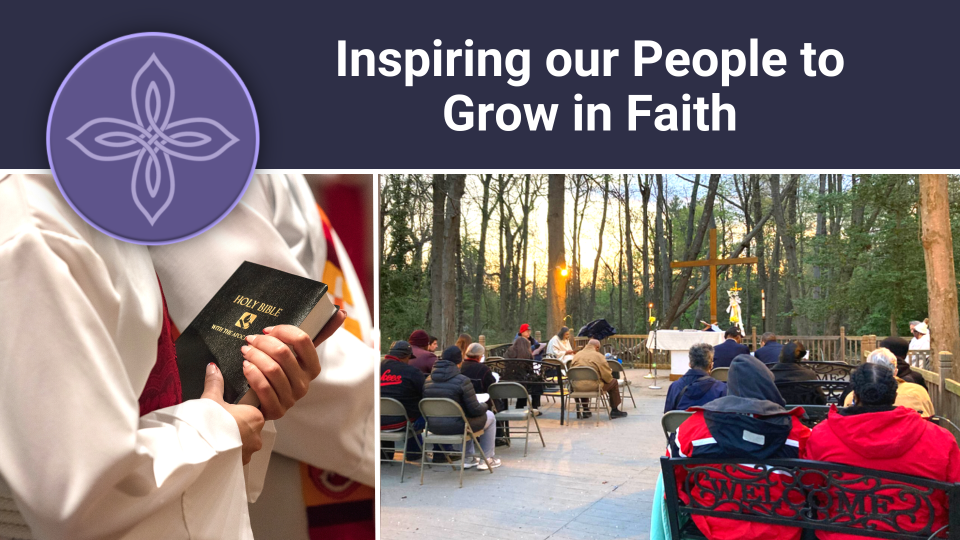
Let me begin with what we originally named as our second priority, for it has become my first:
Friends, we can only inspire others to do what we do ourselves, so let’s take a moment of personal inventory. How has my faith, how has yours grown in the past year or several years?
Specifically:
– How has God been present for you in the trials and blessings of your life?
– What has Jesus said to you through the words of friend or stranger, in your private prayer, or the sermon you thought was being preached just to you?
– What was it like when you felt stretched beyond your means and the Spirit met you in that place and saw you through?
I am persuaded that tending to our lives in Christ, personally and collectively, is the most important thing for us to focus on now. We’ve all had to spend enormous energy on institutional maintenance, and we still do. All of you are working so hard to keep things going, on what we might call the chores off church. I have no doubt that God is grateful to you for these efforts, and also concerned for you.
I’ll speak to the institutional maintenance side of things in a moment, because I must. But the reality is that tending to our spiritual lives is often the first thing to be sacrificed when workloads increase, right alongside self-care. Sometimes that can’t be helped, when we’re facing a crisis or when we’re responsible for another’s care. But we can also get accustomed to ways of living that are not life-giving. I know that I can. That’s why it’s on my heart to linger here, because it’s so easy to lose sight of what we need to stay rooted in Christ and draw our strength from Him. And because we cannot lead others on a path we aren’t walking ourselves.
Thankfully, it’s not all up to us. Jesus is drawing closer to us all the time, whether we call on Him or not. The Christian life, as you know, is one of response. Personally, this means taking the time to listen for His voice. Collectively, it means creating hospitable spaces for people to share their lives and explore the deeper questions of faith; it means teaching practices of prayer, forgiveness, hospitality and other ways we receive His living presence as the One who heals and forgives.
On my Sunday parish visitations, I often carry with me a Path of Discipleship card deck.
I use them to prompt spiritual conversations with vestry members and in forums. Typically I give everyone three cards and ask them to pick one whose question they would be willing to answer.
Here are a few examples:
-How does knowing that you are made in God’s image impact how you relate to others?
-Share an experience when your faith sustained you in a difficult time.
-When do you like to pray, and why?
People surprise themselves with how they respond. Lay leaders will tell me afterwards how refreshing it was to talk about faith in church, or at a church meeting, and how much they learned about the people they’ve been serving alongside for years.
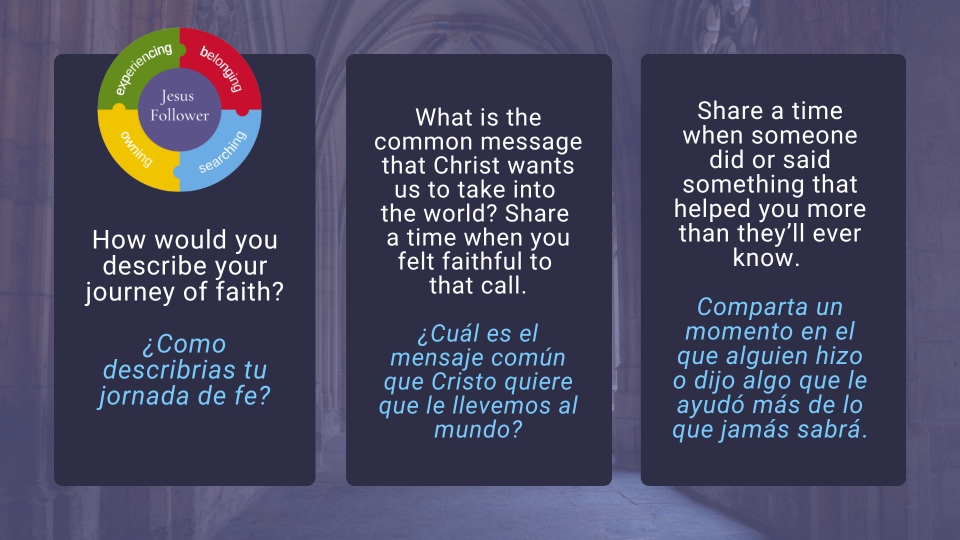
So let’s talk to one another right now. On the screen are three sample questions from the Path of Discipleship deck for adults. If you’re willing, pick one to talk about in conversation with two or three people sitting next to you. (If you’d rather not, that’s fine, but you might stay and listen to others.)
– How would you describe your journey of faith?
– What is the common message that Christ wants us to take into the world? Share a time when you felt faithful to that call.
– Share a time when someone did or said something that helped you more than they’ll ever know.
We have samples of these decks on one of the tables in the back, and information on how you can order more. They are one of many simple prompts to help us go deeper with one another.
However you do it, I encourage you to tend to your faith, and to foster as many ways as possible for your people to grow in faith. Congregations who do this well tend to grow numerically as well as spiritually, because they are cultivating a vital center from which all ministry flows.
As a diocese, we’ll continue to make resources available through the School for Christian Faith and Leadership–one of the most fruitful outcomes thus far of our strategic plan. Members of the diocesan staff are continually searching out new resources, and with gifted teachers throughout the diocese, they are creating more.
The Presiding Bishop’s office is also investing in free resources for these sacred conversations.
Here is one example: Intro video to Centered
Perhaps you noticed one of our own, Mildred Reyes, featured. Centered is available in English, Spanish and French.
In a moment, I’ll suggest ways that congregations might inspire people to grow in faith together. But to bring this section to a close, and to underscore the importance of growing in faith, beginning in 2023 I’m establishing a requirement for those brought before me or any bishop in this diocese for the sacraments of Confirmation, Reception, and the Renewal of Baptismal Promises. For those preparing people for these sacraments, I ask that you ensure that they are able to tell, in their own words, the story of Jesus.
I’d like those affirming their commitment to Christ to know His story as it’s told in Scripture, beginning with His birth; a few highlights from His teaching and healing ministry; an understanding of why He was controversial among the religious and political leaders of His day and what led to His crucifixion; and finally, what happened on the day Resurrection and when He appeared to His disciples. Knowing things about Jesus isn’t the same as having a relationship with the living Christ, but we can’t follow HIm if we don’t know about Him and His teachings.
The reason that I’ve decided to make this request is that I’ve come to realize how few of our people can tell His story with confidence. I’m sure most know more than they do, but His story isn’t accessible to them; it doesn’t dwell with them. Rest assured that there isn’t going to be a test that people have to pass, and I’m not asking you to totally re-work your preparation process. But all who follow Jesus deserve to have His story inside them in such a way that they can see their lives through His.
Because faith backgrounds and exposure to Scripture vary, this learning will be different for every person. There may be resistance, given our people’s reluctance to read the Bible and how badly Jesus is caricatured in the culture, which is all the more reason for our people to know Him well. We’ll work together, sharing resources and ways to help make Jesus’ story come alive. I welcome your suggestions, and I’ve asked the Rev. Amanda Akes-Cardwell, Missioner for Faith Formation and Development, to serve as a resource gatherer and source of encouragement in this endeavor.
I want our people to be confident in their faith, and for others to know that we in the Diocese of Washington are committed to growing in faith and inspiring others to do the same.
Before I turn to the second priority, let’s take a stretch break for 3 minutes, and I ask you to ponder what said thus far.
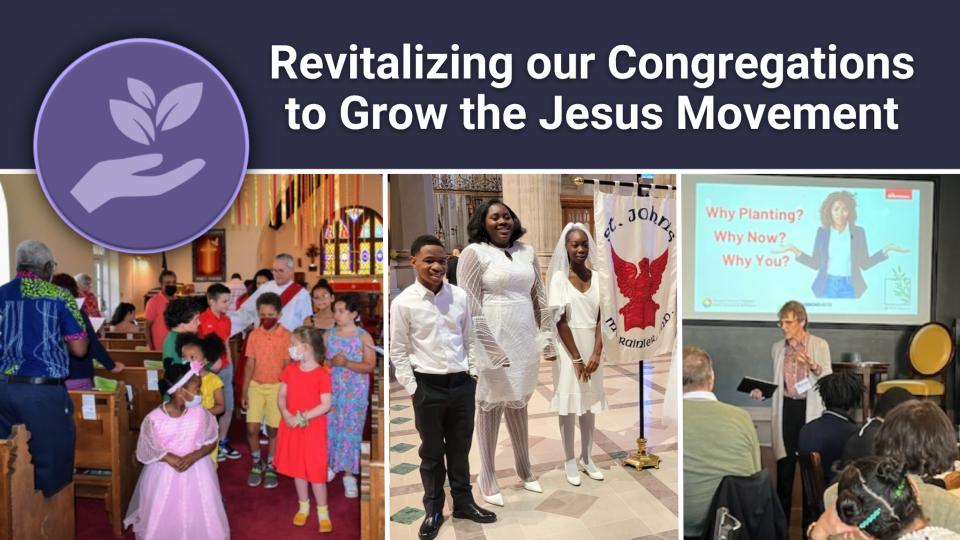
I turn now to revitalization.
Whether we can say that we are living in a post-pandemic world is for public health officials to determine. But we can now begin to assess in earnest the impact of the past three years on our congregations. Early assessments are both encouraging and worrisome.
Obviously, not all are in the same place. There has always been a wide spectrum of congregational life and real inequities among us. Broadly speaking, whatever trends of vitality or decline our congregations were experiencing before the pandemic have accelerated. There are a few exceptions, but not many.
Some EDOW congregations, by your own account, are feeling hopeful. For you, pre-pandemic life is returning, and energy is high, which is wonderful to see. Yes, there have been changes. Deaths and the Great Resignation have taken their toll. Those new to your communities aren’t as inclined to take up the work of church as others had in the past. Thus the work of ministry rests on fewer shoulders. That’s always been the case, but the trend has accelerated. It’s an exciting time for you, and leader fatigue is real.
The next faithful step for the more robust EDOW congregations may be one of pruning, letting go of some things that were once life-giving but are less so now, so that you can invest more in initiatives that your people are responding to. That’s one group among us.
The majority of EDOW congregations are doing okay–and okay is not bad–but you’re not seeing a return to pre-pandemic levels of engagement–most notably in worship attendance, financial support, and other metrics of vitality. Fortunately, you’ve learned through the pandemic how to offer worship and other gatherings via technology, which is a tremendous blessing for those who would have otherwise lost their connection to the congregations they love. But it also means that the work of maintaining your congregations rests even more heavily on you, and that your future depends on creating the kind of spiritual community that other people, not yet a part of you, would find compelling. And who may that be? It’s an important question for all of us.
In the diocese, we will continue to invest the lion’s share of our resources into congregational revitalization efforts. But these resources aren’t as helpful when limited leadership capacity works against your ability to do the very things needed for renewal. Those of you who are overcommitted tell us that you need a break, and you do. But as Carey Nieuhof observes, “the cure for an unsustainable pace isn’t more time off or a week at the beach. The cure for an unsustainable pace is to create a sustainable pace.”
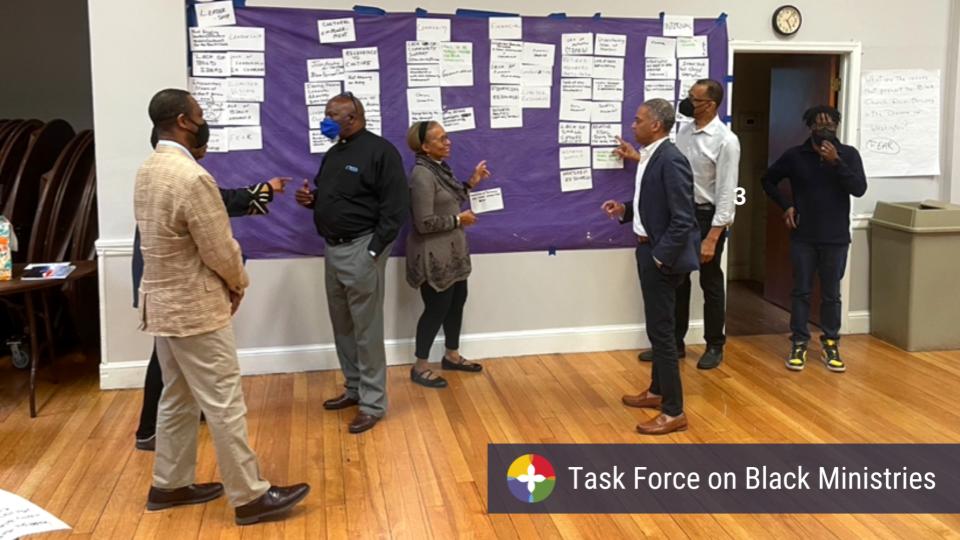
These realities are greater than many EDOW congregations can successfully address on their own. Leaders of some of our Black churches told us that at last year’s Convention, when they asked for the creation of a Task Force on Black Ministries, made up of members from Black congregations, to collectively address their situation and explore ways that they could thrive. They also wanted the rest of us to acknowledge the reality of racism in this diocese and its impact.
The task force worked under the guidance of its chair, the Rev. Ricardo Sheppard and Canon Anne-Marie Jeffery. You’ll find its final report in your Convention booklet beginning on page 51, which Diocesan Council accepted in October. In December, the Council voted unanimously to act on the task force’s first recommendation, which was to create an on-going Black Ministries Committee charged with taking the next steps of implementation. We are now accepting applications for service on that committee. The task force did courageous, prophetic work. Please join me in thanking the members of the task force here with us today.
Two weeks ago Canon Jeffrey and I had lunch with the six full-time rectors serving congregations in the region of Southern Maryland. To provide a bit of context for the rest of you, there are twenty EDOW congregations in southern Maryland, located in St. Mary’s and Charles Counties and the southern portion of Prince George’s County. The majority are served by part-time clergy. There are currently five southern Maryland congregations in clergy transition; two have been advertising their clergy position for months with no applications.
The clergy around that lunch table serve the strongest congregations in Southern Maryland, and they have a lot in common with many EDOW congregations in that they can afford one full-time priest and maybe one or two part-time staff. The clergy wear many hats, and by necessity they carry a heavy load of church chores, alongside a few heroically dedicated lay leaders who are among the invisible saints of this diocese.
When I asked the clergy what was hardest about their work, they spoke of the isolation, and how they would love to work on a team. Some have that sense of team with the deacons of Southern Maryland, for which they are grateful, but even so, loneliness is real. They spoke of the weight of church maintenance–be it the care of buildings, the out-sized list of expectations placed upon them or they place upon themselves, the desire to be able to do more of actual ministry when their days are consumed with chores.
Then I asked them what they loved most about their ministry, and their eyes lit up as they spoke. What was surprising to them was the variety of loves around the table–teaching, pastoral care, leadership development, the planning and leading of worship. Listening, I thought, surely we can find a way to create some kind of team approach here, allowing clergy to lean into their strengths and support one another, rather than being disparate solo operators responsible for everything.
I asked, “What if we invited your vestries to come together to hear you speak of what ministry is like for you, and to consider how they might partner so that all might benefit from your strengths and collectively address areas of weakness?” They all thought their lay leaders would be open to an exploratory conversation, which we will schedule for later this spring, and include interested vestries and clergy of neighboring congregations. I’m not talking about mergers here, but partnering through strength to build greater strength.
The experience of the Southern Maryland clergy is not unique. We could have the same conversation in every region, or with congregations across regions. This isn’t for everyone, and many resist even having the conversation. The most consistently expressed fear is the loss of parish identity, which I understand. Yet if we don’t do something to ease the burdens we place on our lay and clergy leaders, we can’t expect as fruitful a return from all our efforts in revitalization, nor can we realize our visions of justice. The trends of decline will continue.
With those willing to step out in faith in this way, we will explore how to build ministry capacity across congregations. It could result in joint efforts to create small group gatherings across a given region, to strengthen youth and young adult ministry, or to address the spiritual questions for those blessed to live past their 60s and beyond. You might discover efficiencies in building use and maintenance, or–the bane of every solo priest’s existence–the churning out of weekly bulletins.
These conversations are in keeping with a goal of our strategic plan to develop stewardship strategies so that congregations are less constrained by maintenance concerns. It is also an expression of pastoral concern for you, our leaders, so that you can live healthy Christ-centered lives.
Two final notes regarding revitalization. First–and this is a hard topic–we need to have an honest conversation regarding debt, with particular concern for those congregations carrying debt burdens beyond their assets or ability to pay, and those for whom deferred building maintenance expenses far exceed their members’ financial capacity. Taking on debt is necessary at times. Most congregations that do, typically during capital campaigns, have the means and a plan to meet their obligations. But there are some with burdensome debt that they’ve been carrying for decades. The diocese is a co-signer for four of these loans.
There isn’t a one-size fits all solution, nor is there a diocesan fund to pay for all loans and the millions in deferred maintenance costs that threaten the financial viability of other congregations. The hard truth is that the pandemic years have brought some of our communities to the edge of viability. Canon to the Ordinary Andrew Walter will be guiding our efforts to face these realities and work toward possible solutions. These will not be easy conversations to have, but the time has come.
Second–on a hopeful note–God continues to raise up among us those who are longing to create something new. Many of you are here today, and God has placed on your hearts visions of what could be. You are eager to experiment, engage with those you know would love The Episcopal Church if only we met them where they are instead of expecting them to come to us.
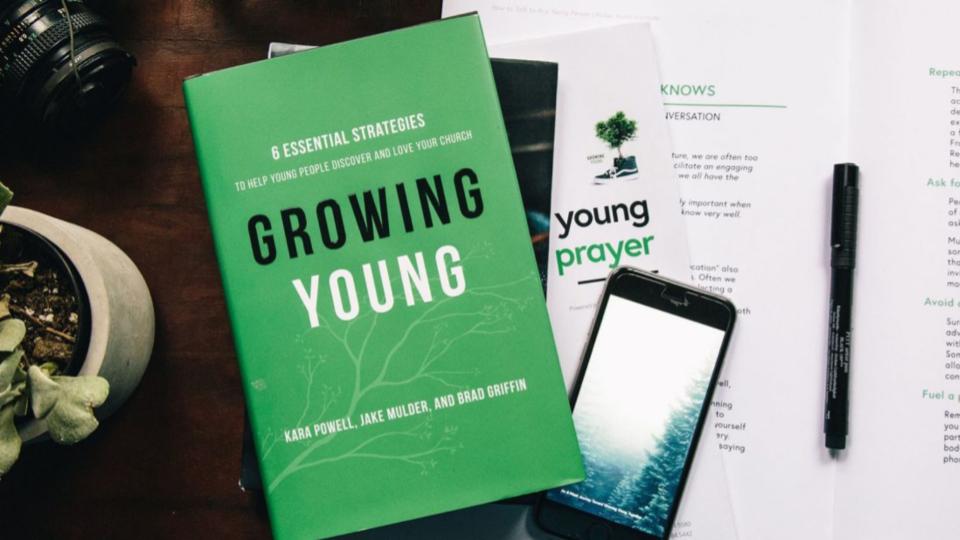
Last year, we took the first steps in fulfilling our strategic goal of growing younger, to start or restart up to three congregations with rising generations in mind. Leaders of six congregations are part of our first Growing Young cohort, exploring and sharing ways they might support, encourage and engage rising generations.
And some of us are studying church planting and exploring how and where we can begin to invest staff and resources toward new expressions of Episcopal community. We’ll continue to take steps in 2023, focusing our energies in two places of greatest potential, identifying leaders, and creating ministry teams.
Let me close this section with words from our Presiding Bishop in response to the 2021 Parochial Report data from across The Episcopal Church:
It’s important to remember that the institutional church as we know it has not been the form that Christianity has always taken. The essence and core of the church is not its outward form, which will always change over time. The essence and core is Jesus Christ–his Spirit, his teachings, his manner of life, his way of love–and the movement he founded cannot be stopped. We need our church leaders, both ordained and lay, to embrace this moment of reinvention, and the folks I see rising up are going to bring us into a profoundly different age.1
I see the same rising up. Part of our work now is to create space and provide resources for those who feel called to lead us through this moment of reinvention.
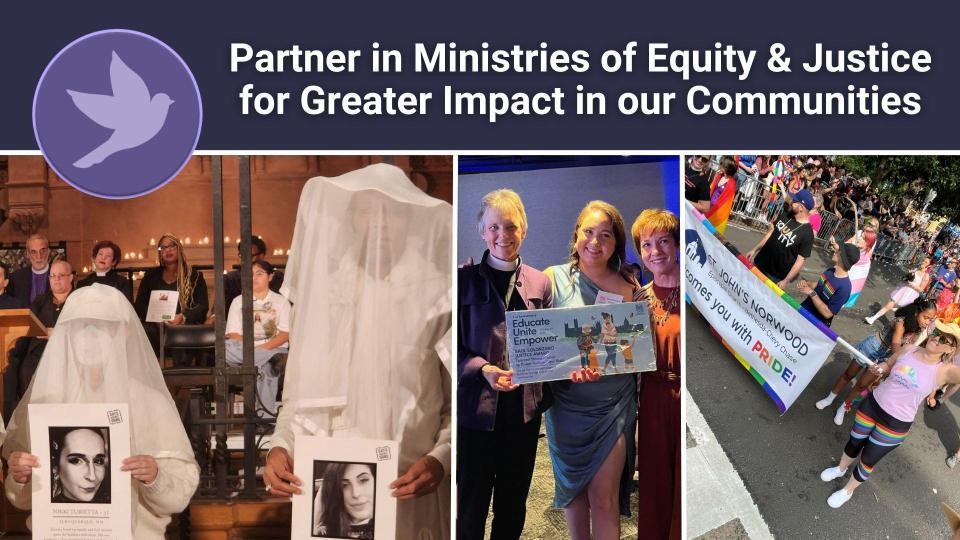
The area of equity and justice is where I see manifestations of sacrificial love, courage, and cooperation across the diocese that take my breath away. The work is hard, but also a source of energy and joy.
The Rev. Meredith Heffner at St. James’ Church in Potomac told me recently that while some traditional aspects of congregational life haven’t come back after the pandemic lockdown, there are new people in church who are enthusiastic about St. James’ efforts to address racial injustice, care for the earth, and promote mental health. Those ministries, she said, are talking off.
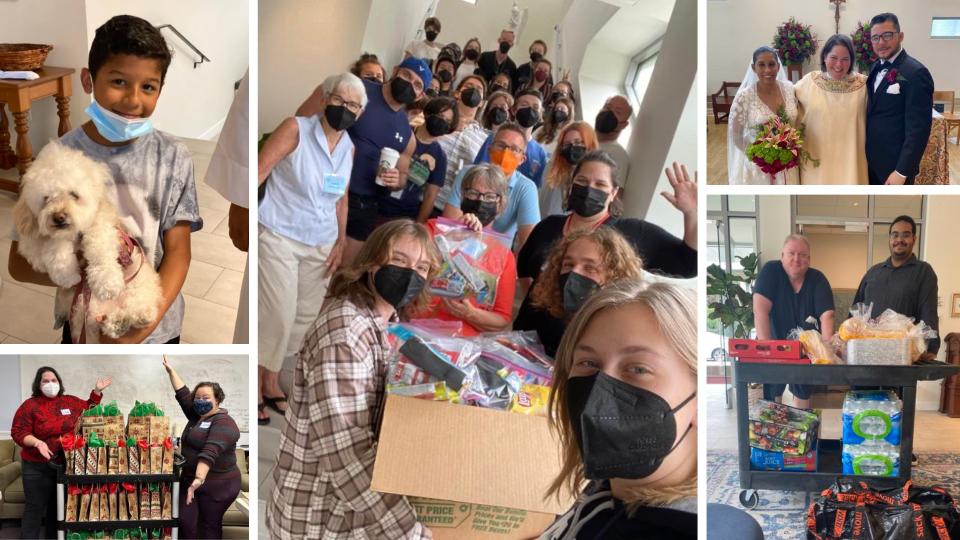
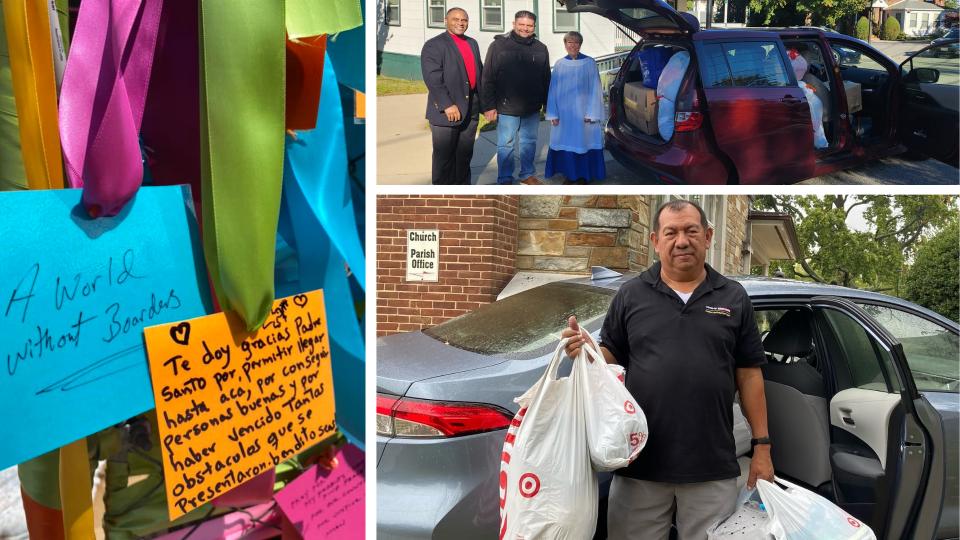
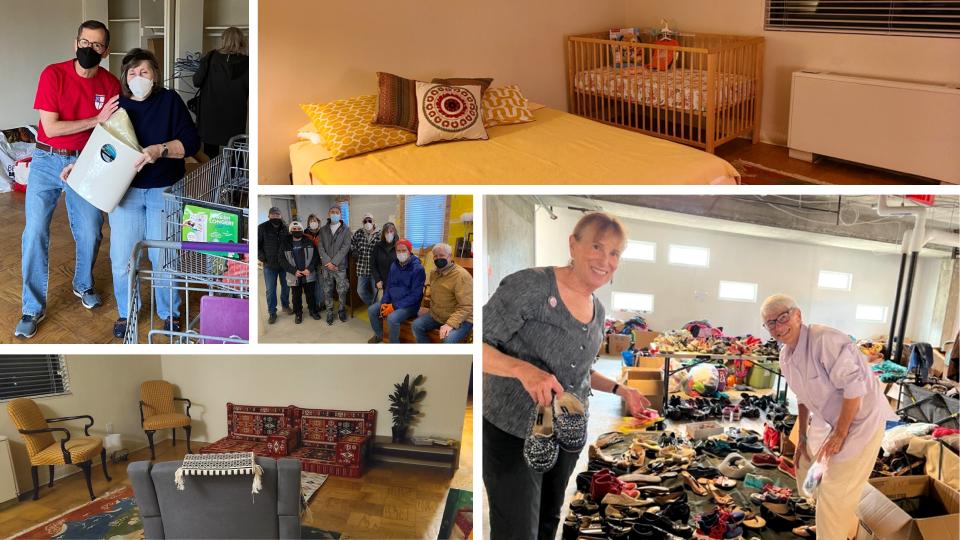
So, too, at St. Thomas’ in Washington, DC, a congregation that in the words of their rector, the Rev. Lisa Ahuja, is “leaning hard into being a blessing to their community.” They are meeting the physical and spiritual needs of migrants arriving by bus to Washington, DC from border states, many dropped off at all hours of the night with nothing more than the clothes on their backs. Other congregations have been part of this tremendous collective effort.
St. Matthew/San Mateo in Hyattsville is providing temporary housing for migrants from Venezuela, and collecting food, clothing, and household items. Other Spanish-speaking congregations are pitching in to help.
Meanwhile, our effort to welcome refugees from Afghanistan continues across the diocese. Many of you are helping to sponsor Afghan families, secure housing, medical care, and employment.
Still others of you are addressing rising food insecurity throughout the diocese, opening your churches as distribution sites and respite centers for people experiencing homelessness. Others have adopted nearby public schools or hospitals, or are working in partnership with Samaritan Ministry of Greater Washington, the Bishop Walker School, and others. We’ll highlight some of your efforts throughout the day, but friends, they are everywhere
One of things I love about this diocese is how quietly and matter-of-factly so many of you simply do what needs to be done and make collaborative connections among yourselves. I wish that I could lift up every example that I know of, which is no doubt a small percentage of what you do.
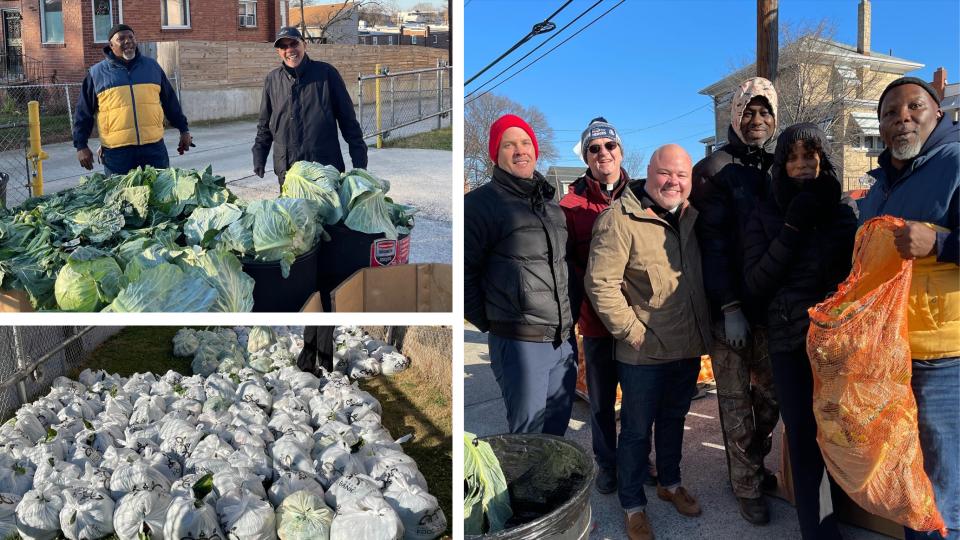
But here is one: Church of the Atonement in Southeast Washington is a fresh produce distribution site. The food bank delivers pallets of fresh produce to the church once a month. Members from Atonement bag the produce, and community food pantries come and pick it up. Atonement prepares up to 500 bags a month. And now Christ Church, Georgetown is partnering in this effort.
In our endeavors to partner for greater impact, diocesan deacons have been instrumental. The ministry of our deacons–now 40 strong–helps us show up where love and justice are needed. We will celebrate the deacons’ ministry later today, and that of Archdeacon Sue von Rautenkranz, who is retiring.
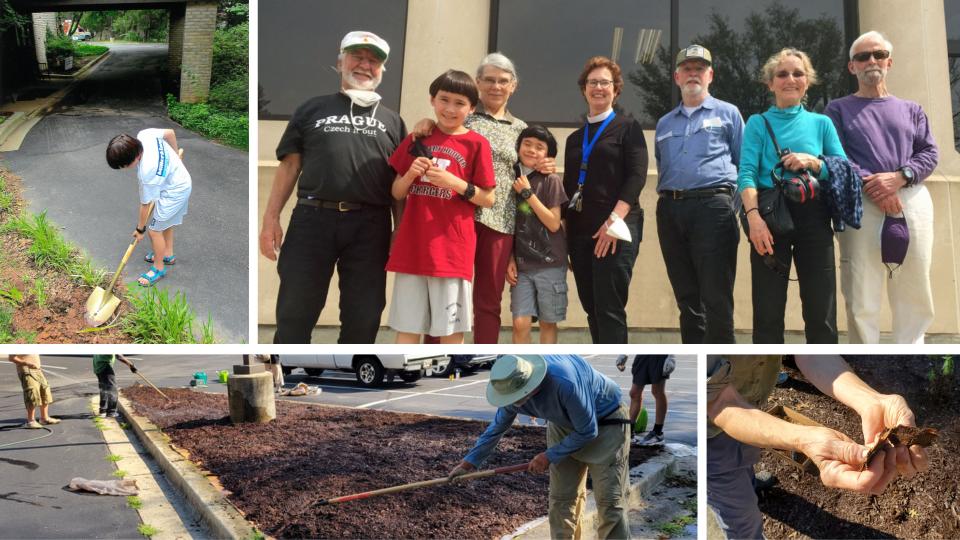
At last year’s Convention, we commissioned a Diocesan Creation Care Committee, to amplify and build upon congregational initiatives to address the climate crisis and other environmental concerns. Many of you are taking steps in environmental stewardship–reducing single use plastic, recycling, cleaning trash, and putting solar panels on your buildings. You are our inspiration. Later in the Convention, we’ll consider a resolution sponsored by members of the Creation Care Committee, because their next step is to encourage us to set collective goals–the first of which is to plant trees and protect natural habitats, joining with Anglicans around the world in an initiative known as the Communion Forest.
The last area that I’ll mention is on-going efforts to face and address racial inequity and injustice. Many EDOW congregations have held multiple sessions of Sacred Ground, a small group based curriculum looking at the reality of race in America. For those of us who are white and were raised to think about our racial history as little as possible, Sacred Ground is an eye-opening and at times heart-breaking experience. We can’t help but see the history of where we live in Maryland and the District of Columbia through the lens of race. Our congregations are part of that history and present-day reality. There is need for reckoning and repair. And we have a part to play.
When the word “reparations” first became part of our lexicon, I resisted its implications for us. But the more I learn and engage, the greater my understanding and commitment to reparations grow. While I cannot tell you how to vote on the reparations resolution or any other, I want you to know the seriousness with which I and members of the diocesan staff are embracing this work. We have an opportunity to do something brave that will bring life to others and to ourselves, as we take faithful steps toward the realization of Beloved Community.
If what I have spoken of today seems like a lot, that’s because it is. Considering the whole of our diocese and discerning God’s spirit among us is a big deal. It is our work today. Thank you for being here.
When we launched the strategic plan in 2020, we envisioned it as a five-year process, meaning that in 2025, we would assess all that we had learned and accomplished. I have proposed to diocesan leadership that we extend the implementation period for one year, which gives more time for the initiatives we’ve begun to bear fruit, and takes into account all that we hadn’t anticipated. I promise a complete assessment in 2026, and an evaluation of the strategic planning process itself.
I realize that the strategic plan isn’t something you think about every day, if at all, except on days like today. That’s all right, because I do, and so does your diocesan staff–that’s what you pay us for. It’s what guides our work.
2026 is also the year that I will turn sixty-seven and will have completed fifteen years as your bishop. That is when diocesan leaders and I will discern the next faithful steps for the episcopate. In all likelihood, we will call for the election of my successor. I love my work, but it’s a big job. As I get older, I realize that the future leadership of our diocese belongs to those coming up behind me. Part of my job now is to identify, encourage and make space for rising leaders, and to provide a strong foundation for the blessed person who will be your tenth bishop. To that work I remain wholeheartedly committed.
I am eligible this year for a three-month sabbatical, but for both personal and vocational reasons, this isn’t a time for me to be gone for that long. So I’ve asked those who hold me accountable to my work if I might take a one-month sabbatical during the summer for the next three years. They’ve agreed, and thus I will be on sabbatical leave in July. My plan thus far is to go somewhere where I can take a very long walk, maybe dare to get on my road bike again, play with my grandchildren, and return ready to continue the ministry God has entrusted to us all.
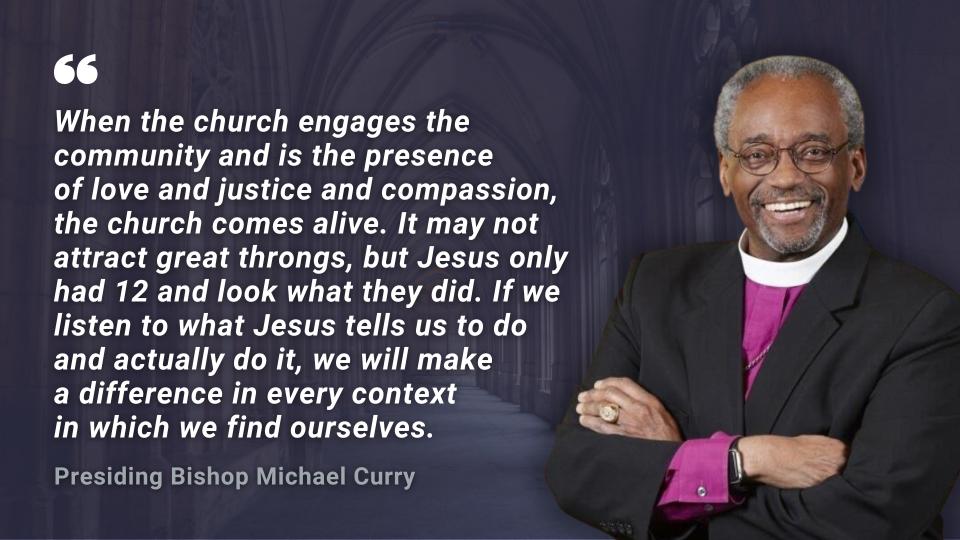
I give the final word to Presiding Bishop Michael Curry, who recently said this:
When the church engages the community and is the presence of love and justice and compassion, the church comes alive. It may not attract great throngs, but Jesus only had 12 and look what they did. If we listen to what Jesus tells us to do and actually do it, we will make a difference in every context in which we find ourselves.2
That, my friends, is our call. Thank you for saying yes. I add my yes to yours. Together, we are still here.
May I never cease to thank God and you for the privilege of serving as your bishop.
1https://www.episcopalchurch.org/publicaffairs/episcopal-church-2021-parochial-report-data-now-available/
2https://lasentinel.net/episcopal-diocese-unites-with-mayor-bass-to-fight-homelessness.html

by Bishop Mariann | Jan 28, 2023
Immediately Jesus made the disciples get into the boat and go on ahead to the other side, while he dismissed the crowds. And after he had dismissed the crowds, he went up the mountain by himself to pray. When evening came, he was there alone, but by this time the boat, battered by the waves, was far from the land, for the wind was against them. And early in the morning he came walking towards them on the lake. But when the disciples saw him walking on the lake, they were terrified, saying, ‘It is a ghost!’ And they cried out in fear. But immediately Jesus spoke to them and said, ‘Take heart, it is I; do not be afraid.’Peter answered him, ‘Lord, if it is you, command me to come to you on the water.’ He said, ‘Come.’ So Peter got out of the boat, started walking on the water, and came towards Jesus. But when he noticed the strong wind, he became frightened, and beginning to sink, he cried out, ‘Lord, save me!’ Jesus immediately reached out his hand and caught him, saying to him, ‘You of little faith, why did you doubt?’ When they got into the boat, the wind ceased. And those in the boat worshiped him, saying, ‘Truly you are the Son of God.’
Matthew 14:22-33
The theme of this Convention, indeed, for all of 2023, is Taking the Next Faithful Step. It is an image that evokes the physical act of moving toward a destination. But as those who cannot physically walk know very well, not every faithful step is made with our feet. We take faithful steps with our hearts and minds, in our relationships and commitments. Sometimes taking the next faithful step doesn’t involve movement at all. Other times, it necessitates looking back before moving forward, or turning around and going in a different direction.
Taking the next faithful steps involves taking stock of where we are. Thus the step you take for yourself, and for the community or ministry that you represent here will be specific and unique to you. To be sure, we have challenges and opportunities in common, and a singular call, as Christians, to know, love, and follow Christ, but how that call is lived out, and what step you are being summoned to take now is rooted in your particular role and context.
For example, in the fantastic story that we’ve just heard of Jesus inviting Peter to get out of the boat and walk on water, it’s worth noting that Jesus didn’t call all the disciples to join him there. As I heard one preacher counsel the members of his congregation, “If Jesus isn’t calling you out on the water, best stay in the boat.”
The image of Peter walking on water is symbolic of those times when what’s before us isn’t merely a step, but rather a leap of faith–those marking moments when we know that we’re being asked, either by life or by Jesus himself, to do something that we’ve never done before and that seems impossible, or, at the very least, really hard. As we step out onto that proverbial water, we know that we are beyond our capacities and the ability to control outcomes. It shouldn’t surprise us when we sink a time or two.
Looking back on your life, and certainly in the past few years, I suspect that you’ve all had at least one walking-on-water experience, and perhaps more. And that more than once, you’ve been in the position of the other disciples, watching from your place of relative safety as your loved ones were being called to step out on water of their own. As much as you may have wanted to, you couldn’t go there with them.
Bring one of those moments to mind now, if you can. Acknowledge the courage taking such a faithful step required of you, or what it felt like to watch while another ventured out. What, as a result of your experience, have you learned about yourself, and how God moves in your life?
There is another less dramatic but no less courageous way that we can experience the call to take the next faithful step. I’m speaking of those times when Jesus isn’t standing in front of us with his arms stretched out; when perhaps we’ve started on a path that seemed compelling at the onset, but is not clear now, and we wonder if we’ve made a mistake; when we’ve encountered obstacles that have so consumed our energies that we feel stuck, or off course.
These are the times when long-range vision goes dark. As the author E. L. Doctorow once described the process of writing, “It’s like driving a car at night.” His advice to other writers was to keep going. ““You only see what the headlights light up, but you can make the whole trip that way.”1
One biblical story that speaks to taking the next faithful step in the dark is that of Moses and the people of Israel moving through the wilderness toward a land of promise. The beginning of the journey could not have been more dramatic and the call more clear. God freed them from slavery, parting the waters of the Red Sea so that they could escape their captors, and God set them on a journey in the wilderness toward a new life of promise.
But the journey took a lot longer than anticipated. It wasn’t an easy road, and the way forward wasn’t clear. More than once, the people seriously contemplated turning back. And not everyone made it through the wilderness. Some interpretations of that iconic story suggest that the pilgrimage generation’s task was to start the journey but not arrive at the destination–which is heartbreaking to think about, but for those of us in the latter years of our lives, that vocation becomes far more real.
I’d like to dwell here for a moment, because those of us who are sixty or older make up the majority of this gathering, and in many of our congregations we are the most influential, because frankly, we show up more and we’re paying the bills. But when the way forward is unclear, our natural temptation is to look back and to hold onto what has the most meaning for us. There’s nothing wrong with that, except that the focus is on us and our preferences, which can blind us to what others need now, particularly those we hope will join our communities. And then we wonder why they don’t come, or don’t stay.
For us, the next faithful step is to acknowledge the grief we carry, the feeling that we’re letting our ancestors down, and the worry that what we value most is being lost or discarded, and that we will be discarded. It’s a real fear, and I hear it across the diocese. In truth, sometimes I feel it myself.
Almost every time I talk about our diocesan priority, as expressed in our strategic plan, to invest resources in rising generations, so that we might become a church that our children and grandchildren will find spiritually compelling, someone will give voice to what all of us over sixty are feeling–”Don’t forget about us old people.” Or, “we don’t want to lose our church’s identity,” which is another way of saying, “We don’t want to lose our identity.” The work of creating the kind of churches that our children and grandchildren will want to attend depends upon us old people giving of ourselves and our resources in ways that preserve the best of our traditions, but allows those coming after us to tell us what they need, what speaks to their hearts and inspires their souls.
It’s not as if everything one generation values is of no use to those that come after. My musician son, now in his thirties, prefers to listen to vinyl records even as he produces music with the latest high tech equipment. He just traded his guitar, that was maybe five years old, for one built in 1940, which he played at his grandfather’s funeral two weeks ago amplified by technology that didn’t exist when that guitar was made.
Contemplative prayer practices dating back to monks from the 4th century continue to nourish the modern soul, as reflected in the number of apps you can download on your smartphone to help you engage them. Old hymns find new settings and can find their place among other musical expressions. Cathedrals like this one, and the beauty of all our church buildings crafted by earlier generations, still beckon, but not if they look as if no one has updated their interiors, replaced the carpeting, or even cleaned the closets since the 1970s.
Let me return now to the image of taking the next faithful step when we can’t see very far ahead, because from a spiritual perspective, that’s where we live most of our lives. The moments of high drama are relatively rare compared to the long stretches of making our way in the relative dark of not knowing. That’s especially true after an experience of trauma, or when we’re tired, feeling a bit stuck, or facing realities that seem to be insurmountable. That’s when taking one small, faithful step, followed by another, can make all the difference, even when it feels we’re not making any progress at all. As I’ve been speaking, I wonder if an example of this kind of faithful step taking has come to mind for you–either for yourself or your community.
The renowned depth psychologist Carl Jung, who was deeply attuned to the spiritual dimensions of life, kept up a lively correspondence with people all over the world. People would write to him for all manner of advice. Two letters, and his responses, speak to this idea of the next faithful step.
The first letter was written by a woman who wanted to know, broadly speaking, how best to live her life. Jung responded, in part, with these words:
Your questions are unanswerable because you want to know how one ought to live. . .There is no single, definite way . . . The way you make for yourself, which you do not know in advance, simply comes into being of itself when you put one foot in front of the other . . . if you do with conviction the next and most necessary thing, you are always doing something meaningful and intended by fate.2
What is the next and most necessary thing for you right now, and for the community you represent? It’s a compelling question for all of us, and sometimes can help us keep going when our long-range vision is out of focus.
Another man wrote to Jung who had clearly done things that he now regretted and was desperate for guidance in how to make amends. To him, Jung replied:
Nobody can set right a mismanaged life with a few words. But there is no pit you cannot climb out of provided you make the right effort at the right place. When one is in a mess like you are, one has no right any more to worry about the idiocy of one’s own psychology, but must do the next thing with diligence and devotion and earn the goodwill of others. In every littlest thing you do in this way you will find yourself. [Everyone has] to do it the hard way, and always with the next, the littlest, and the hardest things.3
I find Jung’s counsel incredibly helpful when I’ve made a mess of things, which I have done in my episcopacy, or when I realize that my intentions to do good were experienced as harmful to someone else. It doesn’t help to justify my actions or make excuses. I simply must do what I can to make amends and restitution, one step at a time. Those who walk the path of recovery and the Twelve Steps know this well.
That’s the approach I am taking, as your bishop, as we face our historical and contemporary complicity in systemic racism. It’s a long journey of reparation–making amends for harms done one faithful step at a time. Some of you may be learning of these steps for the first time, and your congregation hasn’t yet engaged the issues that reparations raises for us. All I can say to you is that these issues are real, they run deep, and those of who are the beneficiaries of white supremacy in our society can only feign ignorance or innocence for so long.
In this and in all aspects of your community’s life, and for us as a diocese, Jesus will sometimes call us to bold steps out onto the proverbial water. But on most days, and in most things, the next faithful step for us is more humble, because we’re in the valley, not on the mountain, and we’re walking more by faith than by sight. Of course we get tired. We’d be made of stone not to feel discouraged. Grief is real. But here’s the paradox of faith, once we accept grief and the struggles of life, our capacity to experience joy increases, too. As Jesus told us, the way of the cross is the way of life.
The planners of this Convention have worked hard to highlight signs of hope and goodness throughout the diocese for us to savor and to celebrate, and to encourage each other as we make our way. We will remind you of the resources available to you as you take the next faithful steps in your context, and of some of the faithful steps before us as a diocese–many of which are of the humble, next-most-necessary-thing variety, and a few are more like walking on water.
May we be open to the Spirit of God moving among us, giving us the consolation, strength, and courage to take our next faithful steps, and to trust that the One who has begun a good work in us will see it through to completion. Amen.
1https://www.trolleyjournal.com/doctorow-kennedy
2Quoted by Maria Papova in The Marginalian, a weekly composite of quotes and reflections
3Quoted again in The Marginalian