by Keely Thrall | Feb 12, 2024
In our polarized and often poisonous politics, it can be challenging to even talk to someone who has different beliefs. Our relationships are strained, loving our neighbor feels impossible and we’ve lost a sense of empathy for each other. Together with Wesley Theological Seminary and the Wheatley Institute at Brigham Young University, the Cathedral will explore how to repair the breaches in our civic life. You’re invited to join us in-person or online for this special forum.
Republican Gov. Spencer Cox (Utah) and Democratic Gov. Wes Moore (Maryland) will dig into Gov. Cox’s initiative to “Disagree Better,” followed by a conversation of leaders, including ABC’s Donna Brazile, attorney Rachel Brand, legal scholar Ruth Okediji, and activist Tim Shriver, who are trying to model a new kind of politics. Columnist Peter Wehner will join Joshua DuBois, Director of Faith-Based and Neighborhood Partnerships for the Obama Administration, to uncover how to aim higher and do better.
Free and open to the public, but please register in advance for both in-person and online attendance.
by Rudy Logan | Feb 1, 2024
In 1915, Historian and Journalist Carter G. Woodson traveled to Washington, D.C., to participate in the commemoration of the Emancipation Proclamation. This trip inspired him to create an organization devoted to the scientific study of Black life, the Association for the Study of African American Life and History. On February 7, 1926, Woodson established Negro History Week. He chose the month of February because it was the birthday month of two key figures in U.S. and Black history, Frederick Douglass and Abraham Lincoln. Woodson built upon rituals of celebration, as Black people had already been commemorating the birthdays of Douglass and Lincoln on the 12th and 14th of February. With Negro History Week, Woodson sought to go further than the commemoration of these two giant figures. He believed in the power of the collective as agents of social change, educators, and advocates for the study of Black life.
Woodson was a child of the enslaved and grew up toiling alongside Civil War veterans and those who were rendered illiterate due to anti-black chattel slavery. Long before he became the second Black person to earn a Ph.D. from Harvard, he knew people for whom it was criminal to read and be educated. From these roots grew the inspiration for Negro History Week and a lifelong mission to educate the Black masses and the rest of the country about the evocative and soul-stirring elements of Black history that we bear witness to today. Woodson helped catalyze a movement born out of struggle—transforming knowledge and improving race relations. Today, we observe Black History Month with the same goals in mind, seeking liberation through truth-telling, emancipatory representation, education, and social transformation.
On a personal note, the study of Black History has been a medium for educational growth and greater self-awareness, impressing upon me that I am somebody. As an undergraduate student, I was introduced to the work of Black Liberation Theology by one of my professors at St. John’s University in Queens, New York. I was exposed to the transcendent relation between what we know about the historical Jesus as a Jewish Palestinian imprisoned under Roman imperial occupation and victim of capital punishment via the Cross and the experiences of black people rendered marginalized and hung on lynching trees in Jim Crow USA.
The Cross and the lynching tree symbolize a similar terror as elaborated in one of James Cone’s seminal texts—The Cross and the Lynching Tree. Both are utilized as instruments of the dominant against the least of these to murder, provoke fear, and maintain control over subjugated groups of people. Upon learning this connection, I realized that to be Black and Christian was not irrational, given the ways in which Christian theologies had been appropriated to steal, brutalize, and displace others, but that to be Black and Christian was ideologically and spiritually consistent, given what we know about the person Christ. This is in part what the study of Black History has done for me as a Black person and follower of Jesus. Black History illuminated that lines between the secular and sacred are imaginary—that to share about Black History is to engage in an anti-racist and freedom-driven practice and spiritual call to action with structurally marginalized groups, both black and across categories of difference.
Nationally, ongoing attacks against Diversity, Equity, and Inclusion initiatives (DEI) show us that Woodson’s vision for what would eventually become Black History Month is as critical as ever. To suppress such efforts is to disappear lived realities of historically marginalized communities subject to routine and overt forms of violence. From learning about structural injustice to the strange fruit, the slave ships, segregated lunch counters, and neighborhoods, education illuminates the full depth of life and helps us chart restorative paths forward. Information—or history rather—equips us with the knowledge to speak and act with sobering clarity and purpose. This is the work of Black History Month—to lift up what has shaped us, our contexts, living within and around us so that we may activate our deepest capacity to be stewards for collective liberation.
Past and present realities illustrate how invaluable our efforts, led by the Committee on Diocesan Reparations have been to excavate our history and employ what we have learned for reparations and (re)conciliation efforts. At this moment when Diversity, Equity, and Inclusion (DEI) initiatives and Black Studies are under assault across the country, Carter G. Woodson’s vision for Negro History Week and Black History Month is essential to our journey for liberation. It confronts us with an imperative task to continue our race education work within the Diocese of Washington and to support those within our geography employing Black, race-conscious education and initiatives to advance our collective knowledge, well-being, and freedom from the lies and violent mechanisms of anti-black racism.
Black History Month is a clarion call—a reminder that the souls of Black folks and our contributions toward realizing a true multi-racial democracy and equitable society aren’t reducible to a single week or month but instead are integral parts of an ongoing struggle to realize just futures for all.
To learn more about Carter G. Woodson, the evolution of Negro History Week to Black History Month and the long history of Black educators using Black History as a framework for advancing anti-racist education, check out the following books:
by Allen Fitzpatrick | Dec 5, 2023
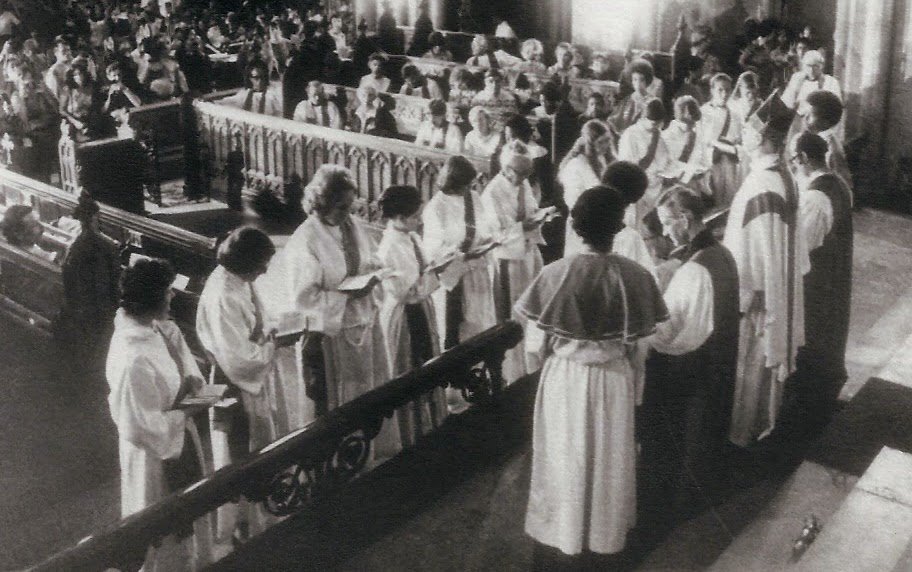
Join us for a film screening of Philadelphia 11
In 1974, in an act of civil disobedience, a group of women organized to be ordinated as Episcopal priests. Meet the women who built the movement that transformed an age-old institution and challenged the very essence of patriarchy within Christendom.
Screening in the Nave with potluck reception to follow in the Parish Hall. There will be a good will donation (suggested $10) to cover the cost of the screening with and remainder to go to Shirley’s Place.
Bring share with friends and fellow Episcopalians!
Learn more about the film
by Allen Fitzpatrick | Nov 3, 2023
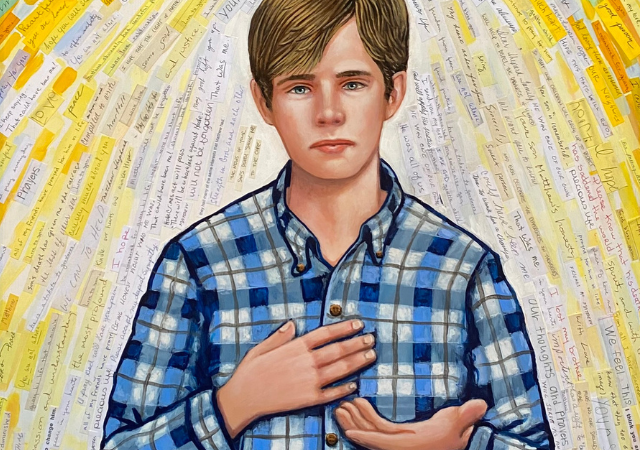
Please join us at the Cathedral as we commemorate Matthew’s birthday and mark the twenty-fifth anniversary of his death. In prayer, song, and word, we will remember Matthew, reflect on his commitment to a more caring and just world, and resolve to embrace the dignity and equality of all people. The Reverend Anne Kitch, a Shepard family relative who preached at Matthew’s funeral in 1998, will offer the homily.
Matthew was interred in the Washington National Cathedral Columbarium on October 26, 2018, following a service of thanksgiving and remembrance in the Cathedral nave, and we honor his legacy with an annual service on his birthday. Those wishing to visit St. Joseph’s Chapel, Matthew’s final resting place, may do so prior to or immediately after the service.
Live webcast: https://www.youtube.com/watch?v=J0VGWyE6Tw0
ASL interpretation is offered for this service.