by Anne-Marie Jeffrey | Mar 31, 2022
Your ancient ruins shall be rebuilt; you shall raise up the foundations of many generations; you shall be called the repairer of the breach, the restorer of streets to live in.
Isaiah 58 12
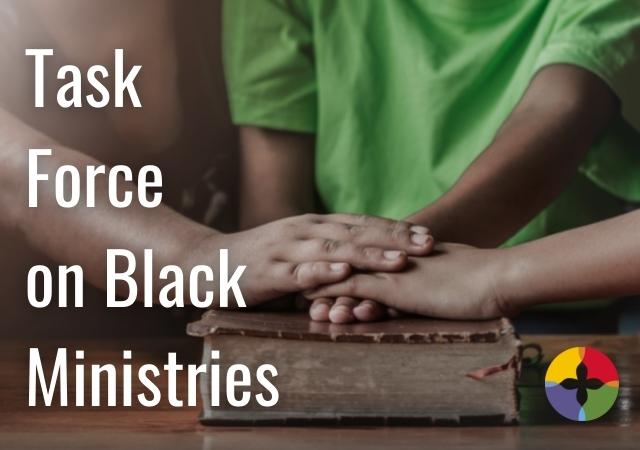
On Thursday, March 17, members of the newly formed Task Force on Black Ministries convened for the first time to consider its charter mission “to study the revitalization of Black churches in the Episcopal Diocese of Washington…and make recommendations to the Diocesan Council to enhance, revitalize, and empower Black churches and Black parishioners [in the diocese]…” by September 1, 2022.
We began by sharing our thoughts with one another about what the work involved would entail. Immediately the power of listening became apparent as we began to see ideas coalescing and building on one another. The Rev. Antonio Baxter, one of the cosponsors of the resolution that brought this task force into being, shared his passion for ensuring that the Black church continues to evolve and play a role in our communities, particularly in the lives of rising generations – millennials and generation Z. He described the need for the Black church to step in where, at times, there seems to be no hope. Others voiced similar visions for Black churches to once more serve as centers of community support.
From this rich conversation, our first essential task took shape–to reach out to members of our Black congregations for one-on-one conversations. What issues do they see affecting the Black church? What can we do as a diocese to enhance, revitalize, and empower Black church and Black parishioners? And where do we hear the Holy Spirit in this shared work?
The task force members agreed: it will be a challenge to fulfill its mission in the relatively brief timeframe between now and September 1. But each of us is grateful that this task force has been formed. And I am personally grateful for the task force members’ commitment to this important work and the space they’ve made in their busy schedules. We are all motivated to get our work underway.
We invite your prayers for the work ahead, the Black church, and the lay and clerical members of the Task Force on Back Ministries:
Sonia Anderson, St. John’s Mount Rainier, MD
The Rev. Antonio Baxter, Atonement, DC
Timothy Q Grandy, Calvary, DC
The Rev. Caron Gwynn, UBE representative
The Rev. Canon Michele Hagans, Washington National Cathedral
The Rev. John Harmon, Trinity, DC
Rosemary Latney, Our Savior, Brookland
Sibyl Moses, St. Augustine’s, DC
Diane Quinn, St. Luke’s, DC
Charmaine Romear, Trinity, DC
Paul Ruffins, St. John’s, Mount Rainier
The Rev. Ricardo Sheppard, Atonement, DC, Chair of the Task Force
Andrea Thomas, St. Georges, DC
The Rev. Canon, Anne-Marie Jeffery, EDOW staff liaison
by Bishop Mariann | Feb 10, 2022
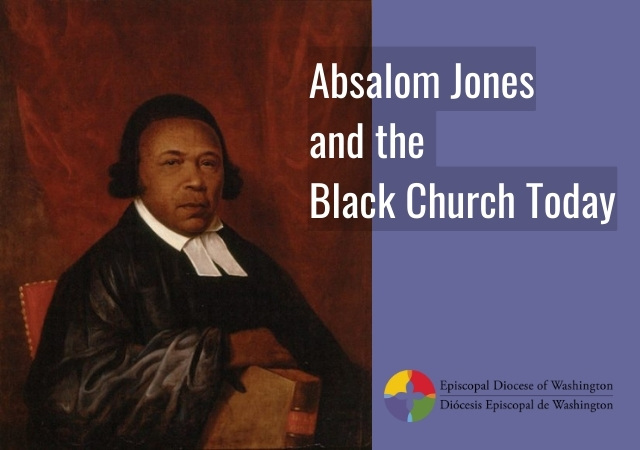
The life and legacy of The Reverend Absalom Jones is a testament to the resilience of the human spirit, his faith, and his commitment to the causes of freedom, justice and self-determination.
From the website of The African Episcopal Church of St. Thomas
On February 13, The Episcopal Church commemorates the life and ministry of Absalom Jones, the first African American to be ordained in The Episcopal Church.
On January 29, Diocesan Convention passed a resolution that directs our collective energies toward the revitalization and empowerment of Black churches and Black parishioners in the Diocese of Washington.
I am persuaded that these two events are related. The church Absalom Jones founded in Philadelphia is one of the most vibrant Black Episcopal Churches in the country. I pray that Absalom Jones’ spirit, faith, and commitment will guide our work.
For those who don’t know his story, Absalom Jones was born into slavery in Delaware on November 6, 1746. While enslaved, he learned to read. When the family that enslaved him moved to Philadelphia, he was able to work evenings and keep his earnings for himself. In 1770 he married Mary Thomas, an enslaved woman, and he purchased her freedom so that she and their children might be free. 14 years later, he obtained his own freedom through manumission.
With his friend Richard Allen, Absalom Jones organized the Free African Society. Both Jones and Allen were also preachers at St. George’s Methodist Church, a mixed-race congregation. As the Black membership grew, White elders responded by segregating worship, requiring that blacks sit in the balcony.
One Sunday morning, as Absalom Jones was praying in a front pew, an usher attempted to forcibly remove him. Jones resisted removal, finished his prayers, and walked out of the church. All the Black members followed and together they formed a new congregation. Richard Allen chose to establish an independent Black church, what would become a new denomination, the African Methodist Episcopal Church (AME). Jones remained as leader of what became The African Episcopal Church of St. Thomas. In 1802, Jones was ordained an Episcopal priest.
Absalom Jones’ ministry was one of compassion, political advocacy and institution building. He was a compelling preacher and community organizer. He helped establish two schools. He and Richard Allen, at the request of Philadelphia’s mayor, rallied Black residents to care for the sick and dying during a yellow fever epidemic. He and others petitioned the U.S. Congress to end the African slave trade. The present day congregation of St. Thomas’, Philadelphia celebrates his feast day each year with great pride, as do many Episcopal churches and dioceses around the country.
The history of Black congregations in The Episcopal Church, including the Diocese of Washington, is complicated, marked by racism and Black self-determination. Many were established right after the Civil War, some with support of White congregations, others on their own. More were planted in the years of Jim Crow and strict housing segregation, when Black people were not allowed to live in most neighborhoods and the more affluent parts of small towns.
When housing laws changed, many of the founding families of Black congregations moved to communities with greater educational and economic opportunity. Resulting White flight re-established segregated worship as formerly White congregations became predominantly Black. That trend accelerated with new arrivals from the African diaspora who found in our Episcopal churches the Anglican Church they were part of at home. Most of our historic Black churches are now in neighborhoods whose populations have shifted again, and as with most Episcopal churches, the membership of all predominantly Black congregations is aging.
Of course many Black Episcopalians now freely choose to worship in predominantly White congregations and vice-versa. The multicultural, multi-racial reality of our Diocese makes it one of the more interesting and complex places to do this important work of racial reckoning and congregational revitalization. Across the Diocese we are all striving to come to terms with our complicity in systemic racism and racial inequities. Martin Luther King, Jr. once lamented that 11 a.m. on Sunday morning was the most segregated hour in America. In many of our churches, that reality remains.
There were once 11 congregations in the Diocese of Washington founded by or on behalf of Black persons; 7 remain, all in Washington, DC with the exception of St. Philip’s in Prince George’s County. There are 15 additional congregations that were originally established for White Episcopalians that are now predominantly Black and multicultural.
Thus the resolution passed at Convention this January asks us to consider the lived experience and future possibilities for over 20 percent of EDOW’s congregations. There is great diversity among them, as well as gifted leaders and rich insights from which we will all benefit. They deserve our collective attention as part of the overall effort of congregational vitality. The Convention’s action will hold us accountable to this work.
The resolution calls for the creation of a task force, composed of members from Black congregations. The task force is commissioned to make recommendations to the Diocesan Council by September 2022 for the enhancement, revitalization, and empowerment of Black churches and Black parishioners.
The task force, once named, will build upon the good work of the Washington chapter of the Union of Black Episcopalians. It will address the new realities facing all our congregations and dynamics unique to the Black church. There are resources from beyond the Diocese to draw upon, including the example of the church that Absalom Jones founded.
The Diocesan Council is now accepting applications for this important Task Force. Members will be from historically Black or predominantly Black congregations. Please consider if God may be calling you or someone you know to serve. This will be exciting, challenging work in a Spirit-led moment not to be missed.
by Bishop Mariann | Jan 27, 2022
Creciendo Joven: 6 Estrategias Esenciales para Ayudar a los Jóvenes a Descubrir y Amar a Tu Iglesia
Todas las iglesias envejecen. Las iglesias estratégicas se vuelven jóvenes.
-Kara Power, Jake Mulder y Brad Griffin, autores de Growing Young (Creciendo Joven).
El sentimiento más común que escucho en las visitas congregacionales es el deseo de atraer a los jóvenes, como si estuvieran en un planeta lejano. Pero, de hecho, hay jóvenes en nuestras congregaciones, en nuestras familias y en nuestros vecindarios.
Es cierto que la mayoría de nuestras congregaciones tienen una edad mediana mucho más mayor que sus vecindarios. Y que la pandemia y sus consecuencias han afectado especialmente a los jóvenes y a las familias con niños. Por lo tanto, a medida que dirigimos nuestra mirada colectiva como una diócesis al ministerio con y entre las nuevas generaciones, tenemos algo que escuchar y orar.
¿Por dónde mejor comenzar que con los jóvenes adultos en nuestras congregaciones? Este viernes por la tarde, como inicio de nuestra Convención Diocesana, escucharemos los testimonios de cuatro jóvenes adultos en nuestra diócesis. La conversación será guiada por nuestro orador invitado, Mark Yaconelli, fundador y director ejecutivo de The Hearth, que tiene 20 años de experiencia trabajando con los jóvenes y las personas que los atienden.
Todos son bienvenidos. Si aún no se ha registrado, puede hacerlo aquí. Mi esperanza es que la reunión del viernes nos inspire a escuchar de nuevo los pensamientos, sentimientos y experiencias de vida de los jóvenes que conocemos y amamos, y luego imaginar cómo nuestras congregaciones pueden convertirse en comunidades que sirven bien a las generaciones venideras. Es una de las principales prioridades de nuestro plan estratégico que comenzamos a abordar con seriedad este año.
Además de escuchar a los jóvenes en nuestras vidas, podemos aprender de congregaciones cuyos esfuerzos entre las generaciones crecientes están dando fruto. Un recurso excelente es de un estudio nacional de más de 250 congregaciones que están involucrando exitosamente a jóvenes adultos (edades 15-29) y como resultado están creciendo espiritual, misionera y numéricamente. Sus conclusiones son capturados en el libro Growing Young: 6 Essential Strategies to Help Young People Discover and Love Your Church (Creciendo Joven: 6 Estrategias Esenciales para Ayudar a los Jóvenes a Descubrir y Amar a Tu Iglesia).
Es un estudio alentador, porque las congregaciones destacadas son diversas en tamaño, denominación, geografía e identidad cultural / racial (más de la mitad eran congregaciones de color).
Más buenas noticias: las estrategias identificadas no nos obligan a convertirnos en algo que no somos. Sin embargo, requieren un compromiso para invertir en los jóvenes. Para aquellos de nosotros que ya no somos jóvenes, nos piden que renunciemos con gracia a nuestra primacía en la vida congregacional. Como escriben los autores, “tomar la decisión intencional de priorizar desproporcionadamente a los jóvenes es el punto de inflexión entre el crecimiento joven y el crecimiento viejo”.
Las estrategias son 6:
- Desbloquear el acceso al liderazgo para capacitar a otros, especialmente a los jóvenes.
- Empatizar con los jóvenes de hoy, poniéndose en los zapatos de esta generación.
- Tomar en serio el mensaje de Jesús y dar la bienvenida a los jóvenes en una forma de vida centrada en Jesús.
- Alimentar una comunidad de calidad y aspirar a experiencias significativas entre pares e intergeneracionales.
- Priorizar a los jóvenes (y a las familias) en todas partes y buscar formas creativas de apoyarlos, recursos e involucrarlos en todas las facetas de su congregación.
- Ser los mejores vecinos y equipar a los jóvenes para que sirvan a otros, tanto a nivel local como global.
He aquí una invitación: Si desea reunir a un grupo pequeño o patrocinar un estudio de toda la congregación de Growing Young, la Escuela de Fe Cristiana y Liderazgo proporcionará hasta cuatro copias gratuitas del libro. Nuestra única estipulación es que usted identifica al grupo de antemano, identifica sus metas en la lectura, y cuando termine, déjenos saber lo que usted ha aprendido y la intención de qué hacer como resultado. Por favor envíe un correo electrónico a la Reverenda Jenifer Gamber para más información.
Me doy cuenta de que nuestras congregaciones que disfrutaron de ministerios con jóvenes animados, jóvenes adultos y familias antes de COVID han visto una disminución dramática en su compromiso. Ha sido desalentador, pero eso no significa que debamos rendirnos. Seguramente hay maneras en que podemos aprender a llegar, con corazones abiertos y atentos.
Al igual que con los objetivos estratégicos que hemos abordado hasta ahora, nuestro enfoque en las nuevas generaciones no será un tema que se debe controlar, sino una inversión sostenida hacia un futuro preferido. Tampoco estamos empezando de cero, porque somos bendecidos con muchos líderes jóvenes talentosos y apasionados. Lo nuevo es el nivel de nuestra intención, compromiso y medidas de rendición de cuentas. Que 2022 sea el año que recordemos como nuestro punto de inflexión y el cambio hacia el crecimiento joven.

by Bishop Mariann | Jan 27, 2022
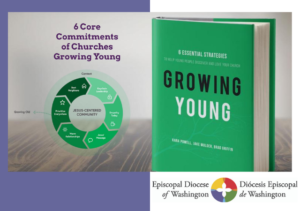
The 6 Commitments of Churches Growing Young
All churches grow old. Strategic churches grow young.
–Kara Power, Jake Mulder, and Brad Griffin, authors of Growing Young
The most common sentiment I hear on congregational visitations is a desire to reach young people, as if they were on a far off planet. But in fact there are young people in our congregations, in our families, and in our neighborhoods.
It’s true that most of our congregations have a median age much older than their neighborhoods. And that the pandemic and its consequences have hit young people and families with children particularly hard. Thus as we turn our collective gaze as a diocese to ministry with and among rising generations, we have some listening and praying to do.
Where better to begin than with the young adults in our congregations? This Friday evening, as the start to our Diocesan Convention, we will listen to the testimonies of four young adults in our diocese. The conversation will be guided by our guest speaker, Mark Yaconelli, Founder and Executive Director of The Hearth, who has 20 years’ experience working with young people and the people who serve them.
All are welcome. If you haven’t registered yet, you can do so here. My hope is that Friday’s gathering will inspire us to listen anew to the thoughts, feelings and life experiences of the young people we know and love, and then imagine how our congregations can become communities that serve rising generations well. It is one of the top priorities of our strategic plan that we begin to address in earnest this year.
In addition to listening to the young people in our lives, we can learn from congregations whose efforts among rising generations are bearing fruit. An excellent resource is from a national study of over 250 congregations that are successfully engaging young adults (ages 15-29) and as a result are growing spiritually, missionally and numerically. Its findings are captured in the book Growing Young: 6 Essential Strategies to Help Young People Discover and Love Your Church.
It is an encouraging study, because the congregations highlighted are diverse in size, denomination, geography, and cultural/racial identity (over half were congregations of color).
More good news: the strategies identified do not require us to become something we are not. They do, however, require a commitment to invest in young people. For those of us who are no longer young, they ask us to gracefully give up our primacy in congregational life. As the authors write, “Making the intentional decision to disproportionately prioritize young people is the inflection point between growing young and growing old.”
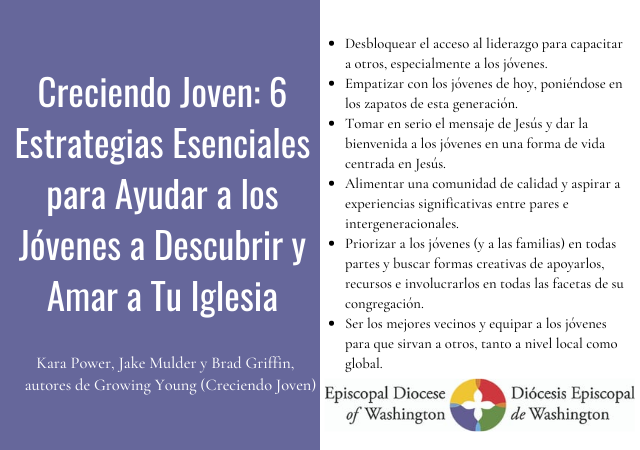
The 6 strategies are:
- Unlock keychain leadership to empower others, especially young people.
- Empathize with today’s young people, stepping into the shoes of this generation.
- Take Jesus’ message seriously and welcome young people into a Jesus-centered way of life.
- Fuel a Warm Community and aim for meaningful peer and intergenerational experiences.
- Prioritize Young People (and Families) everywhere and look for creative ways to tangibly support, resource and involve them in all facets of your congregation.
- Be the best neighbors and equip young people to serve others, both locally and globally.
Here is an invitation: if you would like to gather a small group or sponsor a congregation-wide study of Growing Young, the School for Christian Faith and Leadership will provide up to four free copies of the book. Our only stipulation is that you identify the group in advance, identify your goals in reading, and when finished, let us know what you’ve learned and intend to do as a result. Please email the Rev. Jenifer Gamber for more information.
I realize that our congregations that enjoyed ministries with lively youth, young adults and families before COVID have seen a dramatic decline in their engagement. It’s been discouraging, but that doesn’t mean we should give up. Surely there are ways we can learn to reach out, with open and listening hearts.
As with the strategic goals we addressed thus far, our focus on rising generations will not be an item to check off, but a sustained investment toward a preferred future. Nor are we starting from nothing, for we are blessed with many gifted and passionate young leaders. What is new is the level of our intention, commitment, and measures of accountability. May 2022 be the year we remember as our inflection point and shift toward growing young.

