by Andrew Walter | Feb 1, 2024
The Rev. Andrew Walter, Canon to the Ordinary and Chief Operation Officer presented the new Stewardship Strategy for Parish Facilities and Finances at the 2024 Diocesan Convention.
Good Morning. I’m pleased to speak to you about one of the most consequential of our diocesan goals:
We will develop a stewardship strategy for our facilities and finances so that parishes are not constrained by building concerns.
During the diocesan-wide listening sessions that informed our strategic plan, one of the issues that kept coming up was the high cost of maintaining our church buildings and properties, and how those costs consumed a disproportionate portion of congregational resources that could otherwise be used for actual ministry.
As we emerged from the pandemic, this issue became more acute for many of us, as congregational income remained flat or even dropped, and higher inflation drove up maintenance costs. And for those congregations needing to refinance their mortgages, rising interest rates are forcing them to make larger– sometimes significantly larger–monthly payments.
The truth is, friends, our sacred buildings, despite their history, beauty, and architectural significance, are a financial liability. Toilets clog and overflow. HVAC systems breakdown, often at the worst possible time, and roofs need to be replaced – all of which consume financial resources.
Not long ago, I was speaking with our diocesan Treasurer, Jonathan Nicholas, about our buildings and their associated costs, and he said that church accounting is actually upside down. Congregations list their buildings and property as assets, but assets are defined as a source of future cash inflow, while in reality, our buildings are a source of cash outflow. So, for many of us, our facilities meet the technical definition of a liability.
As with all issues affecting congregational health and vitality, there are no easy solutions. There are, however, three ways to transform a church building from a liability into an asset, when vestries and congregational leaders are willing to make bold, faithful-filled decisions. As a diocese, and as diocesan staff, we can help provide resources and support for all three.
The three ways to turn a building from a liability into an asset are:
- Increasing Rental Income
- Redeveloping Church Property
- Selling a Building and/or Property
Let’s look at all three in more detail, starting with increasing rental income.
Many parishes already generate additional income by renting out space in their buildings. It may be the sanctuary that other faith communities will use for worship or it could be meeting and office space that outside groups will use to gather.
To maximize a building’s value as a source of income, it is essential for congregations to receive market rate rentals, and to do so, we will enlist the expertise of local commercial real estate brokers to assist vestries.
INCREASING RENTAL INCOME
Specifically, the diocese will have commercial real estate brokers on retainer to provide a market analysis of a neighborhood and an evaluation of parish space, so that vestries can clearly understand the going market rate in their area and what they can charge for rent. Such an analysis will be done upon your request.
We have already provided this assistance to congregations in several regions of the region and stand ready to help you.
These commercial brokers will also be able to help vestries market and lease space to potential tenants. In this situation, the vestry would enter into their own agreement with the broker. If and when the broker is able to secure a tenant for the vestry, the vestry would be responsible for paying the appropriate brokerage fee, upon execution of a final lease agreement.
Finally, the diocese will make available to all congregations template lease agreements that they can use when they lease space to other groups. This way, you will not have to draft your own agreements, but rather download an agreement from the diocesan website and tailor the agreement to meet your own specific needs.
Now, turning to the redevelopment of church property
REDEVELOPING CHURCH PROPERTY
In some situations, the best path or perhaps the only path forward for a parish will be to redevelop its church property. By using the term “redevelop”, I do not mean the renovation, repairing, renewing, or restoring of a building to good condition. By redevelop, I mean a vestry and parish partnering with real estate professionals to reimagine, replace, rehabilitate, and repurpose their buildings and properties. Recent examples here in the diocese include St. Anne’s in Northern Montgomery County and St. Thomas in Central DC.
This is a dramatic step, requiring faith and tenacity. Redevelopment is a lengthy, complicated process that involves government approvals, permitting, neighborhood engagement and legal guidance. From recent experiences within the diocese, we’ve learned there are many pitfalls in the redevelopment process, and congregations understandably struggle to manage all of the complications and details.
To help, the diocese is developing a roster of real estate professionals who can act as consultants, starting from the beginning when a vestry contemplates the possibility of redevelopment, through a market analysis and engagement with the community, and up to an evaluation of opportunities and partners. These consultants will not only have the necessary expertise in real estate, but also an understanding of the work and ministry of the church. Successful redevelopment will take into account the real estate, the neighborhood, and the congregation’s mission as followers of Jesus.
Recognizing that some parishes may not have the financial capacity to engage a consultant for some of the preliminary stages of the redevelopment process, the diocese will provide financial assistance in a manner determined by the circumstances of each church. If a vestry decides to move forward in redeveloping its property, the consultant would be compensated for their work by the vestry, with such compensation generated by income from the redevelopment.
As a reminder, any encumbrance of parish property requires approval from the Standing Committee of the diocese. Redevelopment projects almost certainly fall into this category. Therefore, a congregation seeking diocesan approval for redevelopment must be able to show how the redevelopment will lead to the long-term vitality and financial sustainability of a parish – based upon conservative financial projections – and the congregation must show it has done due diligence, including conversations with community leaders and stakeholders, so that everyone involved and affected by the redevelopment understands how the congregation’s sense of mission and the needs of the community are met by the project. This is transformative work of the highest order, and we want to help.
SELLING OF CHURCH PROPERTY
Lastly, the selling of church property.
Let me say first of all that none of us want to sell our property. Our church buildings are holy places, consecrated to God and made sacred by the generations who came before us to pray and worship. But, in all likelihood, some of us will have to sell property in the future.
A decision to do so would be incredibly difficult, but with all my heart, I believe it is better for a congregation to make a decision to sell while it still has a choice and a future, rather than wait until all assets have been exhausted and there is no choice, and no future for the congregation.
Any parish that must think about selling property will receive a lot of support from the Bishop, diocesan staff and leadership bodies of the diocese. We will walk alongside you. Together, we can mutually discern the long-term viability of the congregation. We can conduct a vitality assessment and review financial statements. We can identify real estate brokers who can analyze the property for opportunities and value. And, putting all of those pieces together, we can talk about a future, a new life, for a congregation unburdened by the stress and cost of maintaining buildings, and instead, focused on serving God and God’s people. Together, we can talk resurrection.
SUMMARY
In summary, the diocese will provide support to congregations seeking to
- Increase Rental Income
- Redevelop Church Property
- Sell a Building or Property
Visit the Stewardship of Facilities and Finances for resources and more information, and of course, if you would like to speak with me about any of these options or possibilities, please reach out.
Thank you.
by Bishop Mariann | Oct 20, 2022
Jesus said, “For where two or three are gathered in my name, I am there among them.”
Matthew 18:20
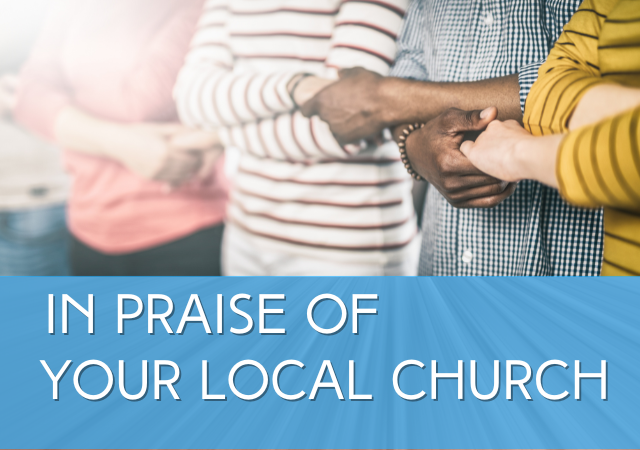
As with the air we breathe and the ground beneath our feet, we sometimes take for granted the faith communities that we count on to be there for us when we need them. So in this season when the leaders of your local church ask you to consider your financial pledge to support its ministry, l invite you to consider the many ways you are blessed by your church, even if you haven’t been inside its doors for a long time.
Let’s begin with your clergy, who are quick to respond when you call, reach out when you’re hurting, are always glad to see you, and work every day to create sacred spaces in which you can draw closer to God. They do all these things because they care. Who else in your life spends hours each week preparing to speak about the most important things–such as faith, doubt, suffering, joy, courage, forgiveness, grief, and love–and encourages you to orient your life toward Jesus.
Now consider the community itself–the people who show up early to prepare a place for you, who practice the songs, tend to the altar, and clean up after you’ve gone home. Think of those who inspire you by their selflessness and who provide all manner of opportunities for you to help make this world a better place; those who are the first to knock at your door with a casserole or flowers when you’ve lost someone; who ask how you are doing, and genuinely want to know. Let’s not forget the person who drives you crazy, and yet who helps you practice patience and acceptance–the very patience and acceptance that you need, too.
If you are raising children, consider the priceless gift of doing so with other families who, like you, want their children to have, as we pray the Baptism liturgy, “inquiring and discerning hearts, the courage to will and to persevere, a spirit to know and love God, and the give of joy and wonder in all God’s works.” In church, your children are surrounded by surrogate grandparents, aunties and uncles, and really cool teenagers for your kids to look up to, until, low and behold, they are cool teenagers teaching a rising generation how to hold the candles and cross.
While caring for the building itself is a big responsibility and costs a lot of money, think of what it means to have such a place, a home away from home where people like you have gone to pray for generations. The walls of your church are soaked with prayer. If they could talk, they would tell of tears and laughter, moments of unspeakable sorrow and wondrous joy; of forgiveness sought and received; of the word spoken that changed a person’s life, of an injustice done and then, by grace, acknowledged, and restitution made–all in that sacred space.
Finally, consider all those who have never been and perhaps will never be part of your church but who nonetheless receive blessing through its ministry–those whose sobriety depends on the A.A. meeting in the basement, or who are experiencing homelessness and your church is the one place they are treated with dignity; the children who are nurtured in the daycare or receive the backpacks your church donates at the beginning of the school year; the refugee family given a home and support in a new land.
Now it may be that your church doesn’t do all of the things I’ve mentioned, or that it’s struggling to regain its footing, or is in a leadership transition. No church is perfect, and if you’re looking for reasons to be disappointed, you will probably find them. But don’t forget the ways you have experienced God through the ministry of your church, despite or perhaps through its imperfections. Think of the times you’ve felt Jesus’ mercy when you needed it, the joy of singing a favorite hymn alongside others, and the gift of belonging to a community of faith, not so much because you get everything you want there, but rather because you know that it’s your spiritual home. Your presence and your gifts make a difference, including the gifts you didn’t realize that you had. You may have a big part to play in your church’s future, and maybe what’s coming next is something you don’t want to miss.
Finances are challenging for many of these days, and that’s true for your local church, too. If this is a hard time for you, know that your church understands if you need to reduce your pledge. But if you are blessed with a financial cushion to weather rising inflation and the fluctuations of the stock market, consider being more generous in the coming year. Let your clergy know that you’re grateful for them. Help your volunteer lay leaders rest easier as they work on ministry goals and budgets. Do your part. You’ll be glad you did. And others will be blessed in ways you may never know.

by Bishop Mariann | Oct 20, 2022
Jesús dijo: “Porque donde dos o tres se reúnen en mi nombre, allí estoy yo en medio de ellos.”
Mateo 18:20
Al igual que con el aire que respiramos y el suelo bajo nuestros pies, a veces damos por sentado que las comunidades de fe con las que contamos están ahí para nosotros cuando las necesitamos. Por eso, en esta época en la que los líderes de su iglesia local le piden que considere su compromiso financiero para apoyar su ministerio, los invito a que consideren las muchas maneras en las que usted es bendecido por su iglesia, incluso si no han estado allí durante mucho tiempo.
Empecemos por el clero, que responde rápidamente cuando se le llama, le tiende la mano cuando está sufriendo, siempre se alegra de verle y trabaja cada día para crear espacios sagrados en los que pueda acercarse a Dios. Hacen todo esto porque se preocupan. ¿Quién más en su vida pasa horas cada semana preparándose para hablar de las cosas más importantes – como la fe, la duda, el sufrimiento, la alegría, el valor, el perdón, el dolor y el amor – y le anima a orientar su vida hacia Jesús?
Ahora piensa en la propia comunidad: las personas que se presentan temprano para preparar un lugar para ti, que ensayan las canciones, atienden el altar y limpian después de que te hayas ido a casa. Piensa en aquellos que te inspiran con su desinterés y que te proporcionan todo tipo de oportunidades para que ayudes a hacer de este mundo un lugar mejor; aquellos que son los primeros en llamar a tu puerta con un poco de comida o con flores cuando has perdido a alguien; que te preguntan cómo estás y quieren saberlo de verdad. No olvidemos a la persona que te vuelve loco y que, sin embargo, te ayuda a practicar la paciencia y la aceptación, la misma paciencia y aceptación que tú también necesitas.
Si estás criando a tus hijos, considera el don inestimable de hacerlo con otras familias que, como usted, quieren que sus hijos tengan, como oramos en la liturgia del Bautismo, “un corazón inquisitivo y perspicaz, la valentía de comprometerse y perseverar; la pasión por conocer y amar (a Dios), y el don de gozar y maravillarse ante todas (las) obras (de Dios)”. En la iglesia, tus hijos están rodeados de abuelos sustitutos, tías, tíos y adolescentes realmente geniales a los que tus hijos pueden admirar, hasta que, por fin, son adolescentes geniales que enseñan a una nueva generación a sostener las velas y la cruz.
Aunque el cuidado del edificio en sí es una gran responsabilidad y cuesta mucho dinero, piensa en lo que significa tener un lugar así, un hogar lejos de casa donde personas como usted han ido a orar durante generaciones. Las paredes de su iglesia están empapadas de oración. Si pudieran hablar, hablarían de lágrimas y risas, de momentos de dolor indecible y de maravillosa alegría; del perdón buscado y recibido; de la palabra pronunciada que cambió la vida de una persona, de una injusticia cometida y luego, por gracia, reconocida y restituida, todo en ese espacio sagrado.
Por último, considere a todos aquellos que nunca han formado parte de su iglesia, y tal vez nunca lo hagan, pero que, sin embargo, reciben bendiciones a través de su ministerio: aquellos cuya sobriedad depende de la reunión de A.A. (Alcohólicos Anónimos) en el sótano, o que se encuentran sin hogar y su iglesia es el único lugar en el que se les trata con dignidad; los niños que son atendidos en la guardería o que reciben las mochilas que su iglesia dona al comienzo del año escolar; la familia de refugiados que recibe un hogar y apoyo en una nueva tierra.
Puede que su iglesia no haga todo lo que he mencionado, o que esté luchando por recuperar su equilibrio, o que esté en una transición de liderazgo. Ninguna iglesia es perfecta, y si está buscando razones para sentirse decepcionado, probablemente las encontrará. Pero no olvide las formas en que ha experimentado a Dios a través del ministerio de su iglesia, a pesar de sus imperfecciones o quizás a través de ellas. Piensa en las veces que has sentido la misericordia de Jesús cuando la necesitabas, en la alegría de cantar un himno favorito junto a otros, y en el don de pertenecer a una comunidad de fe, no tanto porque allí consigues todo lo que quieres, sino porque sabes que es tu hogar espiritual. Tu presencia y tus dones marcan la diferencia, incluso los dones que no sabías que tenías. Puede que tengas un papel importante que desempeñar en el futuro de tu iglesia, y tal vez lo que viene es algo que no quieres perderte.
Las finanzas son un reto para muchos en estos días, y eso es cierto para su iglesia local, también. Si este es un momento difícil para usted, sepa que su iglesia entiende si necesita reducir su promesa. Pero si ha sido bendecido con un colchón financiero para enfrentar la creciente inflación y las fluctuaciones del mercado de valores, considere ser más generoso en el próximo año. Hágale saber a su clero que está agradecido por ellos. Ayude a sus líderes laicos voluntarios a estar más tranquilos mientras trabajan en los objetivos y presupuestos del ministerio. Haga su parte. Se alegrará de haberlo hecho. Y otros serán bendecidos en formas que tal vez nunca conozca.