

May I never cease to thank you for the honor of serving as your bishop and of addressing you when we gather in Convention.
I’d like to share some of what I see from the vantage point of my role, looking back on the past year, and forward, to the year ahead.
Our Convention theme is “Upholding One Another in Love,” drawing from the Apostle Paul’s letter to the Ephesians in which he writes:
I therefore, the prisoner in the Lord, beg you to lead a life worthy of the calling to which you have been called, with all humility and gentleness, with patience, bearing with one another in love…
The phrase “bearing with,” while an accurate translation of the text, doesn’t convey the richness of what Paul is saying here. He’s not suggesting tolerance, putting up with each other, the way we might with an irritating neighbor or crotchety relative (though we wouldn’t be human if we didn’t feel that way at times). The word translated into English as “bearing with” has an expansive, generous meaning, more like active support, with intention and strength; in other words, upholding one another in love.
That is what I see in you.
Bishop Matthew Heyd of the Diocese of New York likes to say that “the Holy Spirit works at ground level,” and it’s true. Every Sunday when I worship with a different EDOW congregation; in every conversation with clergy and lay leaders; in reading your newsletters, I see and hear how you upholding one another in love—and not through your own strength and good intentions alone (though you have strength and good intentions) but through the love of God that flows through you, by the Spirit’s power.
That’s important for us to remember, as Paul writes in another letter:
It is the God who said, ‘Let light shine out of darkness’, who has shone in our hearts to give the light of the knowledge of the glory of God in the face of Jesus Christ. But we have this treasure in clay jars, so that it may be made clear that this extraordinary power belongs to God and does not come from us. 2 Corinthians 4:6-7
You are beautiful clay jars, and the ways you embody the love of Christ is such an inspiration, and was particularly noteworthy in this past year.
It would be hard to overstate the impact across our region, and in our congregations, of the reduction in the federal workforce, changes in immigration policies, rates of detention and deportation; and funding cuts to schools, social service agencies, and other non-profit organizations. This didn’t impact us in the abstract. One of the first questions I asked our lay leaders whenever we met in the past year was “Do you still have a job?” Many, many times, the answer was no.”
You have responded to these challenges with love. You’ve organized support groups for those who have lost, or are at risk of losing their employment; you’ve established emergency funds for those same families and increased your support for the organizations that provide food, medicine, and money to those who need them. You are offering grief support, networking for new employment opportunities, and countless expressions of care and neighborly love.
On a diocesan level, we have amplified and worked to strengthen your efforts, with diocesan-wide support group gatherings; the Diocesan Emergency Fund, which last year dispersed over $50,000 to individual families or food distribution sites in twenty-six congregations across all eight regions. Through the generosity of gifts to the Bishop’s Discretionary Fund, we were able to distribute another $80,000, and through a trust reserved to serving “the poor and needy,” we gave an emergency grant to Samaritan Ministry totalling $75,000.
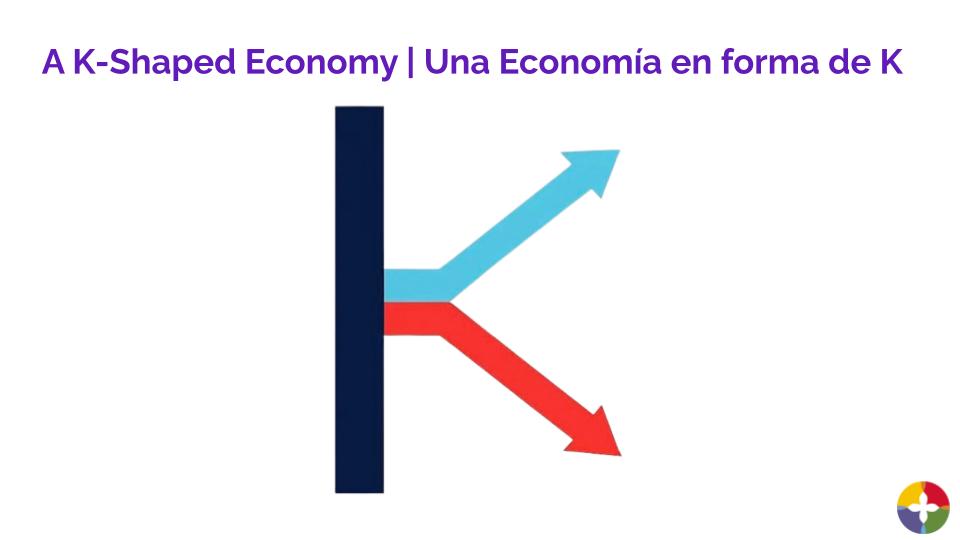
In an economy often described as K-shaped, we have people and congregations on both slant lines of that K. Some are doing well, and our wealth is increasing, while others of us are struggling and on a downward trajectory. Those of you serving congregations in economically struggling areas across the region, while struggling yourselves, are doing all you can to uphold one another and be a blessing to your neighbors.
Those of you with more to give are giving more—I see it in your congregations, the non-profits you support, and in your support to our diocesan-wide efforts. And it must be said that just because a household, or a congregation, is in an affluent part of our diocese, not every household, or that congregation as a whole, has sufficient resources. The largest growth in food insecurity is occurring on the west side of Montgomery Country, one of the wealthiest communities in the country.
Those of you in our immigrant congregations, while facing tremendous challenges, are upholding one another and so many more with sacrificial love. You are collecting food and clothing for those in your neighborhoods and beyond, who are truly desperate now. You are caring for children whose parents have been deported. Others of you in the diocese are coming alongside our immigrant congregations and the wider immigrant community in courageous and loving ways—providing groceries for those afraid to go to the store or to work for fear of being detained; walking children to school; accompanying families to medical appointments or immigration hearings; offering legal assistance, and also stepping up to guardianship for children whose parents risk deportation.
In every one of our congregations, without exception, there are unsung saints—those who quietly and faithfully go about their ministries of love without expecting anything in return, for like the ones in Jesus’ parable in the Gospel of Luke about servants who deserved no reward because they were simply doing their job (Luke 17:10), they feel that they are simply doing what God has asked them to do. Nonetheless, I’ve asked clergy and wardens to lift up those who embody such courage and love, so that we might pray in thanksgiving for them and thank them for how much they mean to us. Each person nominated throughout this year will receive a letter of recognition and a small gift as a sign of our gratitude.
Three of our nominees are here or will join us later today, and we will recognize them after lunch.
Something else that I’ve seen this past year is that an increasing number of EDOW congregations are experiencing numerical growth in attendance and engagement, particularly among young adults, though the age-range and life situation of those finding their way to us is quite broad.
Our numerical growth is consistent with news across the country about an increased spiritual longing and interest in religion, and to the astonishment of some, interest in traditional expressions of religion like The Episcopal Church. We aren’t seeing the explosive growth reported by some, but it is real and happening in congregations across our regions, though not as uniformly as we might hope.
In some of the growing congregations, the increase in people has meant financial growth—as evidenced by successful annual pledge drives and an impressive number of capital campaigns reaching their goals. But that’s not true for all. Growth does not automatically lead to financial security, particularly when growth is among people of modest means or is coupled with high numbers of lay-offs in the congregation.
It’s hard to talk about such growth in a diocesan-wide gathering, for it can lead to uneasiness and sadness—even a sense of failure—among those who aren’t experiencing growth. I understand.
Let me say what you all know—that there are a variety of factors that need to be in place for congregations to thrive, and there are obstacles that prevent or limit thriving and growth. Some of those obstacles are external; many are internal. Some of our congregations are dealing with many obstacles and insufficient financial and leadership resources with which to address them.
That’s exactly why we are investing such a large portion of our diocesan resources and staff to congregational revitalization efforts and have actively sought outside funding to support this work. Our most notable outside support comes from the Lilly Endowment, which has granted us $1,750,000 for our work over a period of eight years, in two separate initiatives. The good news is that participating congregations, by and large, have found diocesan partnership and collaborative learning to be helpful, and in some instances, “a real game changer,” as one rector put it.
In reality, there are no quick remedies for congregations facing real and often multiple obstacles to the vitality necessary for growth. Revitalization takes time, honest assessment, a willingness to learn new things, and to grow ourselves, in faith and love.
Let me remind you of the foundation for our congregational work:
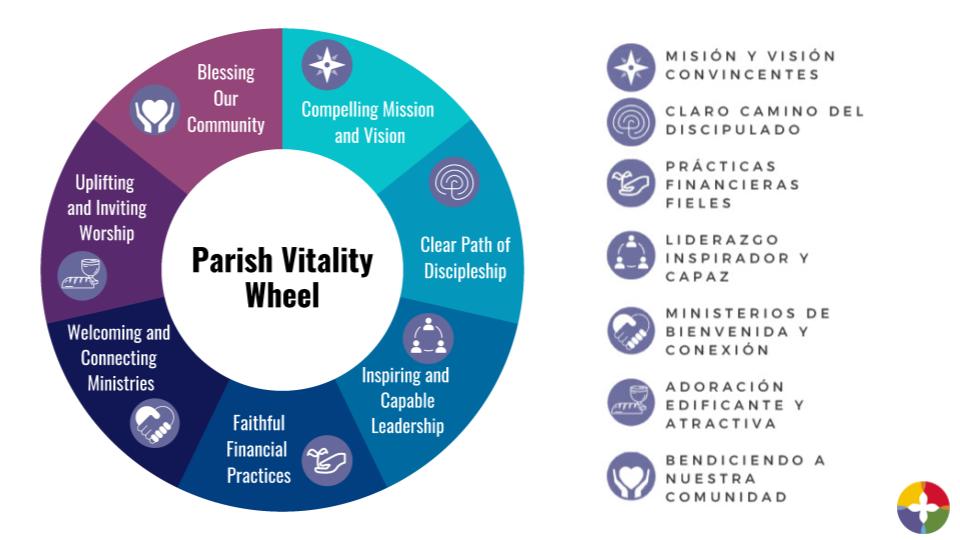
Vital, healthy congregations have certain characteristics in common. As part of our strategic plan, we identified seven such characteristics, as a diagnostic tool and a means of establishing particular paths forward toward vitality for a given faith community.
Looking at all seven can be validating for some, in that they are descriptors of your congregation’s life, though you might use different language. For others, it can be overwhelming because of the many obstacles to vitality that you are facing now.
The good news is that you don’t have to work on all seven at the same time; in fact, you shouldn’t, for that’s a recipe for failure. The congregations that are making the most progress have focused their energies on one or at most two areas for a season. Fortunately, movement in one area has a galvanizing and leveraging effect on others. What leaders need to discern, then, is which area is God calling them to focus on now. What would have the greatest impact, or put another way, where is there energy and possibility for movement, or what obstacle is truly holding your congregation back?
More EDOW congregations are doing that holy, courageous, discerning work, and some of you are doing it in collaboration with others, or exploring that possibility.
I’d like to speak now about collaboration, because it’s one of those things that we all seem to believe in, but are understandably reluctant to do.
Collaboration is hard for several reasons: it takes time and effort, and it falls in that category of work that author Steven Covey famously called “important, but not urgent.” Most of us are dealing with urgent tasks, and thus, the important but not urgent work falls away.
More pointedly, the fact is that collaboration involves the risk: those who are doing well risk feeling weighed down with another congregation’s problems, when it takes all of your energy and more to tend to your own corner of the Lord’s vineyard.
The universal concern is the strong desire to preserve your congregation’s unique identity and independence. As I’ve told you before, nearly every congregation in the diocese makes a point of telling me how unique it is ( which of course, is true). Canonically, your leaders have considerable authority and independence, which I respect.
For some congregations, the path of vitality may require very little from others in the diocese, except at critical junctures, such as clergy transitions or emergency situations. By and large, many of you experience yourself as better off on your own. I understand, though it turns out that from time to time, being part of the diocese is helpful for all of us, and at other times, it’s costly. That’s what upholding one another in love looks like in every relationship.
When you need us, we are here for you.
For some congregations, however, the path of vitality will require collaboration with others, because you simply don’t have enough capacity on your own to thrive and grow. You can hold steady for a time, and gradually decline on your own, but the likelihood of growth is slim. It’s not your fault, but it’s true, and the trajectory is clear.
But you are not on your own.
You are not alone.
In this diocese, we uphold one another in love. And we do so more than we realize.
Through the steady care of our regional deans, genuine friendships between our congregations, and regional and diocesan-wide initiatives, we’re learning to collaborate in ways that are life-giving, even when we face hard things.
From my role, I see our collaboration more and more: whenever we gather leaders for a Learning Day or as part of a cohort through Tending Our Soil; when when we use resources from churches that closed to help us start new churches; or help another through the mutual aid channels and list serves that we’ve established; and when we work together for Creation Care, Migrant Support Ministry, and Reparations. Every leadership body of our diocese is an expression of collaboration, and my heartfelt thanks to those who serve. If you are now or have ever served on a diocesan committee or collaborative endeavor, would you please raise your hand?
You should all raise your hand, actually, for today is an expression of our collaborative spirit. Would you turn around to your neighbors and thank them for upholding all of us, and so many others, in love?
If you’d like to learn more about anything I’ve mentioned, or am about to describe, please stop by the EDOW table in the exhibitors’ area and meet your staff, those who daily work to sustain and support the ministry entrusted to us all.
As a segue toward the future, let me remind you that at Convention last year, I promised that in 2025, we would undertake a comprehensive evaluation of the strategic plan we began in 2020, and then discern next steps.
We have done that evaluation, and my thanks to all who participated in it. What we learned, both in group conversations across the diocese and in our leadership bodies, is that the overall goals of the strategic plan and the initiatives we’ve undertaken as a result were, by and large, consistent with what congregational leaders felt were still priorities for us, though we received good feedback on ways we could do our work better.
Thus, the Diocesan Council and Standing Committee, the two leadership bodies to which I am most accountable when this Convention is not in session, approved our going forward one more year with a refreshed expression of our current strategic plan.
Looking now to the future, this is what you can expect from me and your diocesan leadership.
First of all, we know that the Holy Spirit works at the ground level, that the foundational ministry of our diocese is in our congregations: every Sunday, as you gather around the Table of Christ to draw strength from his presence, to hear the Word of God as revealed in Scripture and interpreted by those entrusted with the pulpit; to experience the loving, sustaining grace of Christian community, where we grow in faith and love, support one another through life’s passages, raise our children and help them to grow in the knowledge and love of the Lord. It is at the ground level where we come to know and love our neighbors, seek forgiveness for our failings, and strive for justice and peace. Nothing is more important
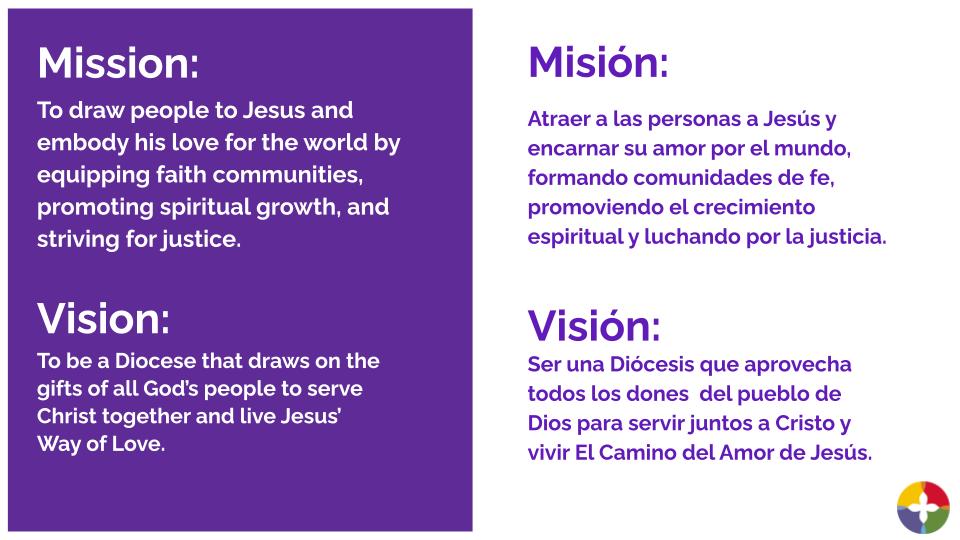
With that understanding, here is a quick review of what we stated as our mission and vision when this strategic work began, and of the three overall areas of diocesan priority:
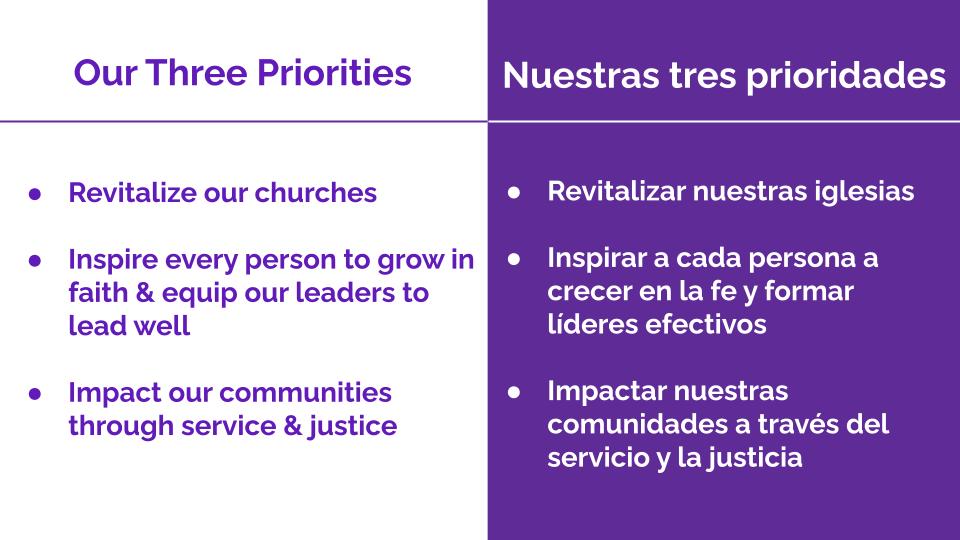

Church revitalization is at the ground level, too. Our diocesan focus is specific to the congregations that choose to engage, and that’s what you see in the first objective.
We will strengthen and expand opportunities for revitalization initiatives, including the launch of Planting Seeds of Renewal (PSR), a new one-year offering that will engage up to 12 congregations every year for three years; the completion of Tending Our Soil; and the Committee on Black Church Ministries Workshops, which will engage 10-14 congregations this year.
We will, through the School for Christian Faith and Leadership (SCFL), share the learnings from our revitalization initiatives with other congregations in the diocese as they pursue vitality in ways that honor their unique context and mission.
The Committee on Black Ministries workshops are the result of sustained effort by our historic and predominantly Black congregations to work toward vitality together, gathering resources and focusing on the particular obstacles our Black churches face.
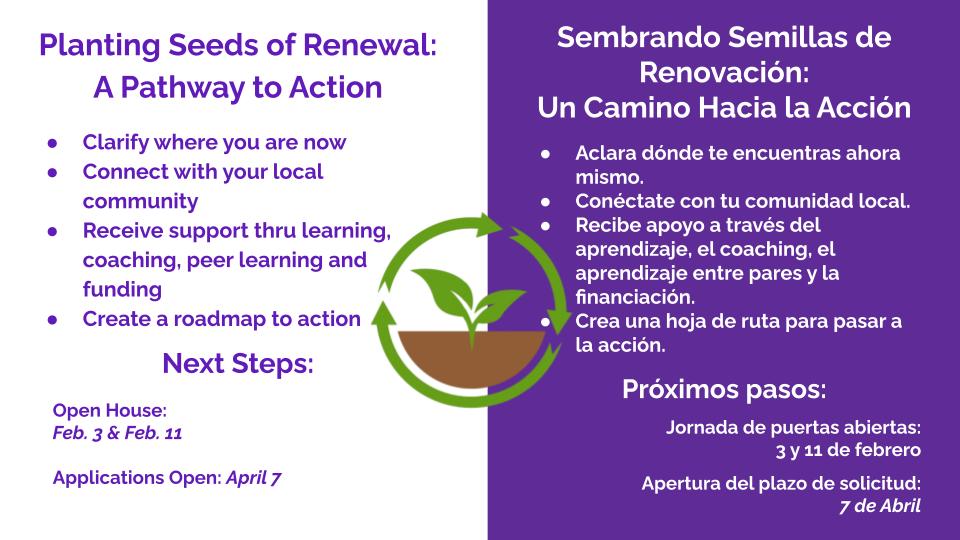
Let me say a bit more about our newest offering:
Planting Seeds of Renewal: A Pathway to Action
It’s a one year program, that we will repeat for three years, designed for congregations ready to take the next faithful step toward greater vitality. It is a one-year program, repeated for three years.
If you’d like to learn more there are two open houses scheduled and you can always contact us.
If you’d like more information today, stop by the Diocesan Resource table in the Exhibitors’ area or reach out to Canon Anne-Marie Jeffery and Ms. Amanda Anderson.
Continuing with Church Revitalization:
Continuing with Church Revitalization:
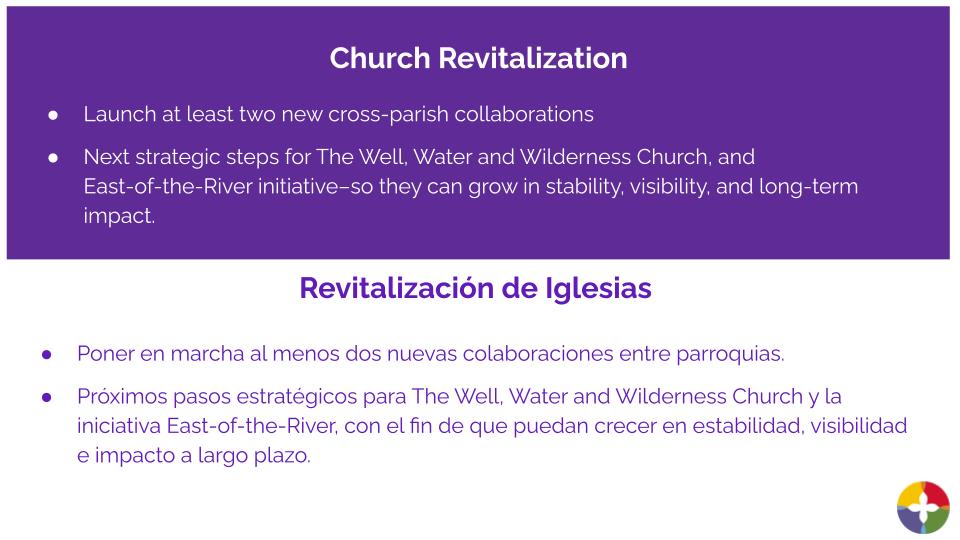
We will launch at least two new cross-parish collaborations (shared clergy, staff, resources: office/administrative).
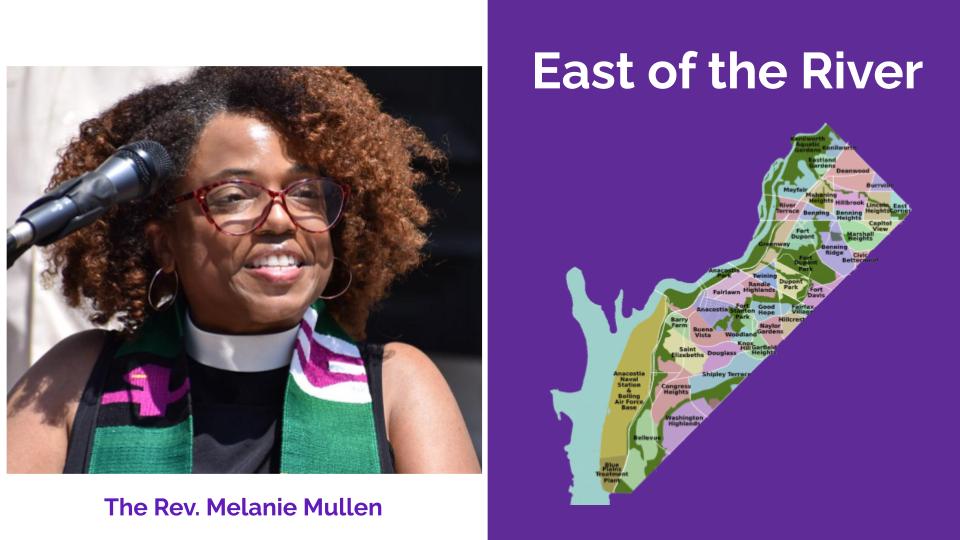
We will take the next strategic steps for our three new communities of faith: The Well, Water and Wilderness Church, and East-of-the-River initiative—so they can grow in stability, visibility, and long-term impact.
One of the goals of the original strategic plan was to launch up to three new worshipping communities. For two years, we did broad demographic studies to determine where we were underrepresented and where there was potential for a new expression of Episcopal worship.

For a time it seemed that The Well would be our only new church start.
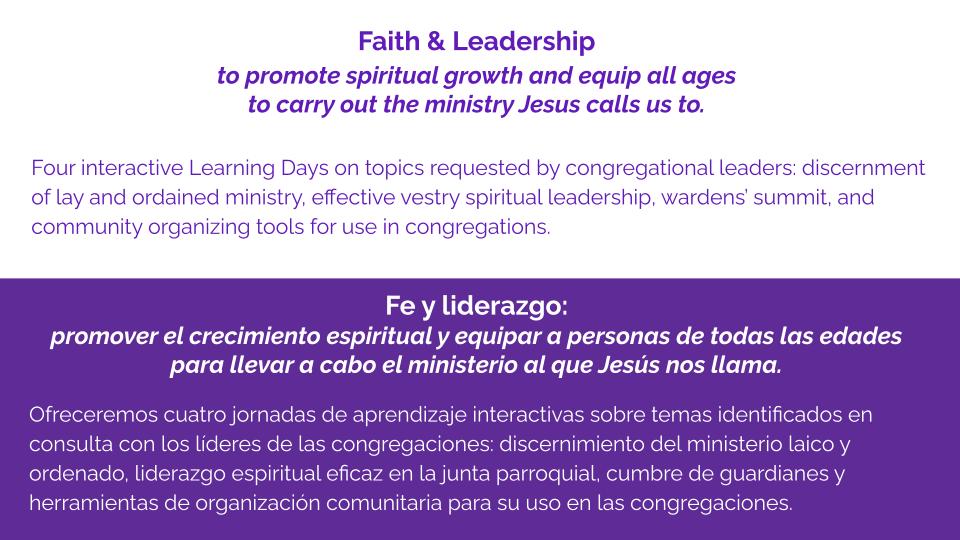
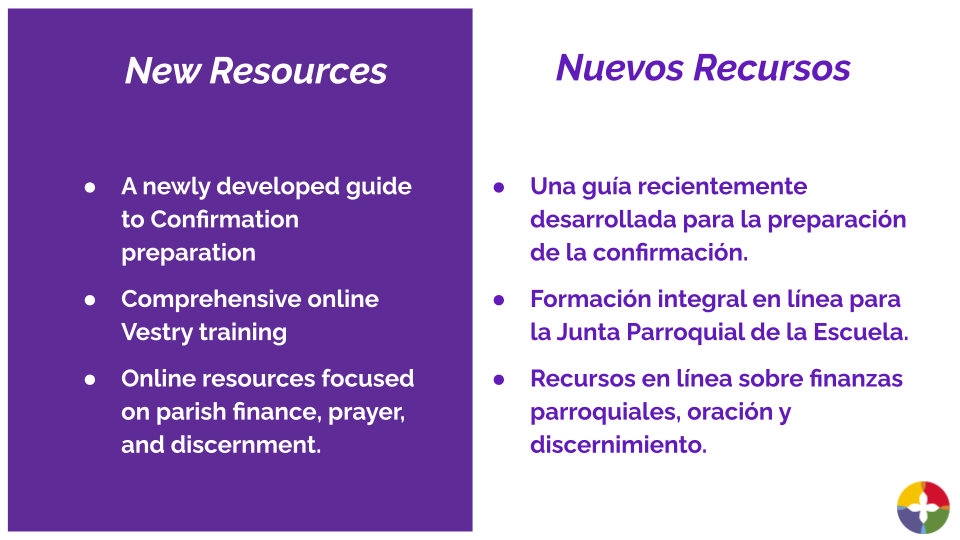
Our Second Priority: inspire every person to grow in faith and equip our leaders to lead well.
Again, what you see here are specific goals, with measurable outcomes.

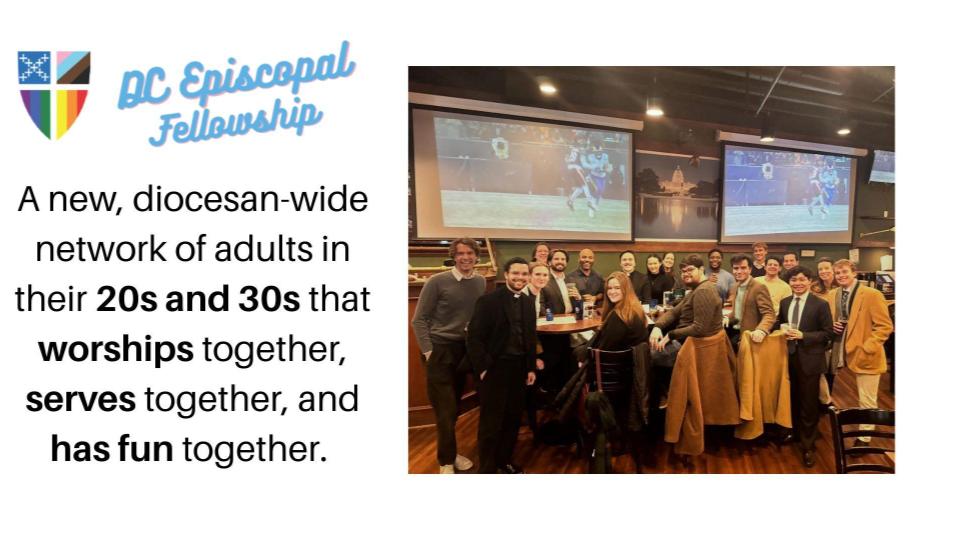
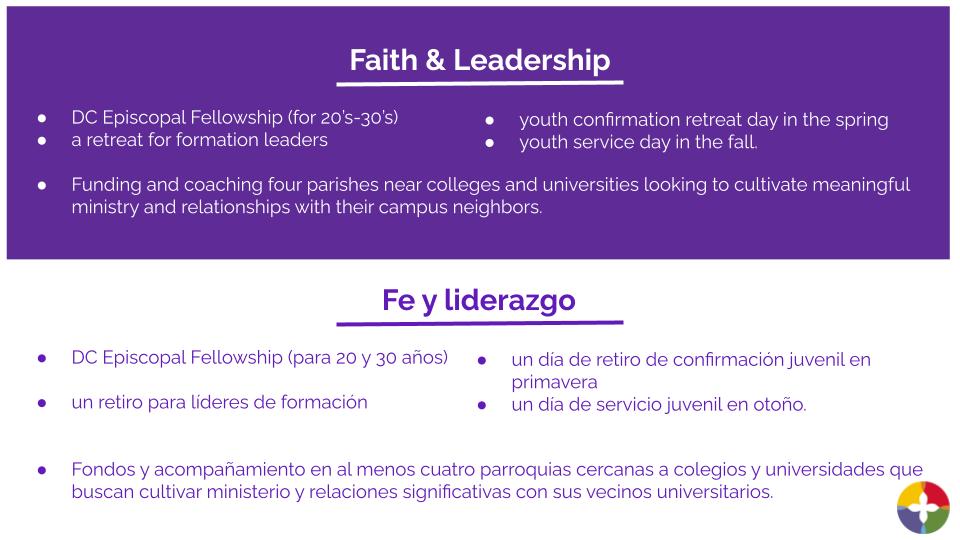
We will invest funding and coaching in support of at least four parishes near colleges and universities looking to cultivate meaningful ministry and relationships with their campus neighbors.
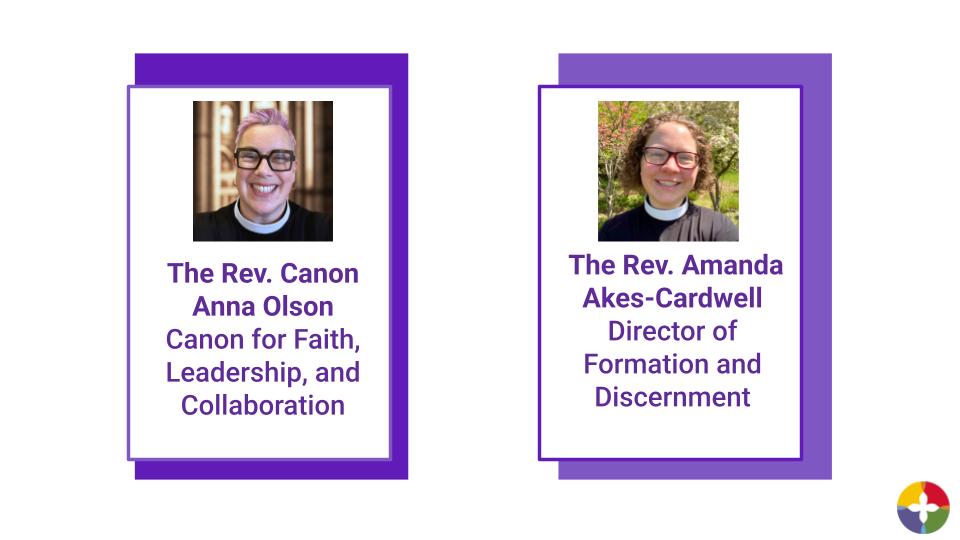
You can learn more at the EDOW table and chat with them today.
Our third diocesan priority is:

Two other goals for this year focus on the priorities of local congregations and the ministry of our wonderful deacons.

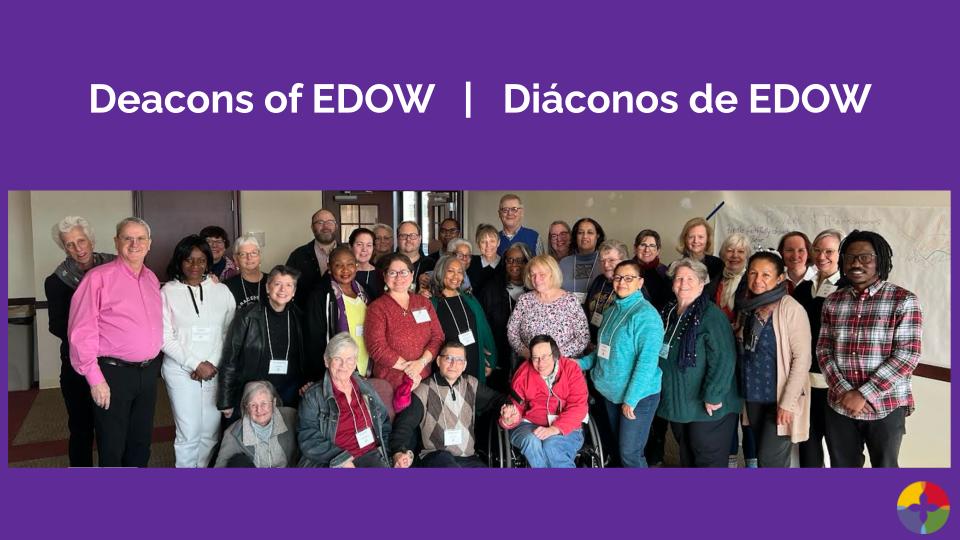
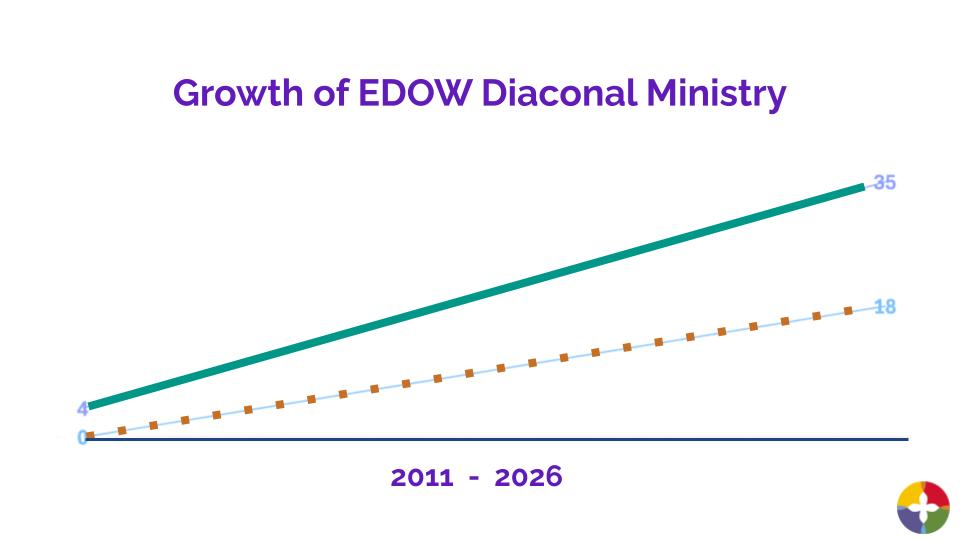
Would you join me in expressing our gratitude for the ministry of our deacons?
There you have it: my best summary of the ministry we have committed to as a diocese.
The final instruction Jesus gave his first disciples, and that through his spirit he gives to us now, is to love one another, to love our neighbor, and to even love those we perceive as our adversaries, as he loves us.
It’s a big ask, and we often stumble along in our efforts. I know that I do, but that’s the part of the call, too, to embrace our humanity with grace and mercy, and to remember that Jesus knows that we’re human and loves us still. And he calls each one of us, and all of us as the Episcopal Church, to follow him in His way of love.
In a time such as this–and it is a time–it’s easy to fall prey to the illusion that we are powerless. That is the Evil One’s most convincing lie. The truth is that every effort for love makes a difference for good. God’s love works through our efforts to show up, to speak up, to actively care, to uphold one another in love.
Thank you for answering the call in a time such as this, for being Jesus, hands and feet and heart in the world now. And for allowing me to walk alongside you, and in this past year, blessing the call to expand my public role in ways that I could never have anticipated, and could not do, without you. You are my inspiration.
I love you, and I want nothing more for you than to thrive and grow as individual followers of Jesus and as communities of faith in His name.
