Declaración sobre las sentencias del Tribunal Supremo de EE.UU. que relajan las restricciones a las armas y anulan el caso de Roe v. Wade

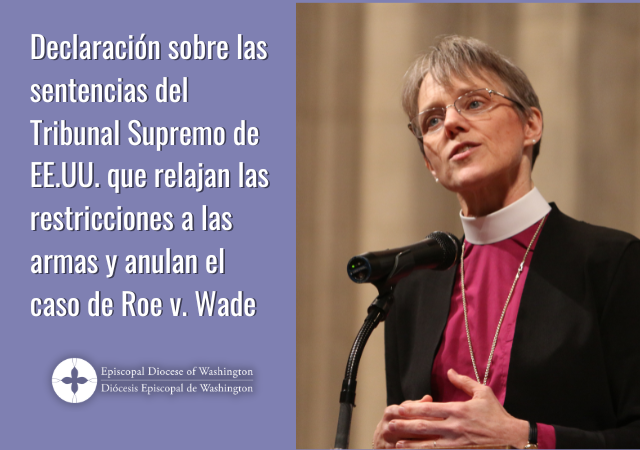
Declaración sobre las sentencias del Tribunal Supremo de EE.UU. que relajan las restricciones a las armas y anulan el caso de Roe v. Wade

El Tribunal Supremo de EE.UU. ha emitido esta semana sentencias sobre dos de las cuestiones más controvertidas de la sociedad estadounidense, al anular las restricciones sobre las armas de fuego en Nueva York y anular el caso de Roe contra Wade.

Aunque ambas sentencias eran esperadas, la noticia de las mismas tiene repercusiones en todo el país, y escribo para reconocer el dolor y el miedo que invocan entre aquellos de nosotros que esperábamos que el más alto tribunal del país defendiera el derecho de la mujer a la plena salud reproductiva y utilizara su poder para ayudar a frenar la epidemia de violencia armada en nuestro país.

En ninguno de los dos casos estas sentencias resolverán las cuestiones que abordan. Un mayor acceso a las armas sólo aumentará la violencia y la muerte por armas de fuego, y la historia demuestra que restringir el acceso legal al aborto tiene un impacto desproporcionado en la salud y la seguridad de las mujeres con bajos ingresos. Además, anular un precedente de casi cincuenta años de protección constitucional para las mujeres, en palabras del Deán Randy Hollerith, “sólo inflamará aún más la profunda división del país sobre el aborto”.

Las posiciones de la Iglesia Episcopal en ambos temas–la violencia con armas y los derechos reproductivos de las mujeres–buscan fortalecer el tejido moral de nuestra sociedad, proteger los derechos individuales consagrados en la Constitución de los Estados Unidos y abordar las desigualdades entre nosotros que son una afrenta a Dios. Por lo tanto, seguiremos buscando un terreno común cuando sea posible y un diálogo constructivo entre los diversos puntos de vista. Las sentencias de esta semana hacen que nuestro trabajo sea más difícil y más importante.

Le pido a Dios misericordia y fuerza para afrontar los días venideros, dando gracias a todos en nuestra iglesia y más allá que perseveren en la esperanza.

La Reverendisma Mariann Edgar Budde
Obispa de la Diócesis Episcopal de Washington

Carta de Verano

Carta de Verano

Junio 2022

Queridos Colegas del Clero y Guardianes de EDOW,

Escribo con saludos, oraciones de gratitud por ustedes, y con la esperanza de que, en medio de las muchas responsabilidades que tienen, puedan encontrar tiempo para el descanso y la renovación este verano. Aunque el mundo nunca se detiene y estamos entre los llamados a liderar y cuidar de los demás, también necesitamos cuidado y tiempo para llenar los pozos interiores de los que sacamos fuerza y compasión.

El verano es también un tiempo de planificación, y al mirar hacia el otoño, les recomiendo las ofertas de la Escuela de Fe Cristiana y Liderazgo. Son especialmente valiosos los cursos de exploración de la fe, Descubrir, Abrazar, Llegar a ser; una clase de confirmación en línea llamada CREAR (en inglés), y una amplia variedad de otras ofertas a la carta. La Escuela también puede ayudar a adaptar una clase a su contexto particular. Por favor, póngase en contacto con la Rev. Jenifer Gamber para obtener más información.

Otro recurso que puede ser de valor para usted es nuestro kit de herramientas de la Campaña de Donación Anual (en inglés) que le proporciona todos los materiales que necesita para los esfuerzos de administración financiera de su congregación. El tema de este año es “Mira, estoy haciendo algo nuevo”. Busque las sesiones a través de la Escuela para introducir este programa pronto. Los miembros del Comité de Recursos Financieros están preparados para ayudarle. Inscríbase para asistir a un taller.

Su personal diocesano también está planificando, y he incluido a continuación las fechas de los eventos diocesanos durante el verano y el otoño. Por favor, agregue a sus calendarios lo que sea útil o pertinente para usted y su congregación.

Permítanme terminar con palabras de aliento y exhortación del Apóstol Pablo que nos proporcionan una visión convincente de lo que significa seguir a Jesús en su camino de amor:

Ámense sinceramente unos a otros. Aborrezcan lo malo y apéguense a lo bueno. Ámense como hermanos los unos a los otros, dándose preferencia y respetándose mutuamente.


Esfuércense, no sean perezosos y sirvan al Señor con corazón ferviente. Vivan alegres por la esperanza que tienen; soporten con valor los sufrimientos; no dejen nunca de orar. Hagan suyas las necesidades del pueblo santo; reciban bien a quienes los visitan.


Bendigan a quienes los persiguen. Bendíganlos y no los maldigan. Alégrense con los que están alegres y lloren con los que lloran. Vivan en armonía unos con otros. No sean orgullosos, sino pónganse al nivel de los humildes. No presuman de sabios.


No paguen a nadie mal por mal. Procuren hacer lo bueno delante de todos. Hasta donde dependa de ustedes, hagan cuanto puedan por vivir en paz con todos. . . . No te dejes vencer por el mal. Al contrario, vence con el bien el mal.


Romanos 12:9-18:21 (DHH)

Le doy gracias a Dios por cada uno de ustedes.

Fielmente,

Obispa Mariann


PRÓXIMOS EVENTOS DIOCESANOS

Talleres de Donaciones Anuales
Sábado, 9 de julio | 10:00 a.m. | Grace, Silver Spring
Sábado, 28 de julio | 7:00 p.m. | En línea por Zoom

El Comité de Recursos Financieros de la Diócesis de Washington se complace en ofrecer dos talleres de verano utilizando el Kit de Herramientas de Donación Anual (en inglés). Además de compartir materiales específicos del kit de herramientas EDOW, también discutiremos los posibles impactos de la recaudación de fondos mientras salimos de una pandemia global.

¿Preguntas? Póngase en contacto con el Comité de Recursos Financieros.

Ordenación Sacerdotal
Sábado, 23 de julio | 10:00 a.m. | Catedral Nacional de Washington

Por la Gracia de Dios y con el consentimiento del pueblo, la Reverendismia Mariann Edgar Budde ordenará al Sagrado Orden Sacerdotal a Catherine Manhardt y David Frederick Potter el
sábado, 23 de julio de 2022 a las 10:00 a.m. en la Catedral Nacional de Washington.

Sus oraciones y presencia son solicitadas y se anima al clero que tengan previsto procesar a que confirmen su asistencia. El color del día es rojo.

El servicio será transmitido en vivo y el enlace se publicará en el calendario de EDOW.

¿Preguntas? Póngase en contacto con la Archidiácona Sue von Rautenkranz.

Conectando con su comunidad
Sábado, 30 de julio | 10:30 a.m. a 1:00 p.m. | Iglesia de la Ascensión, Sligo

Conectar con su comunidad es fundamental para la vitalidad de cada congregación, pero puede parecer desalentador salir de nuestras puertas al vecindario. Basándonos en las prácticas del Desarrollo Comunitario Basado en Activos, nos reuniremos durante medio día para practicar la salida al vencidario para observar lo que Dios está haciendo. Los participantes se irán con herramientas para llevar a su congregación.

Haga clic aquí para obtener más información e inscribirse. Venga como individuo o como equipo.

¿Preguntas? Póngase en contacto con la Rvda. Anne-Marie Jeffery, Canóniga para la Vitalidad de la Congregación.

Becas de Crecimiento Congregacional – ciclo de otoño
El ciclo de solicitud abre el lunes 1 de agosto y cierra el viernes 7 de octubre

Las becas de crecimiento congregacional de EDOW apoyan los esfuerzos para hacer crecer congregaciones sanas y vitales y crear nuevas expresiones de comunidades de adoracion episcopales. Las subvenciones diocesanas para el crecimiento congregacional ofrecen una oportunidad para que las parroquias y los ministerios sueñen, exploren y emprendan “algo nuevo”.

¿Preguntas? Póngase en contacto con Mildred Reyes, Misionera del Ministerio Latino/Hispano e Iniciativas Diocesanas.

Reparar la brecha: Un simposio sobre reparaciones
Sábado, 1 de octubre | 10:00 a.m – 3:30 p.m. | Iglesia Episcopal de Calvary, DC

Nos reuniremos como diócesis para un día completo de programación para continuar nuestro trabajo compartido para reconocer nuestra historia diocesana de participación en el racismo anti-negro y aprender más sobre el legado de beneficio que hemos recibido de esa participación.

Haga clic aquí para obtener más información e inscribirse, e invite a los miembros de su congregación a asistir.

El Grupo de Trabajo sobre Reparaciones tendrá listo en julio un plan de estudios de dos sesiones para que su congregación aprenda sobre las reparaciones y se prepare para el simposio. Haga clic aquí para ver el folleto (en inglés).

¿Preguntas? Póngase en contacto con el Rvdo. Peter Jarrett-Schell, presidente del Grupo de Trabajo sobre Reparaciones.

Confirmaciónes Diocesano en Otoño
Sábado, 15 de octubre | 10:00 a.m. | Catedral Nacional de Washington

La inscripción para el Servicio Diocesano de Confirmación de otoño se abrirá el 9 de septiembre de 2022. Para obtener recursos para apoyar a los candidatos mientras se preparan para la confirmación, incluyendo el programa de confirmación en línea de EDOW, póngase en contacto con la Rvda. Amanda Akes-Cardwell, Misionera para la Formación de la Fe y el Desarrollo.

¿Preguntas? Póngase en contacto con la Archidiácona Sue von Rautenkranz.

Conferencia del Clero
Lunes, 24 de octubre al miércoles, 26 de octubre | el Centro Maritime, Linthicum Heights, MD

El personal diocesano y sus deanes regionales están trabajando en la planificación del programa de la Conferencia del Clero. El enfoque de este año será el bienestar del clero y cómo caminamos unos junto a otros en nuestro llamado a servir al pueblo de Dios. Les daremos mucho tiempo para que se reúnan con sus compañeros y para que exploren nuevas relaciones colegiales. La Rvda. Dra. Allison St. Louis será nuestra líder de la conferencia. Pronto se darán más detalles; por ahora, por favor, apunten estas fechas en sus calendarios.

¿Preguntas? Contacte a Allen Fitzpatrick, Asistente Ejecutivo de los Cánonigos.

Jornada de Trabajo sobre el Diaconado
Sábado, 29 de octubre | 9:30 a.m. – 2:30 p.m. | Lugar por anunciar

La Ven. L. Sue von Rautenkranz, archidiácona de la Diócesis de Washington, junto con los miembros de la Comisión de Ministerio y el Comité Permanente, diáconos y sacerdotes con experiencia en el servicio de diáconos, compartirán sus conocimientos sobre el ministerio diaconal, así como los próximos pasos prácticos en un día lleno de presentaciones, sesiones de información en grupos pequeños y adoracion. La inscripción se abrirá el 29 de agosto de 2022. Conozca más sobre el Día del Taller, incluyendo los requisitos para quienes deben asistir.

¿Preguntas? Póngase en contacto con la Archidiácona Sue von Rautenkranz.

Reuniones Regionales
Martes, 18 de octubre | 6:30 p.m. | En línea | Sur de DC, Norte de Prince George’s, Sur de MD
Jueves, 20 de octubre | 6:30 p.m. | En línea | Norte, Centro y Sur de Montgomery
Martes, 17 de noviembre | 6:30 p.m. | En línea | Norte y centro de DC

Este año, en un esfuerzo por ser conscientes de nuestros recursos, las regiones se reunirán en grupos combinados. Por favor, pon la fecha correspondiente en su calendario y notifique a los delegados y suplentes de la Convención Diocesana de su congregación. La inscripción, los materiales y la información sobre las votaciones se compartirán cuando se acerquen las fechas de las reuniones regionales.

¿Preguntas? Póngase en contacto con el Rvdo. Andrew Walter, Canónigo del Ordinario y Jefe de Operaciones.

Retiro de Líderes de Formación Cristiana
Viernes, 4 de noviembre – Sábado, 5 de noviembre | Claggett Center

Únase a los líderes de formación de niños, jóvenes y familias para descansar, rejuvenecer y refrescarse espiritualmente. Este retiro de una noche es un tiempo para que los líderes de formación estén en comunión unos con otros y con la Rvda. Amanda Akes-Cardwell, Misionera de Formación y Desarrollo de la Fe. El retiro contará con la enseñanza, la adoración, el tiempo de inactividad, y el compañerismo. 1-2 líderes de formación de cada parroquia están invitados a asistir, sin embargo, el espacio es limitado. La inscripción se abre el 1 de septiembre.

¿Preguntas? Póngase en contacto con la Rvda. Amanda Akes-Cardwell, Misionera para la Formación y el Desarrollo de la Fe.

The Hidden Virtue of Perseverance

The Hidden Virtue of Perseverance

‘I have said these things to you while I am still with you. But the Advocate, the Holy Spirit, whom the Father will send in my name, will teach you everything, and remind you of all that I have said to you. Peace I leave with you; my peace I give to you. I do not give to you as the world gives. Do not let your hearts be troubled, and do not let them be afraid.’
John 14:25-27

For nearly two years I’ve been working on a writing project about the decisive moments in life when we learn to be brave. I’m nearing the end of the first draft, and the topic I’m writing about now is perseverance, which is timely, given how slow my progress has been. More than once I’ve wondered if I have what it takes to see this endeavor through to completion.

I’ve often thought of perseverance as a hidden virtue, in that we rarely see what others have gone through to be able to do what seems effortless to us, what it costs them to carry on when tired or discouraged or to start again after failure or disappointment. We don’t talk often enough about what the entrepreneur Scott Belsky described as “The Messy Middle” – the hardest stretch in any creative or faith-inspired endeavor.

“What’s in the middle?” Belsky asks. “Nothing headline-worthy yet everything important: your war with self-doubt, a roller coaster of incremental successes and failures, bouts of the mundane, and sheer anonymity. The middle is seldom recounted and all blends together in a blur of exhaustion. . . Success is misattributed to the moments we wish to remember rather than those we choose to forget. We’re left with the misconception that a successful journey is logical. But it never is.1

There is a heart component to perseverance, which Jesus emphasized when teaching his disciples about prayer. He typically did so by telling outrageous stories, such as the one about a man who kept pounding on the door of a friend’s house in the middle of the night demanding bread, and of a widow who incessantly hounded a judge for the justice she deserved. These characters are hardly saints, as if to underscore that fact there is nothing visibly admirable about perseverance; it’s more akin to grit and dogged effort. The reason Jesus told these parables, according to the Gospel of Luke, was to encourage his disciples to pray continually and not lose heart. (Luke 18) Jesus knew that life can be hard, disappointments are real, and at times we’re all bound to feel discouraged.

In church this Sunday, we’ll continue reading from the portion of John’s Gospel known as Jesus’ Farewell Discourse (chapters 14-17). The scene here is Jesus’ last supper with his disciples, where he speaks words of encouragement that he hopes will help them persevere in faith after he’s gone. Don’t worry, he tells them. I’m leaving, but you won’t be alone. He tells them that someone else will be with them, whom he calls “the Advocate”–another name for the Holy Spirit. The Advocate will help them remember all that Jesus taught and give them his peace and strength, even in the most turbulent times. These are words we can hold onto, as reassurance that we’re not alone, either, and that, in the words of the Apostle, the One who began a good work within and among us will see it through to completion.

Your diocesan staff spent two days this week taking stock of the incremental goals we set for the first four months of 2022 and setting our sights on the next three months’ work. It has become part of the rhythm of our year to have these regular check-ins, a practice that helps us stay focused on the overarching five-year goals the diocese committed to in 2020 as we live through the contingencies and demands of our daily work. More than once in the last three years, we’ve all felt discouraged and overwhelmed, and the all-too familiar dread of working really hard with little to show for our efforts. But each time we pause and take stock, we realize that we have made progress, although never as cleanly or quickly as we had imagined, and that we’ve learned things that inform our next steps.

We’re learning the importance of celebrating our accomplishments, no matter how small; reflecting deeply on both our missteps and insights; and continually opening ourselves to the Holy’s Spirit’s inspiration. And as the summer approaches, we’re reminded that this is also a time to rest, support our leaders, and savor moments of joy.

In a small book of essays exploring the deeper meaning of everyday words, David Whyte defines courage as “what love looks like when tested by the simple everyday necessities of being alive.”2 The same is surely true of perseverance–it is the daily commitment to live as if the inspiration and dreams that propelled us are trustworthy, even when we don’t feel it, and to trust the slow, steady work of God.

1Scott Belsky, The Messy Middle: Finding Your Way Through the Hardest and Most Crucial Part of Any Bold Venture (New York: Penguin Random House, 2018), 7.
2David Whyte, Consolations: the Solace, Nourishment, and Underlying Meaning of Everyday Words, Kindle Version, 220.

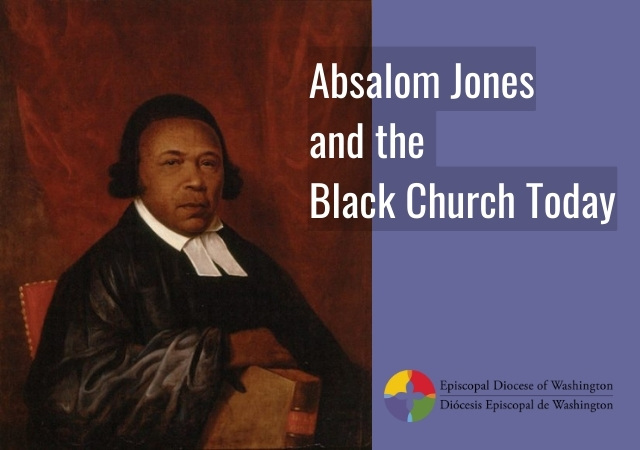
Absalom Jones and The Black Church Today

Absalom Jones and The Black Church Today

The life and legacy of The Reverend Absalom Jones is a testament to the resilience of the human spirit, his faith, and his commitment to the causes of freedom, justice and self-determination.
From the website of The African Episcopal Church of St. Thomas

On February 13, The Episcopal Church commemorates the life and ministry of Absalom Jones, the first African American to be ordained in The Episcopal Church.

On January 29, Diocesan Convention passed a resolution that directs our collective energies toward the revitalization and empowerment of Black churches and Black parishioners in the Diocese of Washington.

I am persuaded that these two events are related. The church Absalom Jones founded in Philadelphia is one of the most vibrant Black Episcopal Churches in the country. I pray that Absalom Jones’ spirit, faith, and commitment will guide our work.

For those who don’t know his story, Absalom Jones was born into slavery in Delaware on November 6, 1746. While enslaved, he learned to read. When the family that enslaved him moved to Philadelphia, he was able to work evenings and keep his earnings for himself. In 1770 he married Mary Thomas, an enslaved woman, and he purchased her freedom so that she and their children might be free. 14 years later, he obtained his own freedom through manumission.

With his friend Richard Allen, Absalom Jones organized the Free African Society. Both Jones and Allen were also preachers at St. George’s Methodist Church, a mixed-race congregation. As the Black membership grew, White elders responded by segregating worship, requiring that blacks sit in the balcony.

One Sunday morning, as Absalom Jones was praying in a front pew, an usher attempted to forcibly remove him. Jones resisted removal, finished his prayers, and walked out of the church. All the Black members followed and together they formed a new congregation. Richard Allen chose to establish an independent Black church, what would become a new denomination, the African Methodist Episcopal Church (AME). Jones remained as leader of what became The African Episcopal Church of St. Thomas. In 1802, Jones was ordained an Episcopal priest.

Absalom Jones’ ministry was one of compassion, political advocacy and institution building. He was a compelling preacher and community organizer. He helped establish two schools. He and Richard Allen, at the request of Philadelphia’s mayor, rallied Black residents to care for the sick and dying during a yellow fever epidemic. He and others petitioned the U.S. Congress to end the African slave trade. The present day congregation of St. Thomas’, Philadelphia celebrates his feast day each year with great pride, as do many Episcopal churches and dioceses around the country.

The history of Black congregations in The Episcopal Church, including the Diocese of Washington, is complicated, marked by racism and Black self-determination. Many were established right after the Civil War, some with support of White congregations, others on their own. More were planted in the years of Jim Crow and strict housing segregation, when Black people were not allowed to live in most neighborhoods and the more affluent parts of small towns.

When housing laws changed, many of the founding families of Black congregations moved to communities with greater educational and economic opportunity. Resulting White flight re-established segregated worship as formerly White congregations became predominantly Black. That trend accelerated with new arrivals from the African diaspora who found in our Episcopal churches the Anglican Church they were part of at home. Most of our historic Black churches are now in neighborhoods whose populations have shifted again, and as with most Episcopal churches, the membership of all predominantly Black congregations is aging.

Of course many Black Episcopalians now freely choose to worship in predominantly White congregations and vice-versa. The multicultural, multi-racial reality of our Diocese makes it one of the more interesting and complex places to do this important work of racial reckoning and congregational revitalization. Across the Diocese we are all striving to come to terms with our complicity in systemic racism and racial inequities. Martin Luther King, Jr. once lamented that 11 a.m. on Sunday morning was the most segregated hour in America. In many of our churches, that reality remains.

There were once 11 congregations in the Diocese of Washington founded by or on behalf of Black persons; 7 remain, all in Washington, DC with the exception of St. Philip’s in Prince George’s County. There are 15 additional congregations that were originally established for White Episcopalians that are now predominantly Black and multicultural.

Thus the resolution passed at Convention this January asks us to consider the lived experience and future possibilities for over 20 percent of EDOW’s congregations. There is great diversity among them, as well as gifted leaders and rich insights from which we will all benefit. They deserve our collective attention as part of the overall effort of congregational vitality. The Convention’s action will hold us accountable to this work.

The resolution calls for the creation of a task force, composed of members from Black congregations. The task force is commissioned to make recommendations to the Diocesan Council by September 2022 for the enhancement, revitalization, and empowerment of Black churches and Black parishioners.

The task force, once named, will build upon the good work of the Washington chapter of the Union of Black Episcopalians. It will address the new realities facing all our congregations and dynamics unique to the Black church. There are resources from beyond the Diocese to draw upon, including the example of the church that Absalom Jones founded.

The Diocesan Council is now accepting applications for this important Task Force. Members will be from historically Black or predominantly Black congregations. Please consider if God may be calling you or someone you know to serve. This will be exciting, challenging work in a Spirit-led moment not to be missed.

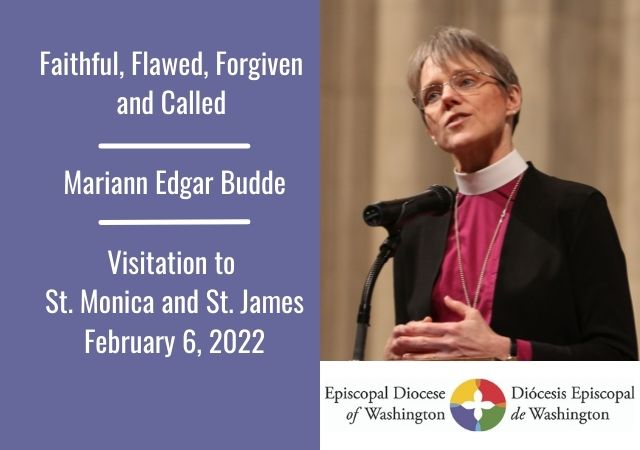
Faithful, Flawed, Forgiven and Called

Faithful, Flawed, Forgiven and Called

In the year that King Uzziah died, I saw the Lord sitting on a throne, high and lofty; and the hem of his robe filled the temple. Seraphs were in attendance above him; each had six wings: with two they covered their faces, and with two they covered their feet, and with two they flew. And one called to another and said: “Holy, holy, holy is the Lord of hosts; the whole earth is full of his glory.”The pivots on the thresholds shook at the voices of those who called, and the house filled with smoke. And I said: “Woe is me! I am lost, for I am a man of unclean lips, and I live among a people of unclean lips; yet my eyes have seen the King, the Lord of hosts!”Then one of the seraphs flew to me, holding a live coal that had been taken from the altar with a pair of tongs. The seraph touched my mouth with it and said: “Now that this has touched your lips, your guilt has departed and your sin is blotted out.” Then I heard the voice of the Lord saying, “Whom shall I send, and who will go for us?” And I said, “Here am I; send me!”
Isaiah 6:1-8

I would remind you, brothers and sisters, of the good news that I proclaimed to you, which you in turn received, in which also you stand, through which also you are being saved, if you hold firmly to the message that I proclaimed to you–unless you have come to believe in vain. For I handed on to you as of first importance what I in turn had received: that Christ died for our sins in accordance with the scriptures, and that he was buried, and that he was raised on the third day in accordance with the scriptures, and that he appeared to Cephas, then to the twelve. Then he appeared to more than five hundred brothers and sisters at one time, most of whom are still alive, though some have died. Then he appeared to James, then to all the apostles. Last of all, as to one untimely born, he appeared also to me. For I am the least of the apostles, unfit to be called an apostle, because I persecuted the church of God. But by the grace of God I am what I am, and his grace toward me has not been in vain. On the contrary, I worked harder than any of them–though it was not I, but the grace of God that is with me. Whether then it was I or they, so we proclaim and so you have come to believe.
1 Corinthians 15:1-11

Once while Jesus was standing beside the lake of Gennesaret, and the crowd was pressing in on him to hear the word of God, he saw two boats there at the shore of the lake; the fishermen had gone out of them and were washing their nets. He got into one of the boats, the one belonging to Simon, and asked him to put out a little way from the shore. Then he sat down and taught the crowds from the boat. When he had finished speaking, he said to Simon, “Put out into the deep water and let down your nets for a catch.” Simon answered, “Master, we have worked all night long but have caught nothing. Yet if you say so, I will let down the nets.” When they had done this, they caught so many fish that their nets were beginning to break. So they signaled their partners in the other boat to come and help them. And they came and filled both boats, so that they began to sink. But when Simon Peter saw it, he fell down at Jesus’ knees, saying, “Go away from me, Lord, for I am a sinful man!” For he and all who were with him were amazed at the catch of fish that they had taken; and so also were James and John, sons of Zebedee, who were partners with Simon. Then Jesus said to Simon, “Do not be afraid; from now on you will be catching people.” When they had brought their boats to shore, they left everything and followed him.
Luke 5:1-11

I’d like to speak about something familiar to all of us: the experience of coming to terms with our frailties and failures. It’s a theme that runs through our Scripture texts for today, but I could just as well tell you about my past week. On Wednesday night as I stumbled my way through a highly choreographed Anglo-Catholic worship service, I remembered something I heard the Franciscan priest Richard Rohr say. “To keep me from becoming too impressed with myself,” he told a journalist during an interview about his latest book, “I ask God to send me one humiliation a day. It’s a prayer that God is quick to answer.”

The stories from Scripture are particularly helpful for those of us who imagine we can somehow earn our way into God’s favor (or anyone else’s, for that matter). Each describes a situation in which a person feels summoned to do something brave. But in the presence of holiness, each feels exposed, seen for who they truly are, which surely disqualifies them for the task at hand.

“Woe is me, I am lost.” The prophetic Isaiah laments as he was summoned before God. “For I am a man of unclean lips, and I live among a people of unclean lips.” “I am the least of the apostles,” writes Paul about his call to follow Jesus, “unfit to be an apostle, because I persecuted the church of God.” “Go away from me, Lord,” says Simon Peter in the boat with Jesus, “for I am a sinful man.”

In each instance, God in essence replies, “I know who you are. I know everything about you. And I am asking you to step up anyway.” God could very well have added, “Spoiler alert: you won’t always get this right, what I’m asking of you. In fact, you may well fail. But perfection, and success, isn’t what I’m asking for; only faithfulness.”

Of all the biblical characters, Simon Peter is truly the patron saint of imperfection. From that first encounter in the boat, Peter gives his whole heart to Jesus. Still he never seems to get things right, and some of his failures are truly spectacular. Still, Jesus turns to Simon Peter more than any other disciple, as if to say to all of us, “Look. Following me isn’t a call to perfection, only faithfulness.”

What makes Simon Peter’s example so compelling is his perseverance. Every time he falls, he gets back up. He acknowledges his mistakes and accepts Jesus’ forgiveness, even after the most horrible failing of all, when he denies knowing Jesus on the night of Jesus’ arrest. How could he ever forgive himself for that? But after the resurrection, Jesus seeks him out, so that Simon Peter knows that he is forgiven and still called to be a witness to Jesus’ way of love.

Like the Apostle Paul after him, the one who had to forever live with the memory of persecuting followers of Jesus until he himself became one, Simon Peter comes to know and accept himself, in the words of Adam Hamilton, as a faithful and flawed disciple.1–Faithful, flawed, forgiven and called. “By the grace of God I am who I am,” St. Paul wrote to the Christians in Corinth, and surely Simon Peter could have said the same. “And God’s grace toward me has not been in vain.”

I’ve been working on a writing project about courage, and how we learn to be brave. Among the people I’ve been blessed to learn more about is the Rev. Dr. Pauli Murray, who lived one of the most extraordinary lives of the 20th century. She was the first Black woman in nearly every educational and professional setting of her life, including becoming the first Black woman to be ordained in the Episcopal Church. In honor of Black History month and in this theme of faithful imperfection, I’d like to tell you a bit of her story.

Pauli Murray was born in 1910, in Baltimore, to mixed-race parents. As a child, Murray experienced the dramatic constriction of Black life in this country with the rise of Jim Crow segregation, stripping away of civil rights, and vigilante violence against Black leaders and businesses. When her mother died and her father was institutionalized, Murray went to live with her maternal grandparents and a devoted aunt in North Carolina. Her Aunt Pauline was a teacher, and she encouraged Murray to pursue education.

Murray was proud of her family heritage, but the legacy of mental illness and poverty loomed large. Despite the formidable barriers of race, gender and poverty, Murray rose to the top of whatever class she was in. She was always poor, working for almost no pay as a writer, union organizer, and later as an underpaid attorney. She never stayed long in any position. Her romantic life was one tortuous relationship after another as she struggled privately with gender identity, until she met the love of her life in her late 40s. Murray’s passion was writing, and her legal arguments, crafted in near manic states of intense work and physical deprivation, are now part of the canon of civil rights law, though she was never adequately compensated or recognized for her efforts.

Pauli Murray entered Howard Law School in 1941. Fully prepared to take her place among the aspiring lawyers at Howard, Pauli was stunned by overwhelming prejudice against her because she was a woman. She had grown up surrounded by strong women, had attended a women’s college, been befriended by Eleanor Roosevelt, and worked in organizations where women held positions of leadership. While in her private life gender identity was a source of near-constant turmoil, this was the first time she experienced the full-on effects of gender discrimination becasue she was a woman.2 All of her energies to this point had been focused on the struggle against prejudicial laws based on race. Now, in a nearly all-male Black institution, she encountered what she described as the twin evils of discriminatory violence that she aptly called “Jane Crow.”

Marginalization at Howard galvanized Murray into action. Murray countered gender discrimination the same way she had racial discrimination: by proving her abilities. She quickly rose to the top of her class. It became her life-long quest to treat both race and gender equity as non-negotiable in civil rights law and societal practice.”3

While still in law school Murray first conceived of the legal arguments that would later prove decisive in the Supreme Court’s 1954 decision on racial equity in Brown v. Board of Education and its 1971 ruling on behalf of gender equality in Reed v. Reed.4 It was an audacious vision, a direct attack on both racial and gender discrimination based on the 13th and 14th Ammendments to the Constitution that had abolished slavery and granted full citizenship to all persons born in the United States. No one at the time took her argument seriously, but it would one day garner the attention of Howard Thurman, and later still Ruth Bader Ginsburg.

Murray’s accomplishments are all the more noteworthy given her on-gong struggles with depression and grinding poverty. Her personal experience was often one of failure, yet much like Simon Peter, she persisted. Every time she fell, she got back up. In later years, she took great satisfaction when her ideals were vindicated by victories, saying, “I have lived to see my lost causes found.”

About a year ago, Washington National Cathedral hosted a film screening of the recent documentary of Murray’s life (which I highly recommend if you haven’t seen it). Afterwards there was a discussion with the producer and director, and someone raised the issue of Murray’s difficult temperament and mental instability, for which she was often hospitalized. The director was quiet for a moment and then said, “Well, it’s often the broken people of the world who change things for the better.”

His words went straight to my heart.

I hope that dwelling in the stories of our imperfect spiritual ancestors and the life of Pauli Murray has provided space for the Spirit to speak to you about your life–the goodness of it amid all that you would change if you could, and how the grace of God may be revealed most powerfully at times through your pain, brokenness and disappointment. Or perhaps it’s in the dance between the seemingly opposing realities of strength and weakness where grace shines through.

Either way, by the grace of God you are what you are, and God’s grace has not been in vain. So when God, or life itself, summons you to courage, why not step and say yes, imperfections and all, knowing full well that you won’t get everything right. For you are faithful, flawed, forgiven and called by the One whose love is unfailing. Amazingly enough, sometimes it’s through your failings–and mine–that love can shine.

Amen.

~~~
1Adam Hamilton, Simon Peter: Flawed but Faithful Disciple (Abingdon Press: Nashville, 2018)
2Pauli Murray, Song in a Weary Throat, Memoir of an American Pilgrimage (Liveright: reprint edition, 2018)
3Rosalind Rosenberg, Jane Crow: The Life of Pauli Murray (New York: Oxford University Press, 2017) Kindle Edition
4Ibid. p.116