A Joint Letter from 154 Bishops of The Episcopal Church: Whose Dignity Matters?

A Joint Letter from 154 Bishops of The Episcopal Church: Whose Dignity Matters?

A letter to our fellow Americans.

We, the undersigned bishops of The Episcopal Church, write today out of grief, righteous anger, and steadfast hope.

What happened a week ago in Minnesota and is happening in communities across the country runs counter to God’s vision of justice and peace. This crisis is about more than one city or state—it’s about who we are as a nation. The question before us is simple and urgent: Whose dignity matters?

In the wake of the tragic deaths of two U.S. citizens, Alex Pretti and Renee Good, we join Minnesotans and people across the nation in mourning two precious lives lost to state-sanctioned violence. We grieve with their families, their friends, and everyone harmed by the government’s policies. When fear becomes policy, everyone suffers.

We call on Americans to trust their moral compass—and to question rhetoric that trades in fear rather than the truth. As Episcopalians, our moral compass is rooted firmly in the Gospel of Jesus Christ.

This is what we know. Women were shoved to the ground, children torn from their families, and citizens silenced and demeaned for exercising their constitutional rights. These actions sow fear, cast doubt, and wear us down with endless noise.

We cannot presume to speak for everyone or prescribe only one way to respond. For our part, we can only do as Jesus’ teaching shows us.


A Call for Action

This is a moment for action. We call on people of faith to stand by your values and act as your conscience demands.

We urge the immediate suspension of ICE and Border Patrol operations in Minnesota and in any community where enforcement has eroded public trust. Because the rule of law is weakened, not strengthened, when power is exercised without restraint.

We also call for transparent, independent investigations of the people killed—investigations centered on truth, not politics. Justice cannot wait, and accountability is essential to healing.

We call on the elected officials of our nation to remember the values that we share, including the rule of law. Rooted in our Constitution, it ensures that law—not the arbitrary will of individuals—governs us all, protecting individual rights, ensuring fairness, and maintaining stability.


A Shared Commitment

Every act of courage matters. We must keep showing up for one another. We are bound together because we are all made in the image of God. This begins with small, faithful steps.

As bishops in the Episcopal Church, we promise to keep showing up—to pray, to speak, and to stand with every person working to make our communities just, safe, and whole.

We are committed to making our communities safer and more compassionate:

  • So children can walk to school without fear.
  • So families can shop, work, and worship freely.
  • So we recognize the dignity of every neighbor—immigrant communities, military families, law enforcement officers, nurses, teachers, and essential workers alike.

You may feel powerless, angry, or heartbroken right now. Know that you’re not alone.

Each of us has real power: community power, financial power, political power, and knowledge power. We can show up for our neighbors, support small businesses and food banks, contact elected officials and vote, and learn our rights so we can speak up peacefully without fear.


Choosing Hope

This crisis is about more than one city or state—it’s about who we are as a nation. The question before us is simple and urgent: Whose dignity matters?

Our faith gives a clear answer: everyone’s.

Safety built on fear is an illusion. True safety comes when we replace fear with compassion, violence with justice, and unchecked power with accountability. That’s the vision our faith calls us to live out—and the promise our country is meant to uphold.

In the face of fear, we choose hope.

By the grace of God, may this season of grief become a season of renewal. May courage rise from lament, and love take root in every heart.

Faithfully,

† The Rt. Rev. Kristin Uffelman White, Bishop of Southern Ohio

† The Rt. Rev Gladstone B. Adams, III, X Bishop of Central New York (Retired)

† The Rt. Rev. Laura J. Ahrens, Bishop Suffragan of Connecticut

† The Rt. Rev. Diana D. Akiyama, Bishop of Oregon

† The Rt. Rev. David A. Alvarez, VI Bishop of Puerto Rico (Retired)

† The Rt. Rev. Lucinda Beth Ashby, Bishop of El Camino Real

† The Rt. Rev. David C. Bane, IX Bishop of Southern Virginia (Retired)

† The Rt. Rev. J. Scott Barker, Bishop of Nebraska

† The Rt. Rev. Cathleen Bascom, Bishop of Kansas

† The Rt. Rev. Jennifer Baskerville-Burrows, Bishop of Indianapolis

† The Rt. Rev. Nathan D. Baxter, Bishop of Central Pennsylvania (Retired)

† The Rt. Rev. Mark Beckwith, X Bishop of Newark (Retired)

† The Rt. Rev. Barry L. Beisner, Bishop Provisional Missionary Diocese of Navajoland

† The Rt. Rev. Patrick W. Bell, Bishop of Eastern Oregon

† The Rt. Rev. Scott Anson Benhase, OA, X Bishop of Georgia (Retired)

† The Rt. Rev. Mark Allen Bourlakas, Assistant Bishop of Virginia

† The Rt. Rev. Thomas E. Breidenthal, IX Bishop of Southern Ohio (Retired)

† The Rt. Rev. Jennifer Brooke-Davidson, Assistant Bishop of North Carolina

† The Rt. Rev. C. Franklin Brookhart, Assisting Bishop of Los Angeles

† The Rt. Rev. Kevin S. Brown, Bishop of Delaware

† The Rt. Rev. Thomas J. Brown, Bishop of Maine

† The Rt. Rev. Susan Brown Snook, Bishop of San Diego

† The Rt. Rev. Diane M. Jardine Bruce, Bishop Suffragan of Los Angeles (Retired)

† The Rt. Rev. Mariann Edgar Budde, Bishop of Washington

† The Rt. Rev. Elías García Cárdenas, Bishop of Colombia

† The Rt. Rev. Paula E. Clark, Bishop of Chicago

† The Rt. Rev. Angela Maria Cortiñas, Bishop Suffragan of West Texas

† The Rt. Rev. Matthew Cowden, Bishop of West Virginia

† The Rt. Rev. James E. Curry, Bishop Suffragan of Connecticut (Retired)

† The Rt. Rev. Michael B. Curry, XXVII Presiding Bishop of the Episcopal Church (Retired)

† The Rt. Rev. Joe Morris Doss, X Bishop of New Jersey (Retired)

† The Rt. Rev. Ian T. Douglas, Assisting Bishop of Massachusetts

† The Rt. Rev. DeDe Duncan-Probe, Bishop of Central New York

† The Rt. Rev. J. Zache Duracin, Bishop of Haiti (Retired)

† The Rt. Rev. Mark D.W. Edington, Bishop in charge of the Convocation of Episcopal Churches in Europe

† The Rt. Rev. Dan Edwards, XII Bishop of Nevada (Retired)

† The Rt. Rev. C. Christopher Epting, VIII Bishop of Iowa (Retired)

† The Rt. Rev. Douglas Fisher, Bishop of Western Massachusetts

† The Rt. Rev. Jeff W. Fisher, Bishop Suffragan of Texas

† The Rt. Rev. Robert L. Fitzpatrick, Bishop of Hawai’i

† The Rt. Rev. James E. Folts, VIII Bishop of West Texas (Retired)

† The Rt. Rev. Jonathan H. Folts, Bishop of South Dakota

† The Rt. Rev. R. William Franklin, Assisting Bishop of Long Island

† The Rt. Rev. Sally French, Bishop of New Jersey

† The Rt. Rev. J. Michael Garrison, X Bishop of Western New York (Retired)

† The Rt. Rev. Alan M. Gates, XVI Bishop of Massachusetts (Retired)

† The Rt. Rev. Wendell N. Gibbs, Assisting Bishop of Southern Ohio

† The Rt. Rev. Mary D. Glasspool, Assisting Bishop of Massachusetts

† The Rt. Rev. Susan E. Goff, Bishop Suffragan of Virginia (Retired)

† The Rt. Rev. William O. Gregg, VI Bishop of Eastern Oregon (Retired)

† The Rt. Rev. Daniel G. P. Gutiérrez, Bishop of Pennsylvania

† The Rt. Rev. Douglas Hahn, VII Bishop of Lexington (Retired)

† The Rt. Rev. Michael Hanley, X Bishop of Oregon (Retired)

† The Rt. Rev. John T.W. Harmon, Bishop of Arkansas

† The Rt. Rev. Gayle Elizabeth Harris, Assistant Bishop of Virginia

† The Rt. Rev. Scott B. Hayashi, XI Bishop of Utah (Retired)

† The Rt. Rev. Susan B. Haynes, Bishop of Southern Virginia

† The Rt. Rev. Matthew Heyd, Bishop of New York

† The Rt. Rev. Rayford B. High, Jr., Bishop Suffragan of Texas (Retired)

† The Rt. Rev. Mark Hollingsworth, Jr., XI Bishop of Ohio (Retired)

† The Rt. Rev. Barry R. Howe, VII Bishop of West Missouri (Retired)

† The Rt. Rev. Carlye J. Hughes, Bishop of Newark

† The Rt. Rev. Michael B. Hunn, Bishop of the Rio Grande

† The Rt. Rev. Robert W. Ihloff, XIII Bishop of Maryland (Retired)

† The Rt. Rev. James I. Jelinek, VIII Bishop of Minnesota (Retired)

† The Rt. Rev. Don E. Johnson, III Bishop of West Tennessee (Retired)

† The Rt. Rev. Deon Johnson, Bishop of Missouri

† The Rt. Rev. Anne B. Jolly, Bishop of Ohio

† The Rt. Rev. Charles I. Jones, VII Bishop of Montana (Retired)

† The Rt. Rev. David Colin Jones, Bishop Suffragan of Virginia (Retired)

† The Rt. Rev. W. Michie Klusmeyer, VII Bishop of West Virginia (Retired)

† The Rt. Rev. W. Nicholas Knisely, SOSc, Bishop of Rhode Island

† The Rt. Rev. Chilton Knudsen, VIII Bishop of Maine (Retired)

† The Rt. Rev. James E. Krotz, IX Bishop of Nebraska (Retired)

† The Rt. Rev. Philip N. LaBelle, Bishop of Olympia

† The Rt. Rev. Stephen T. Lane, Bishop Provisional of Western New York,

† The Rt. Rev. Mark Lattime, Bishop of Alaska,

† The Rt. Rev. Jeffrey Lee, XII Bishop of Chicago (Retired)

† The Rt. Rev. Edward L. Lee, Jr., Bishop of the Great Lakes (Retired)

† The Rt. Rev. Frank S. Logue, Bishop of Georgia

† The Rt. Rev. Craig Loya, Bishop of Minnesota

† The Rt. Rev. Kym Lucas, Bishop of Colorado

† The Rt. Rev. Shannon MacVean-Brown, Bishop of Vermont

† The Rt. Rev. F. Clayton Matthews, Bishop Suffragan of Virginia (Retired)

† The Rt. Rev. J. Scott Mayer, Bishop of Northwest Texas

† The Rt. Rev. Dorsey McConnell, VIII Bishop of Pittsburgh (Retired)

† The Rt. Rev. Jack McKelvey, VII Bishop of Rochester (Retired)

† The Rt. Rev. Jeffrey W. Mello, Bishop of Connecticut

† The Rt. Rev. Juan Carlos Quiñonez Mera, Bishop of Central Ecuador

† The Rt. Rev. Rodney Michel, Bishop Suffragan of Long Island (Retired)

† The Rt. Rev. Betsey Monnot, Bishop of Iowa

† The Rt. Rev. Robert O’Neill, X Bishop of Colorado (Retired)

† The Rt. Rev. Todd Ousley, Bishop Provisional of Wyoming

† The Rt. Rev. Jacob W. Owensby, Bishop of Western Louisiana

† The Rt. Rev. George E. Packard, Bishop Suffragan of Armed Forces and Federal Ministries (Retired)

† The Rt. Rev. Bonnie A. Perry, Bishop of Michigan

† The Rt. Rev. Kenneth L. Price, Jr., Assisting Bishop of Southern Ohio

† The Rt. Rev. Brian N. Prior, X Bishop of Minnesota (Retired)

† The Rt. Rev. Lawrence C. Provenzano, Bishop of Long Island

† The Rt. Rev. John Rabb, Bishop Suffragan of Maryland (Retired)

† The Rt. Rev. Rayford J. Ray, Bishop of Northern Michigan

† The Rt. Rev. David G. Read, Bishop of West Texas

† The Rt. Rev. Jennifer Reddall, Bishop of Arizona

† The Rt. Rev. Poulson Reed, Bishop of Oklahoma

† The Rt. Rev. Gretchen Rehberg, Bishop of Spokane

† The Rt. Rev. David Rice, Bishop of San Joaquin

† The Rt. Rev. Austin K. Rios, Bishop of California

† The Rt. Rev. Ann Ritonia, Bishop Suffragan of Armed Forces and Federal Ministries for the Episcopal Church

† The Rt. Rev. Bavi (Nedi) Rivera, VII Bishop of Eastern Oregon (Retired)

† The Rt. Rev. Phoebe A. Roaf, Bishop of West Tennessee

† The Rt. Rev. Gene Robinson, IX Bishop of New Hampshire (Retired)

† The Rt. Rev. Samuel S. Rodman, Bishop Diocesan of North Carolina

† The Rt. Rev. Catherine S. Roskam, Bishop Suffragan of New York (Retired)

† The Rt. Rev. Kathryn M. Ryan, Bishop Suffragan of Texas

† The Rt. Rev. Audrey C. Scanlan, Bishop Diocesan of the Susquehanna

† The Rt. Rev. Alan Scarfe, IX Bishop of Iowa (Retired)

† The Rt. Rev. Carrie Schofield-Broadbent, Bishop of Maryland

† The Rt. Rev. Gordon P. Scruton, VIII Bishop of Western Massachusetts, (Retired)

† The Rt. Rev. Brian Seage, Assisting Bishop of Texas

† The Rt. Rev. James J. Shand, X Bishop of Easton (Retired)

† The Rt. Rev. Kara Wagner Sherer, Bishop of Rochester

† The Rt. Rev. Allen Shin, Bishop Suffragan of New York

† The Rt. Rev. Mark S. Sisk, XV Bishop of New York (Retired)

† The Most Rev. Melissa M. Skelton, Bishop Provisional of Olympia (Retired)

† The Rt. Rev. Rob Skirving, Bishop of East Carolina

† The Rt. Rev. John McKee Sloan, XI Bishop of Alabama (Retired)

† The Rt. Rev. William E. Smalley, VIII Bishop of Kansas (Retired)

† The Rt. Rev. Andrew D. Smith, XIV Bishop of Connecticut (Retired)

† The Rt. Rev. George Wayne Smith, X Bishop of Missouri (Retired)

† The Rt. Rev. Douglas E. Sparks, Bishop of Northern Indiana

† The Rt. Rev. Phyllis Spiegel, Bishop of Utah

† The Rt. Rev. Marty Stebbins, Bishop Diocesan of Montana

† The Rt. Rev. E. Mark Stevenson, Bishop Diocesan of Virginia

† The Rt. Rev. William H. Stokes, XII Bishop of New Jersey (Retired)

† The Rt. Rev. George Sumner, XII Bishop of Dallas (Retired)

† The Rt. Rev. Eugene Taylor Sutton, Assisting Bishop of Washington

† The Rt. Rev. G. Porter Taylor, VI Bishop of Western North Carolina (Retired)

† The Rt. Rev. John Harvey Taylor, Bishop of Los Angeles

† The Rt. Rev. Jos Tharakan, Bishop of Idaho

† The Rt. Rev. Brian Thom, Bishop of North Dakota

† The Rt. Rev. Morris K. Thompson, Jr., XI Bishop of Louisiana (Retired)

† The Rt. Rev. John S. Thornton, XI Bishop of Idaho (Retired)

† The Rt. Rev. Martin G.Townsend, IX Bishop of Easton, MD (Retired)

† The Rt. Rev. Megan Traquair, Bishop of Northern California

† The Rt. Rev. Michael L. Vono, IX Bishop of the Rio Grande (Retired)

† The Rt. Rev. Pierre W. Whalon, IX Bishop in charge of the Convocation of Episcopal Churches in Europe (Retired)

† The Rt. Rev. Keith B. Whitmore, V Bishop of Eau Claire (Retired)

† The Rt. Rev. Julia E. Whitworth, Bishop Diocesan of Massachusetts

† The Rt. Rev. Arthur B. Williams, Jr., Bishop Suffragan of Ohio (Retired)

† The Rt. Rev. Jeremiah D. Williamson, Bishop of Albany

† The Rt. Rev. Ruth Woodliff-Stanley, Bishop of South Carolina

† The Rt. Rev. Wayne P. Wright, X Bishop of Delaware (Retired)

† The Rt. Rev. Rob Wright, Bishop of Atlanta

† The Rt. Rev. George D. Young, III, III Bishop of East Tennessee (Retired)
General Convention and Its Role in the Life of The Episcopal Church

General Convention and Its Role in the Life of The Episcopal Church

The Episcopal Church’s General Convention will meet for the 81st time June 23- 28 in Louisville, Kentucky, at the Kentucky International Convention Center. If you’re asking, “So, what is this exactly, and what does it have to do with me?”, you’re not alone. General Convention can feel as far removed from people in local churches as Congress does from everyday life. But the role it plays impacts a lot of what Episcopalians see and do in their local churches.

Let’s look at three questions:

  1. What is General Convention?
  2. What does it do?
  3. Why does it matter?


What is General Convention?

General Convention is the highest authority in The Episcopal Church. Normally it meets every three years, but because of the COVID-19 pandemic, the meeting that was to have taken place in 2021 was moved to 2022 and was shortened to four legislative days. In 2024, it will meet for six legislative days, although other activities take place before the convention officially gets underway.

It’s been around long time, dating to the period when The Episcopal Church was getting formed just two years after the end of the American War of Independence. In 1785, laymen and clergy from six states (Delaware, New York, New Jersey, Pennsylvania, South Carolina and Virginia) gathered as the first General Convention to start forming an Anglican church for the new United States, naming it the Protestant Episcopal Church in the United States of America. The new U.S. church had only one bishop then, Samuel Seabury, so they couldn’t form a House of Bishops until two other bishops were consecrated in 1787. In that year, General Convention adopted the structure of the church we have today and approved the first Book of Common Prayer for the entire church.

It has two houses, like Congress – the House of Deputies and the House of Bishops – and members of both houses have been elected by their diocesan conventions. Not every denomination elects the people who serve at the highest legislative level, but The Episcopal Church does. Each house meets separately and has its own officers, and legislation must pass both houses with the same language for it to take effect.

It’s big. The House of Deputies includes four lay people and four clergy from each diocese – and there are 108 dioceses. So, its membership exceeds 900 people with alternates – and yes, it takes a really big room to accommodate everyone! It also will include 18 young people who make up the Official Youth Presence. They will have seat and voice but cannot vote but nevertheless, they play an important role in sharing ideas with deputies.

The House of Bishops is made up of all active and retired bishops, although many retired bishops don’t attend – those who regularly participate currently are about 200 bishops.

But General Convention is more than just legislation. It also includes official worship services, a large exhibit hall where groups around the church can show people who they are and offer items for sale, and a special day camp for children. Other groups around the church – like organizations and seminaries – have their own events, and it often feels like a big reunion.

A revival is scheduled to take place the night before the convention officially begins at the KFC YUM! Center, usually the site of concerts, ice shows and athletic events, including games of the men’s and women’s basketball teams of the University of Louisville.

In addition, the Episcopal Church Women hold their Triennial meeting concurrently with General Convention, and this year will mark the organization’s 150th anniversary as a ministry within The Episcopal Church.


What does General Convention do?

Its purpose is to pass legislation that affects the church – everything from stating the church’s position on things like immigration and the death penalty, to changing canons on clergy conduct and what Bible translations are authorized for use in public worship. Proposed legislation, called resolutions, can come from bishops, deputies, diocesan conventions or from the task forces and commissions that meet between conventions.

All resolutions are referred to one of the convention legislative committees. Deputies and bishops have their own committees on various topics but meet together. Again this year, legislative committees have been meeting online before the start of General Convention to consider proposed resolutions. Committees are required to conduct an open hearing on every resolution assigned to them. People can sign up to speak on those topics, and the public is welcome to be present.

After being considered by a committee, every resolution then starts in one of the two houses where it is voted on, either individually or, in the case of resolutions that appear to be non-controversial, grouped into a consent calendar. If a resolution passes both houses with the same language, it then takes effect.


Why does it matter?

Some crucial elements of the life of The Episcopal Church and Episcopalians come from actions of General Convention. This year there is a major one – the election of a new presiding bishop. Presiding Bishop Michael Curry concludes his nine-year term this year, and his successor will be chosen from among the list of nominees. The House of Bishops will meet at Christ Church Cathedral on June 26 at 11 a.m. to elect the next presiding bishop, and then it is up to the House of Deputies to confirm (or decline) that election.

The House of Deputies also will elect its president, to serve for the next three years.

But General Convention is responsible for many other actions that affect all Episcopalians. Here are some major ones:

    • Deciding the text of the Book of Common Prayer, as well as supplemental liturgical materials, like the Book of Occasional Services. It also decides what goes into The Hymnal, as well as what other musical resources are authorized.
    • Setting the calendar of saints, currently called Lesser Feasts and Fasts. This year, bishops and deputies will vote on adding feast days for Harriet Tubman and the Consecration of Barbara Harris, among others.
    • Creating the process for being ordained a deacon, priest or bishop. In 1976 General Convention recognized that women could be ordained, and the first out gay bishop was welcomed in 2003.
    • Providing parameters for marriage in the church, which now require all dioceses to make provision for marriage of same-sex couples.
    • Deciding the process for identifying and dealing with clergy misconduct and protecting all church members through required Safe Church training.
    • Defining the physical boundaries of every diocese and setting up mechanisms for a diocese to split or merge with another. It also decides what dioceses are part of The Episcopal Church. This year it will vote on the juncture of the Dioceses of Eastern Michigan and Western Michigan into the Diocese of the Great Lakes, as well as the reunion of the three dioceses in Wisconsin (Milwaukee, Fond du Lac and Eau Claire) into one Diocese of Wisconsin.
    • Declaring when The Episcopal Church is in full communion with another Christian body. The Episcopal Church currently is in full communion with seven other churches, and this year, a resolution proposes establishing full communion with the Evangelical Lutheran Church in Bavaria.
Want to be part of this year’s General Convention?

If you want to follow along closely, sessions of General Convention will be livestreamed, with links available closer to its start in late June.

In addition, anyone can serve as one of the many volunteers that help General Convention run smoothly. Volunteers may serve for as little as a half a day or for multiple shifts over many days.

Information provided by freelance reporter Melodie Woerman and Cynde Bimbi, director of communications and public relations for the Episcopal Church in Delaware.

Presiding Bishop Election

Presiding Bishop Election

The Nominating Committee for Presiding Bishop announced its slate of four candidates this week, an important step in the process that will culminate in the election of our next presiding bishop at the General Convention this summer.

I know the four candidates well. They are all exemplary leaders, deeply committed to Christ and the mission of our church. All are thoughtful, creative, and wise. They are also unique individuals that would bring distinct gifts to the role of presiding bishop.

The next step in the process is a brief open nomination period for other candidates to be placed on the slate. The requirements for consideration are the same as for those nominated by the Search Committee. You can learn more about the process, the nominees, and all the work of the search committee thus far here.

On April 24, all bishops of The Episcopal Church will gather in Charlotte, North Carolina to meet with the nominees for a day of prayer and conversation. I look forward to that opportunity to hear from each of my colleagues who have courageously stepped into the discernment process, feeling a call from God to consider the important and challenging ministry of presiding bishop.

While the discernment process includes the entire church, only bishops vote for the presiding bishop. I take this responsibility seriously. Between now and then, I am open to conversations with all in the diocese, to hear your hopes for our future leadership. In the meantime, thank you for continuing to pray for all the candidates and their families. Thank you for your prayers for our beloved Presiding Bishop Curry, his continued healing, and in thanksgiving for his inspired leadership.

Faithfully,
Bishop Mariann

Film Screening Philadelphia 11

Film Screening Philadelphia 11

Join us for a film screening of Philadelphia 11 

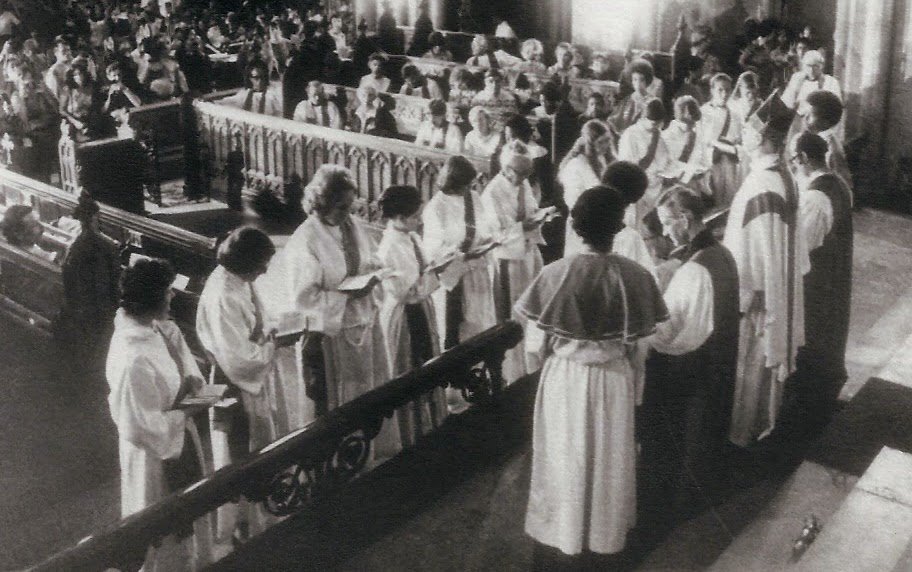
In 1974, in an act of civil disobedience, a group of women organized to be ordinated as Episcopal priests. Meet the women who built the movement that transformed an age-old institution and challenged the very essence of patriarchy within Christendom.

Screening in the Nave with potluck reception to follow in the Parish Hall. There will be a good will donation (suggested $10) to cover the cost of the screening with and remainder to go to Shirley’s Place.

Bring share with friends and fellow Episcopalians!

Learn more about the film

The Philadelphia Eleven

The Philadelphia Eleven

But each of us was given grace according to the measure of Christ’s gift. The gifts he gave were that some would be apostles, some prophets, some evangelists, some pastors and teachers, to equip the saints for the work of ministry, for building up the body of Christ.
Ephesians 4:7; 1-12

On Monday, October 16th at 7:00 p.m., Washington National Cathedral will host the first local viewing of a new documentary entitled The Philadelphia Eleven. It tells the story of the eleven women who, on July 29, 1974, were the first to be ordained priests in The Episcopal Church. Their ordination was an act of canonical disobedience for all involved.

The struggle for women’s equality in The Episcopal Church had been building for decades, and it would continue long after the Philadelphia ordinations. The Diocese of Washington played a significant part in early years of that struggle. On September 7, 1975, against the wishes of the diocesan bishop and in violation of church canons, four more women (“The Washington Four”) were ordained at St. Stephen and the Incarnation in Washington, DC.

The Rev. Carole Crumley, who was in seminary in those years, writes of the Philadelphia service:

Those of us present understood what was happening theologically, institutionally, but more importantly, we experienced the powerful immediacy of the Holy Spirit breaking down walls that separate and divide, restoring wholeness to the Body of the church. We experienced what it is like to be collectively born again. Like any birth, it was messy and painful and exhilarating and full of promise. Today we see that promise fulfilled in so many ways. As we left the service in Philadelphia, some neighborhood children shouted at us, asking what was going on today? We shouted back “Church!”

Those were tumultuous days, both individually and collectively. Just the memories of them, stirred by the trailer to the film, sent me into two days of sobbing. I don’t really know why, except perhaps it was a release of tension, hopes, fears and other feelings stored up from those days.

Carole was ordained in 1977, her own priesthood made possible by the Philadelphia Eleven and the Washington Four. Every woman ordained since—and those blessed by the ministry of women clergy–also owe them a debt of gratitude.

Listening now to the arguments against women’s ordination, and the certainty with which those who held them spoke, underscores the tenacious courage of those early women and their supporters. They were also under continual threat of violence, to the point where some were advised by the FBI to wear bullet proof vests underneath their vestments.

Their determination and sense of call, and the realization that once a few women were ordained there was no turning back, convinced The Episcopal Church, meeting at the General Convention of 1976, to change its canons and at last allow women to be ordained as priests. One of the eleven ordained in Philadelphia says in the film, “There’s a saying that you need to speak the truth even when your voice shakes.” Tears fill her eyes as she continues, “And that’s what I did.”

Looking back from the vantage point of women’s roles in the Church today, we can’t help but gain hope and courage for all the struggles we face now. It’s helpful to remember when we are facing all that seems impossible to accomplish that what is normative now seemed impossible then. Women’s ordination was impossible–until it wasn’t.

Change for the good can happen. Inspired by the Holy Spirit, we play our part, even in those long stretches when we can’t tell if we’re making any progress at all. For those of us whose normal lives are what others worked so hard to make possible, it’s the least we can do for those who may one day take for granted what we can only dream of now.